Ma’alaea Bay consistently has northeast trade winds which create wavelets and chop on the water. I have been lucky on my trips, and again out on a sunset cruise, the sea was calm even with a flooding tide. Add warm weather and dancing with friends to joyful music played by Maui’s Reggae Ambassador; Marty Dread!
Whales are sighted less and less now, as they are migrating to feast in Alaskan waters, so we were delighted to spot a mother with her baby! The captain was respectful, maintaining a 150 to 200 yard distance from the Humpbacks. They stayed on the surface with little motion for about 20 minutes, I think they were enjoying the music too! I think these acoustic creatures are curious about our human vocalizations, and music is a universal language! Then the mom decided time to swim away and surprise! she breaches right before the sunset!! As we headed back to the harbor, we saw another mom-calf pair in the distance and an active group of 3 to 4 whales near shore. I think we all felt this Friday evening the thirteenth was lucky and magical!
Looking at the photos I took, I noticed the mom has a scar on her back from an encounter with a vessel or big fishing line? She is a tough one and has even more of my awe. I am working on improving my video skills, the best part of this video is Marty Dread singing, it fits the whales well!
What is the social function of a Humpback Whale song? What do those songs, whale sounds mean? We are still trying to understand! On Monday morning, April 2, 2012, I was excited to join Whale Trust founders, Dr. Meagan Jones, Dr. Jim Darling, and Flip Nicklin in their National Geographic sponsored research. We headed out of Lahaina in calm sunny waters.
This specific permitted project was to record the current-this season’s song, and playback a different composition song, documenting whales by photo identification of their tail flukes, the time and place of the whale, and any reactions to the playback song. The purpose of the study is to determine whether song composition determines how males interact with each other on the breeding grounds.
We avoided the mom-calf pairs, and a competitive surface active group heading near the shoreline. The males seem to be even more competitive now as there are fewer females available!
We were looking for and listening with hydrophones for the singular singing whale, easier to record, identify, and follow. Those singers tend to stay under singing an average of 15 minutes, while the non singers tend to come up to breathe on average in 8 minutes. We could see whales blowing in the distance when we spotted a single whale diving. Yes, the whale is singing!
Listening to the song, I heard low and high tones, groans, “barnyard” sounds like cow moos, pig grunts, and sheep baas! The whale was nearby, and at one point right below one of our boats! The singer will also sing “up notes”, recognizable sounds that mean the whale is rising to the surface to breathe.
The 2 research vessels were about 700 meters apart when Dr. Darling deployed the playback song into the water. Our whale kept singing for awhile, then stopped and breached right between the boats! Began singing again, then stopped and surfaced tail fluke thrashing, right in front of the research boat playing the playback song! The whale swam away and did not resume singing. Now this is only one observation of behaviors and it takes many to conclude science, but my sense is that whale was reacting aggressively, did not like hearing that different humpback song, and was letting us know!
A southeast wind had picked up along with a flooding tide, causing our small boats to bounce and drift, becoming a challenge to document and remain in one area. Happy to have recorded over four hours, we headed back into Lahaina Harbor. Ah, the patience and persistence of research! Another wondrous whale watching day, another fleeting glimpse of whale culture.
Sunday afternoon, April 1, 2012, sunshine, tropical clouds, light winds, with an ebbing tide made for a relaxing boat trip out on Ma’alaea Bay. The Humpback Whales seemed to be relaxing too! We enjoyed seeing a few moms with their calves and one pair with an escort, swimming about the bay. Single whales were sighted in the distance. Each day we notice fewer whales and it’s time many are on their way to Alaska. No April Fools:) At the end of the month, I will be migrating like the whales, back to San Juan Island!
Thursday, we happened to be running errands in Kahului, the wind was blowing hard so we decided to head to the beach to check out the surf. We ended up in a side street behind a shipping company and power plant, found a small parking area and walked along a concrete and rock wall. Imagine our shock when we saw 50? or more Green Sea Turtles all grouped together, side by side, under and over each other, as they surfed the big waves in a small, somewhat open cove, right below us. It was amazing to watch them handle the surf, not hitting the rocks, raising their heads up to breathe!
Some of the turtles do have tumor like growths, so I thought I recognized one of the turtles I’d seen basking on a beach east of there a week ago. NOAA science data shows a correlation between nitrogen rich (sewage related) watershed runoff that feeds invasive algae the herbivore turtles are feasting on. Unfortunately, that seems to trigger the turtle herpes virus fibrous tumors. Particularly for the Hawaiian near shore turtles, who have site fidelity and are year round residents.
I didn’t have my camera with me, made to sure to bring it Saturday, another windy, high surf day. The turtles were there again, maybe a favorite place, and/or a good hiding spot from sharks. They also utilize the tides and currents. The 2’ and 2’+ flooding tides were peaking, so slack water, on both days around the 3pm to 4pm time frame we watched them.
Our human recovery efforts have helped the turtles. We need to clean up our watersheds. And we can learn from them, those that survive the egg hatching, return to the sea, manage to evade multiple predators, and avoid human impacts, can live hundreds of harmonious, environmentally healthy, years!
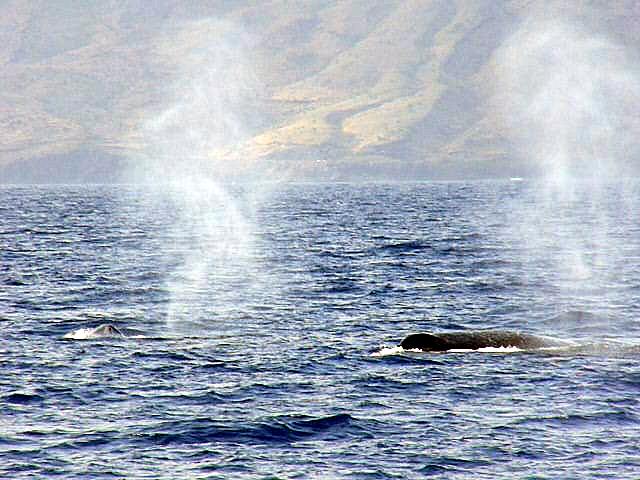
This afternoon the northeast trade winds are blowing wavelets, the tide is flooding, and the sun is shining between clouds, warming up the Makena beach area on the southern side of Maui. Right away we see one Humpback whale, then a mom/calf pair, and another single whale among more spread out in the distance. Not much surface behaviors today, mostly breathing and diving for several minutes.
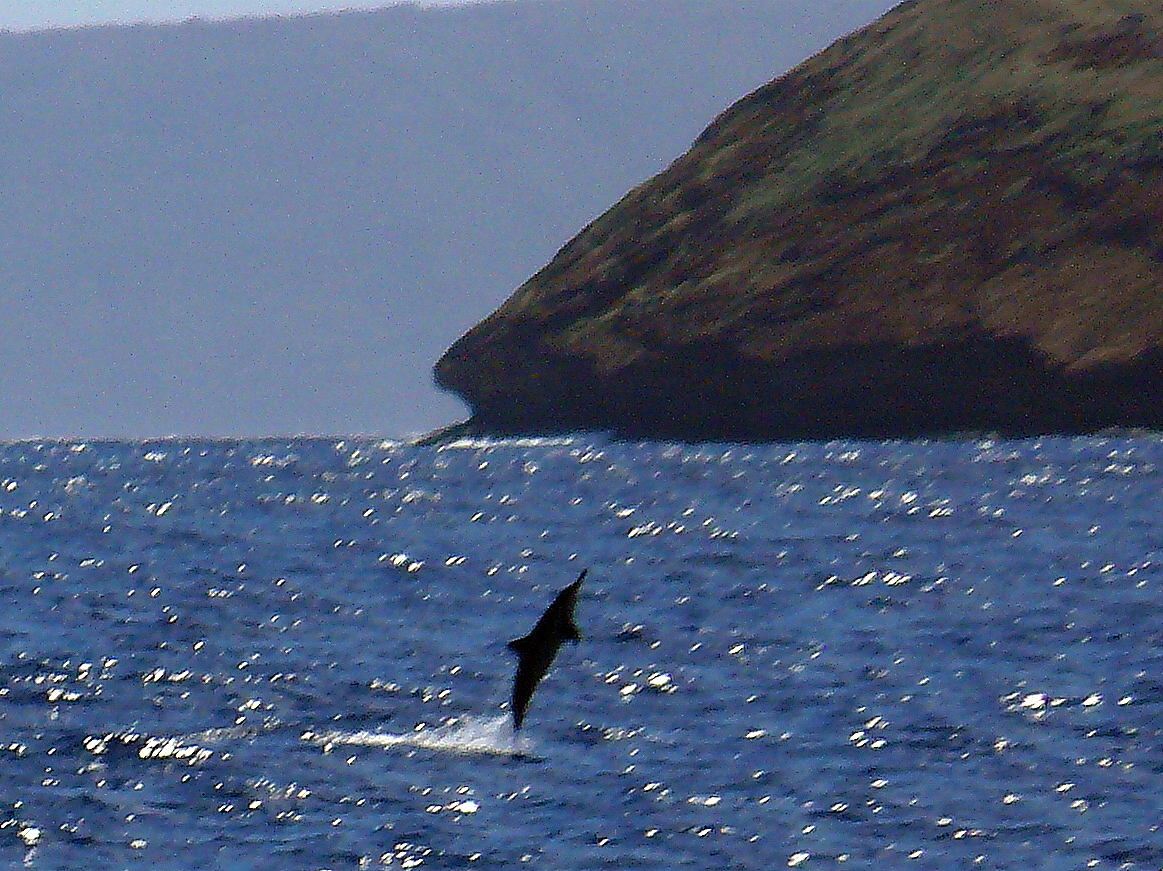
As we head toward Molokini Islet, created by Haleakala Volcano, now with a submerged lagoon so a popular dive-snorkeling site, we are approached by a large community of Spinner Dolphins!
They are awake and very active, showing their name leaping up, out of the water, spinning circles in the air!! Many come swim with the boat, so agile riding the bow and stern wakes, zipping across the bow, speed swimming back and forth between their dolphin families and the boat! And how do I describe eye contact with my first cetacean love- the dolphins!
Wow! The most active Humpbacks I’ve seen this season! Were they also enjoying the slack water, light breeze, sunshine, shifting clouds, and the first afternoon of spring?
I spotted a mother and calf from the marina before we headed out in Ma’alaea Bay. The calf breached numerous times, while the mom seemed comfortable resting. Then another mom/calf pair with an escort swam very near the first pair. We don’t often see the females or babies socializing physically close, so this was an unusual, short interaction.
Rounding McGregor Point, a very active baby breached countless times while mom was swimming west when a group of males? approached them. The calf kept breaching, kind of lunging halfway out as it tired. The adults seemed to be socializing, breaching, pectoral fin waving, tail flukes in the air, rolling, and touching. Then they headed towards our boat, had the female decided no on the boys? Pectoral fin and fluke water slaps, and aquamarine bubble trails indicated aggressive competition behaviors. The hydrophone picked up the Humpback song! The whales swimming much faster now, we all were going back into the bay, where at least 3 more groups of whales are surfacing!
As well as completing the course, testing, training, and field work to become a University of Hawaii Certified Marine Naturalist, I have also trained to become a turtle monitor; educating people about the turtles, turtle needs, and collecting data!
The turtles will come to shore to lay their eggs and “bask”; rest and warm up on the beach, particularly at dusk. Most of the beaches are frequented by people and although Green Sea Turtles are rebounding since we stopped hunting them and the Hawaiian turtles seem fairly comfortable with us humans, we are sharing the waters and beaches and need to give the turtles at least 15 feet of space, not block access back to the water, and not disturb them with light or camera flash.
These ancient beings spend approximately the first 5 to 10 years of their long lives in the oceans before they return to the land. Wonderful to watch at sunset, 15 turtles climb out of the surf to bask on a northern Maui beach! I did zoom and crop my photos and videos.
A stormy, rainy, windy week for the Hawaiian Islands. Kaua’i and O’ahu got hit harder than we did on Maui, although we also had flooding, trees go down, and road damage. That didn’t stop the bigger tour boats from going out, so on March 8, 2012, Thursday afternoon, with a 1.8’ flooding full moon influenced tide, we headed out of Lahaina toward Lana’i Island!
The winds calmed down, the sun peaked through the clouds, the rain stopped, and our timing included some slack water- calmer waters when the tide has peaked. Surprise! We immediately come across a mother Humpback Whale with her calf and an escort whale. The baby whale surfacing, while mom seemed to be resting, coming up to log at the surface. The escort stayed under water. Mom woke up and the group gathered, picked up speed, and swam away.
We could see whales spouting, breathing in the distance, when I noticed dolphins! A group of 6+ swam directly to the starboard, right side of the boat. Spinner Dolphins, my first sighting this year! They tend to rest during the day in a large community of hundreds of dolphins, in shallower waters, more near shore, perhaps as a defense against predators such as sharks. They usually become more active at dusk, hunting their preferred prey- lantern fish that rise from the depths at night. There is some research happening regarding the Spinner Dolphins behaviors, resting sites, and how human presence when they are resting may impact them.
I have noticed dolphins and porpoise often being more active in rougher sea conditions. Is it because they have to surface higher to get that breath of air? Now there are hundreds of the Spinners surrounding the boat and spread out to sea, leaping, synchronized, spinning in the air, and even one was swimming at the surface on its back! They sure move fast! Those little ‘toothed whales’ have close family and community relationships. We saw juvenile and baby Spinners amongst the adults. I am convinced cetaceans are often curious about our human vocalizations. Of course I couldn’t help myself, I was ‘talking’ to them and making my dolphin squeaks and noises. There were dolphins right under me the whole time! Then, after about a magical half hour, poof! The dolphins all decide to move on.
We humans are elated when we spot a group of 7+? whales a few thousand feet out. Their closeness to each other, a bit of fluke and pectoral slapping, surface bubble trails, indicated it was a ‘competitive’ group of males competing for a female’s attention. They were traveling fairly fast and time for us to head in.
The trip and then a rainbow over the south end of Maui reminded me why I enjoy going out on the sea even in rougher conditions. The marine life reacts differently than we humans and they are phenomenal!
I am also a volunteer for the Whale Trust and enjoyed sharing science and education with folks visiting the Lahaina Ocean Arts and Whale Festival on Saturday and Sunday, March 10 & 11, 2012. Check out their website from the link on the right!
Ma’alaea Bay, on the south side of Maui, consistently has northeast trade winds blowing through, so another ‘lucky’ Friday, February 24, 2012, when waters are calm and full of whales! The fairly shallow bay seems to appeal to the mothers with calves. There were several pairs, some with an escort. Single whales and groups in the distance.
The baby Humpbacks were very, very active! Riding on top of mom, tail slapping, lunging out of the water, and breaching! We watched a group, including a mother and calf, pectoral and tail-fluke slap the water, near shore in less than 50’ of water. The tide was flooding in, although less than 2’ exchange.
Listening to the singing and communicating whales gives us a glimpse, sense of their acoustically oriented world. I was able to record with one of my videos.
In the distance we see a calf continually tail slapping, while swimming with and on top of mom, as they head into the bay. Was the baby practicing and-or playing? Are baby whales just energetic like other mammals and our young humans?! Well mom surprised us with a breach of her own, my last fuzzy picture!
Many of the calves do look smaller, born later than other seasons, and I noticed overall fewer whales than February of 2011. The recent census numbers confirm this. They may be arriving later and giving birth later this season, I’ll keep you posted!
Wondrous to see numerous Hawaiian Humpback Whales from land as well as out in the ocean. Since near shore is fairly shallow and with reefs, they don’t often come near shore. Yet if you are scanning from land, you can frequently see groups and many surface behaviors all over the waters and horizon. I really enjoy the sunsets at Kalama Park, and am often delighted by breaching whales! (Are they noticing the sunset too?) I see Green Sea Turtles at dusk too, and saw a group surfing the waves at a north beach of Maui! The whale watch boats seem to abide the 100 yard restriction of approaching the whales, although the whales often chose to approach boats, so you may have a closer encounter with a few whales!
The following photos are off of Makena Beach on Sunday, January 29, 2012, from about 1:30 to 3:10pm. We observed a dozen or more, single and groups of whales, with pectoral fins slapping the water, a few spy hops and breaches. And a mother with what looked like a fairly newborn calf, as its’ fins were pretty floppy; it takes awhile for them firm up! The calf staying right on top of mom, which is common for the mom to help that baby get it breaths! Especially since the trade winds were blowing and stirring up whitecaps on the ocean!
On February 3 and 4, 2012, Whale Trust hosted a very informative Whale Tales, sharing science from many places. Showing the connections between the Pacific Rim whales and us humans, and how the technological tools, such as D-Tags, are helping us understand a bit of the mysteries of the whales underwater lives.
February is officially Humpback Whale month, the photos from the 18th of the World Whale Day parade!
Sunny, warm January 20, 2012, the ‘vog’, big island volcanic smoke haze lifted, with clear skies and calm seas showing Humpback Whales everywhere you looked between 2:35pm and 4:35pm! They’ve arrived! Singles, mothers with calves, and groups were spread out between Maui and Lanai. The captain is well experienced and respectful of the laws and regulations protecting these endangered whales. We headed toward Lanai, stopped and could see whales in the distance in all directions.
So surprise! when a whale pops up right near the side of the boat! (That’s called a “mugging” or being “mugged”. We can’t approach closer than 100 yards; however whales can and do chose to approach boats!) It was a young, not fully grown female (she rolled over and we saw her genital slit with 2 mammary slits), with another larger, male? whale following her. Perhaps she wasn’t interested in mating with him, or enjoying the courting? Then 2 more whales-males? joined in the group swimming around and under the boat. Probably males, as research so far has shown females don’t socialize physically close together like males will, the males even competing and injuring each other. The 4th Humpback Whale had Killer Whale teeth rake marks on its tail flukes and body, a survivor of probably an Alaskan Transient Killer Whales encounter.
Amazing to see the whole, large, whale, and their white undersides glowing in the water! Then breathing, rolling, a little spy hop, blowing bubbles- turning the water turquoise colored, pectoral fin slapping the surface, and graceful dives bringing up their tail flukes. The males have been seen blowing the just under the surface bubbles, perhaps expressing their rank. Interesting that by Humpback Whales, pectoral fin slapping the water is thought to be invitational. As opposed to tail-fluke or peduncle slapping, which seems aggressive and we saw happening between a group further out, who also looked like they were doing headstands-flukes hanging above the surface! Several breaches through out the area and trip, and we humans were treated to a great variety of whale surface behaviors!
Thank you to all who follow my blog, and have been waiting to read about the creatures in Hawaii! I am on Maui and have seen Green Sea Turtles, birds, fish and invertebrates, from the beaches! The Humpbacks, “Koholas”, are still migrating from Alaska, so I was thrilled to go out on a respectful boat and see them for a few hours.
On Friday afternoon, December 30, 2011, we came across a mother and calf in Ma’alaea Bay. They were ‘logging’, resting at the surface. The calf looked really small, fairly recently born? The calf was draped across mom’s back, easier for it to surface and breath. The calves do have to surface much more than the juveniles and adults. There were also 5 to 8 Bottlenose Dolphins surfacing very close to the whales, not active in behavior, travel or direction changes as though they were resting too. We headed further south and saw a mom-calf pair with an ‘escort’; another whale with them. They were awake, swimming, and one pectoral fin slapped the water! This calf was bigger and breached twice!! A Green Sea Turtle popped up to the west of us. A wonderful day of seeing endangered wild animals in their natural habitat, part of the Hawaiian Islands Humpback Whale National Marine Sanctuary. Hope to share photos of my future sightings!
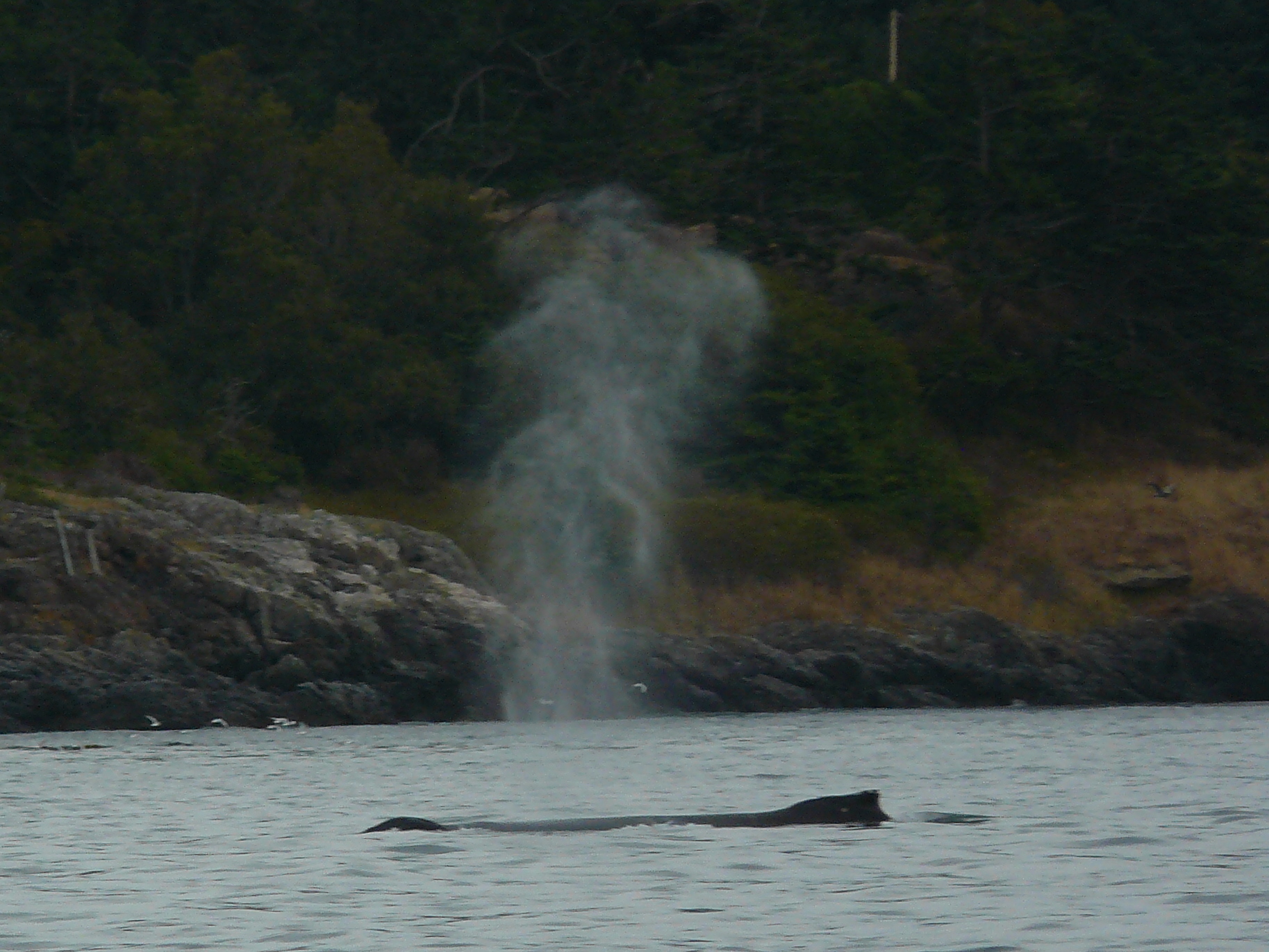
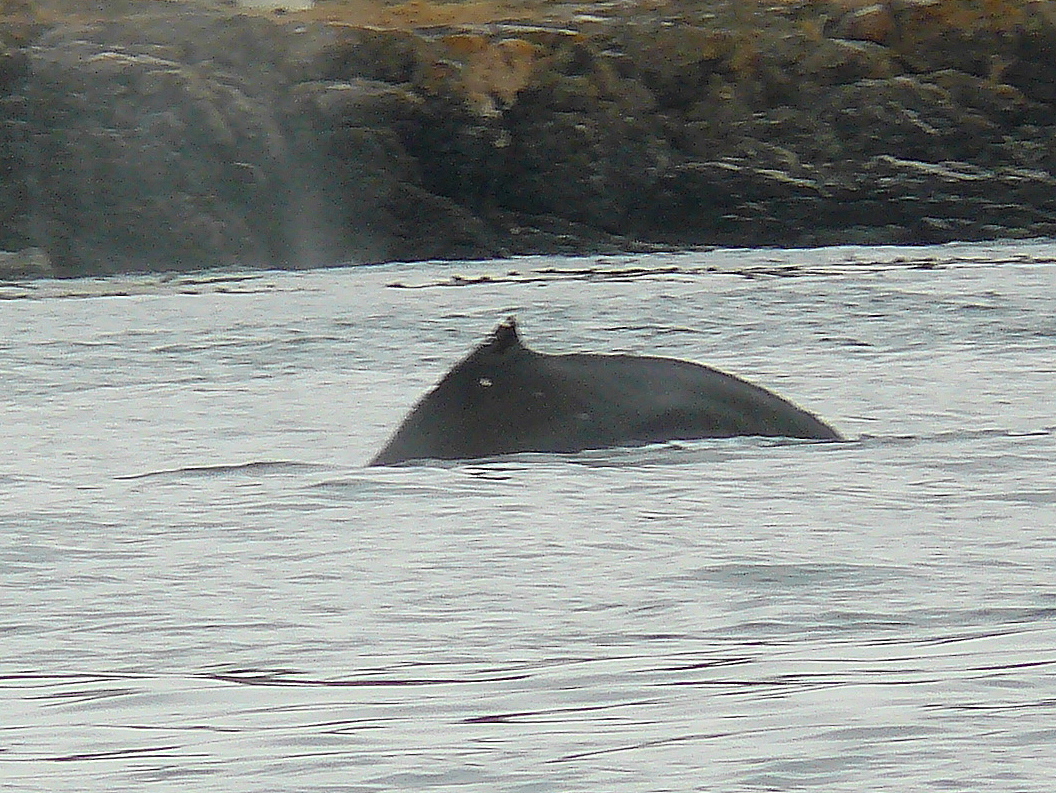
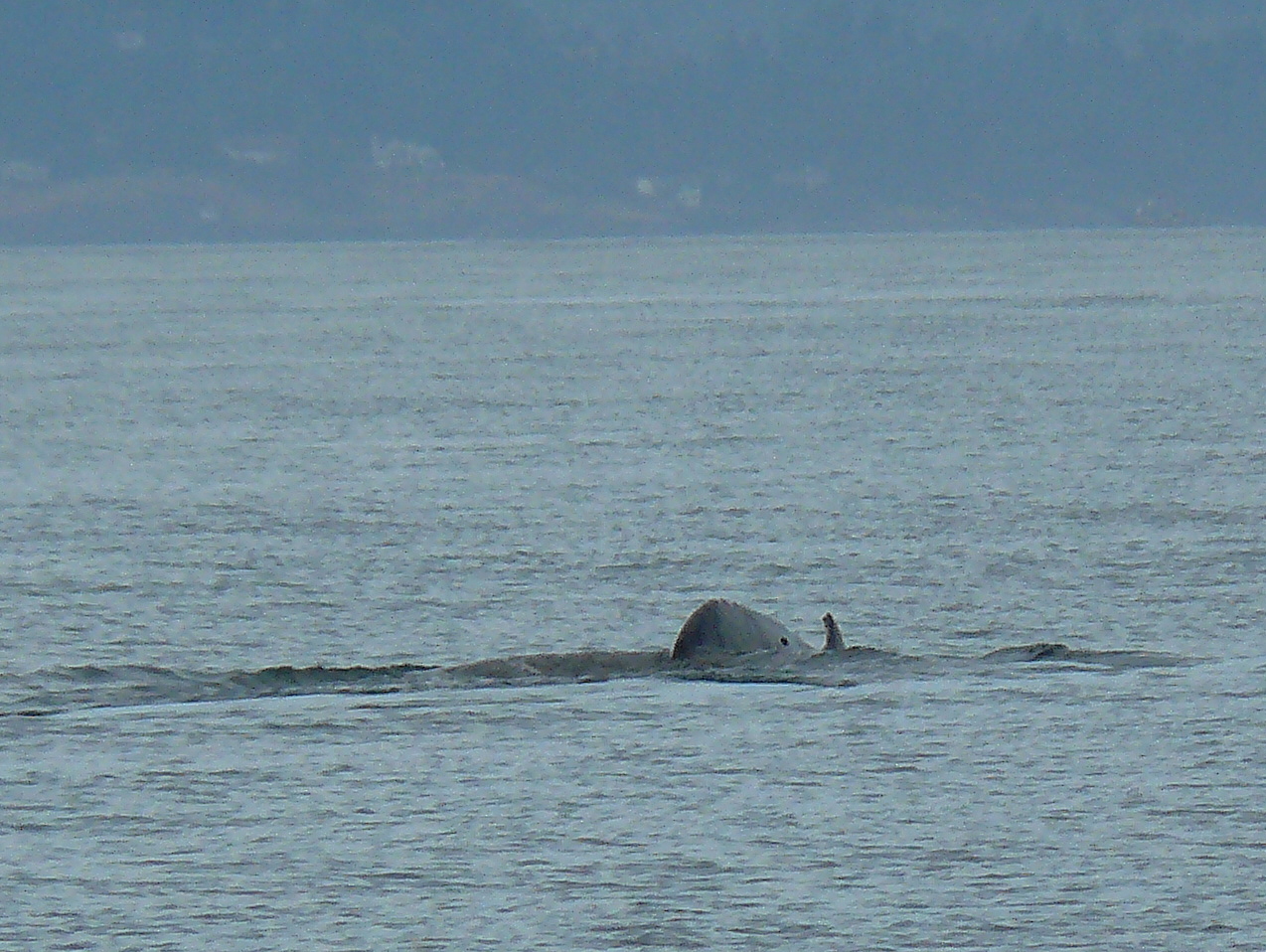
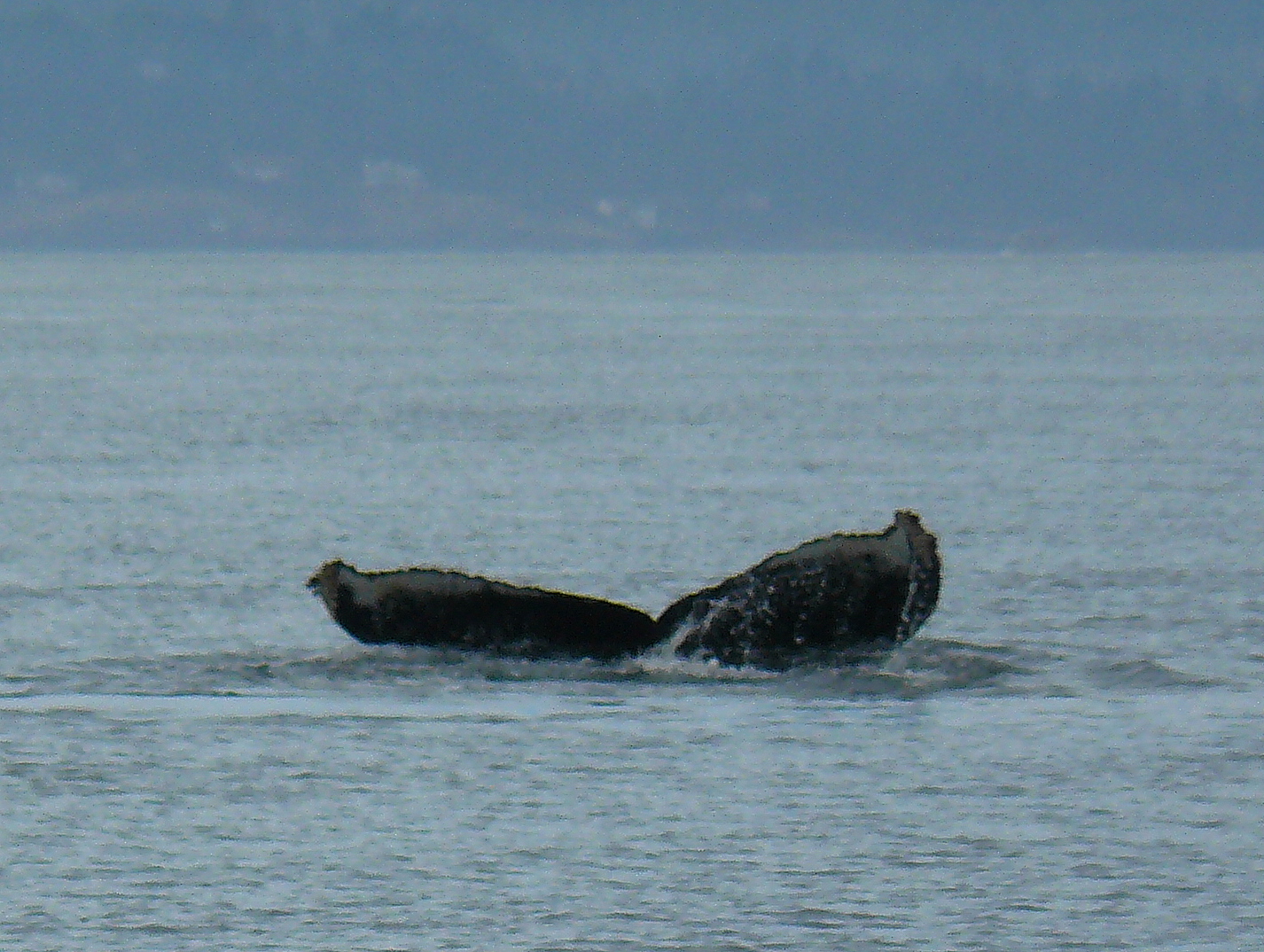
A bit cooler with sun trying to break through clouds, fairly calm water with a less than 2’ ebbing tide made for a pleasant sighting of a Humpback Whale! First spotted off of San Juan Island Hannah Heights at about 1:15pm, heading across Haro Strait at 2:05pm. The whale seemed to be foraging, zigzagging back and forth, near shore then more toward Hein Bank and Canada. Also saw Dall’s Porpoise, perhaps socializing with the Humpback? Nice to see more Humpbacks visiting the Salish Sea!
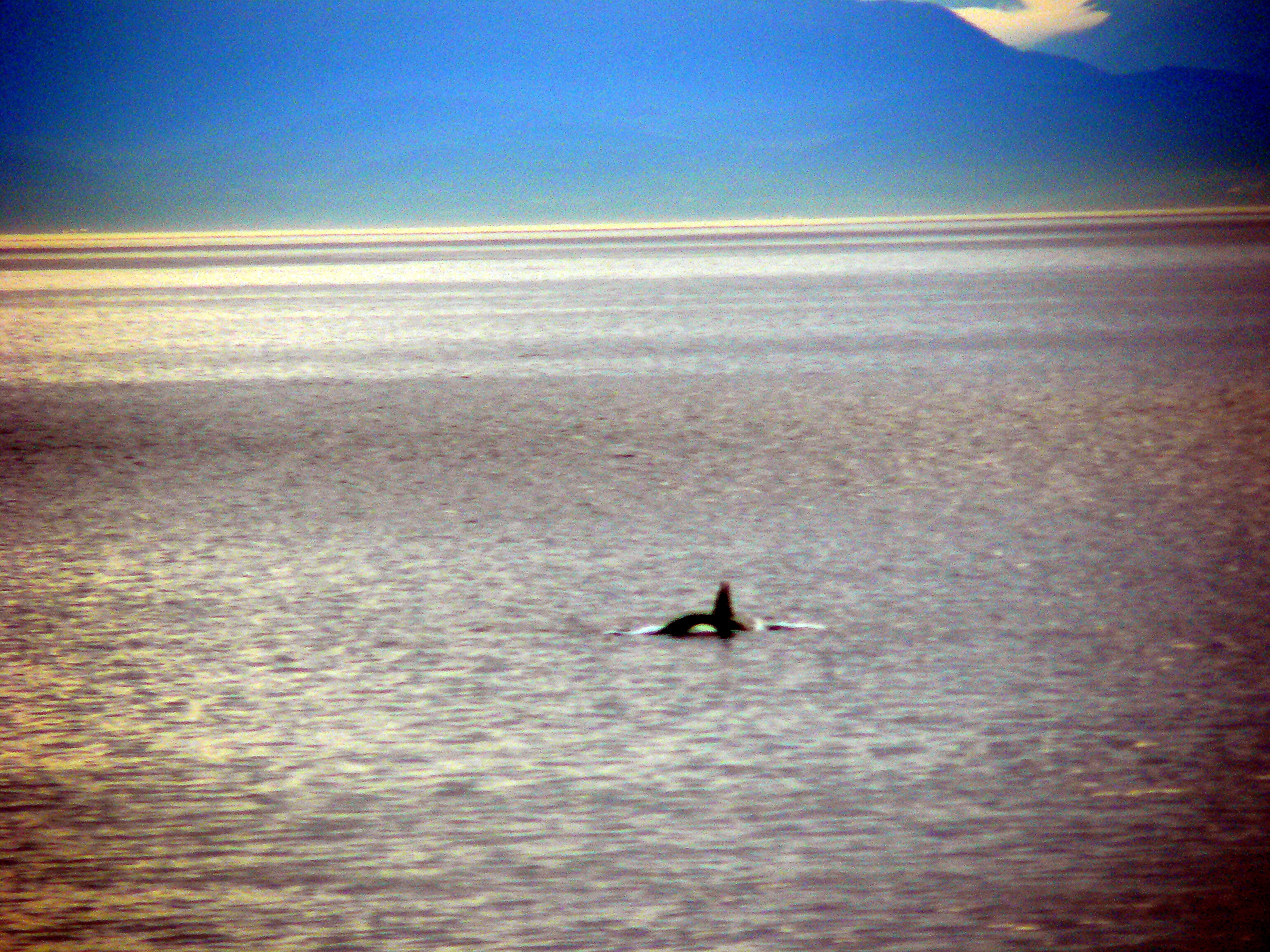
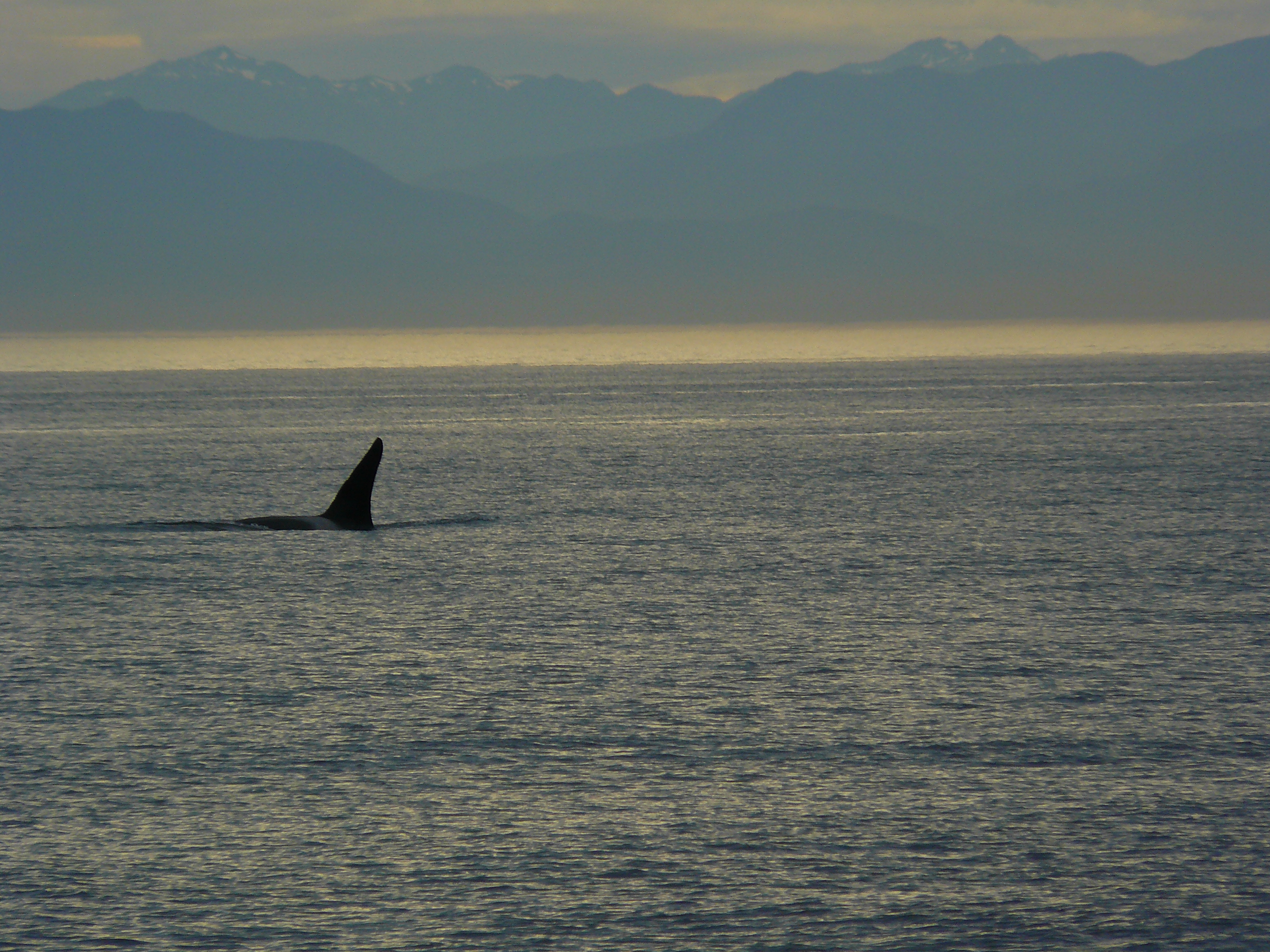
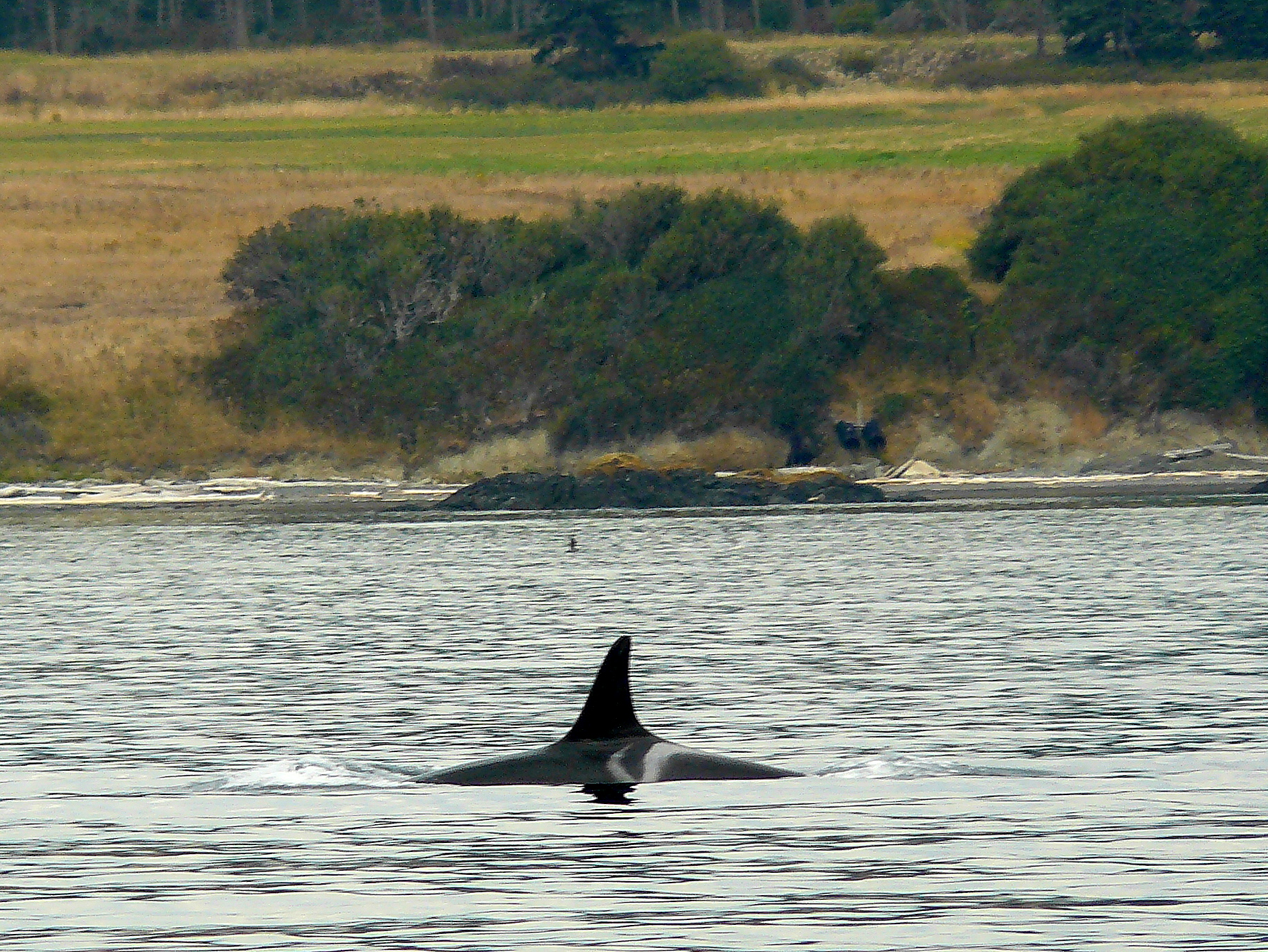
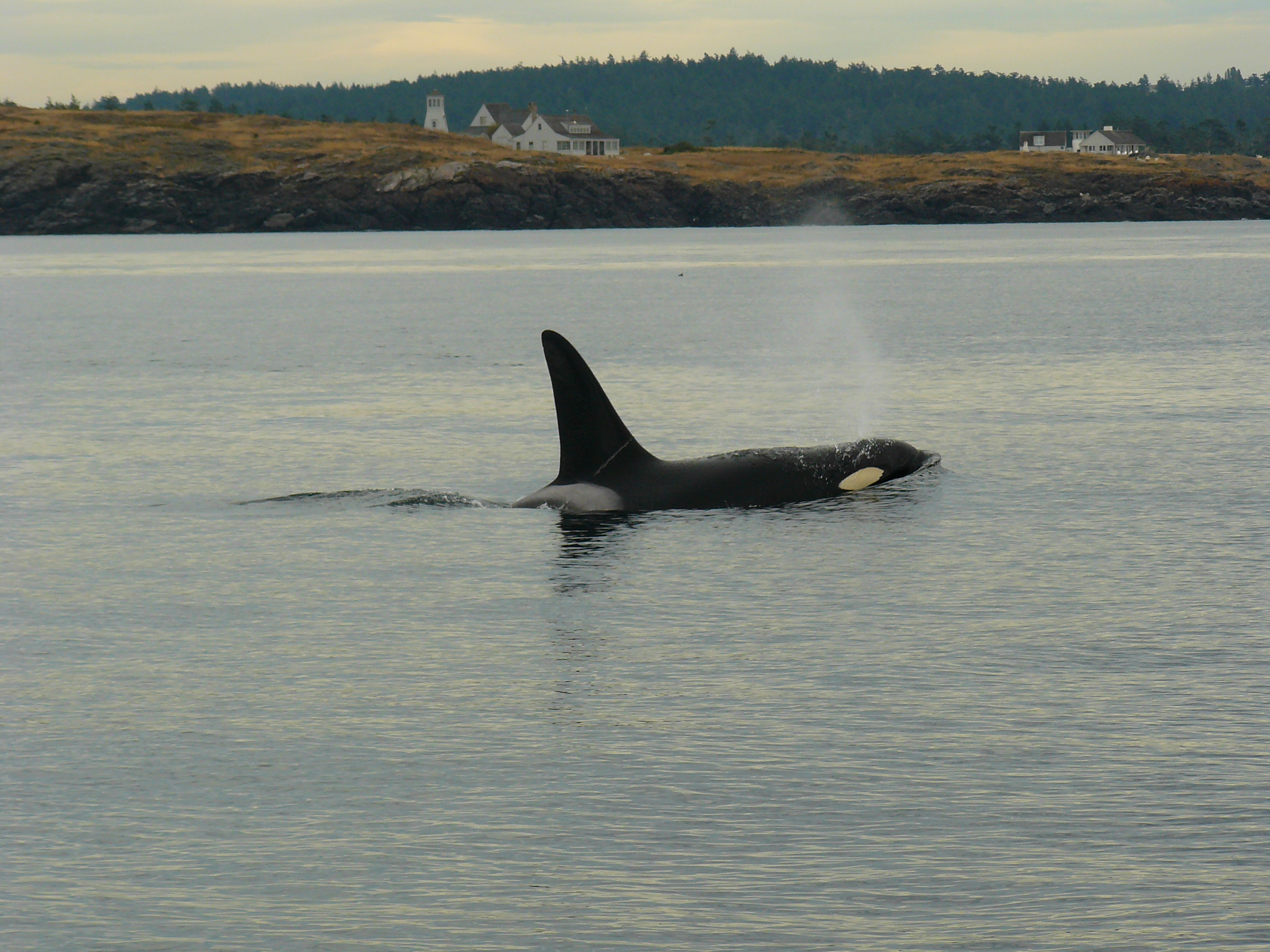
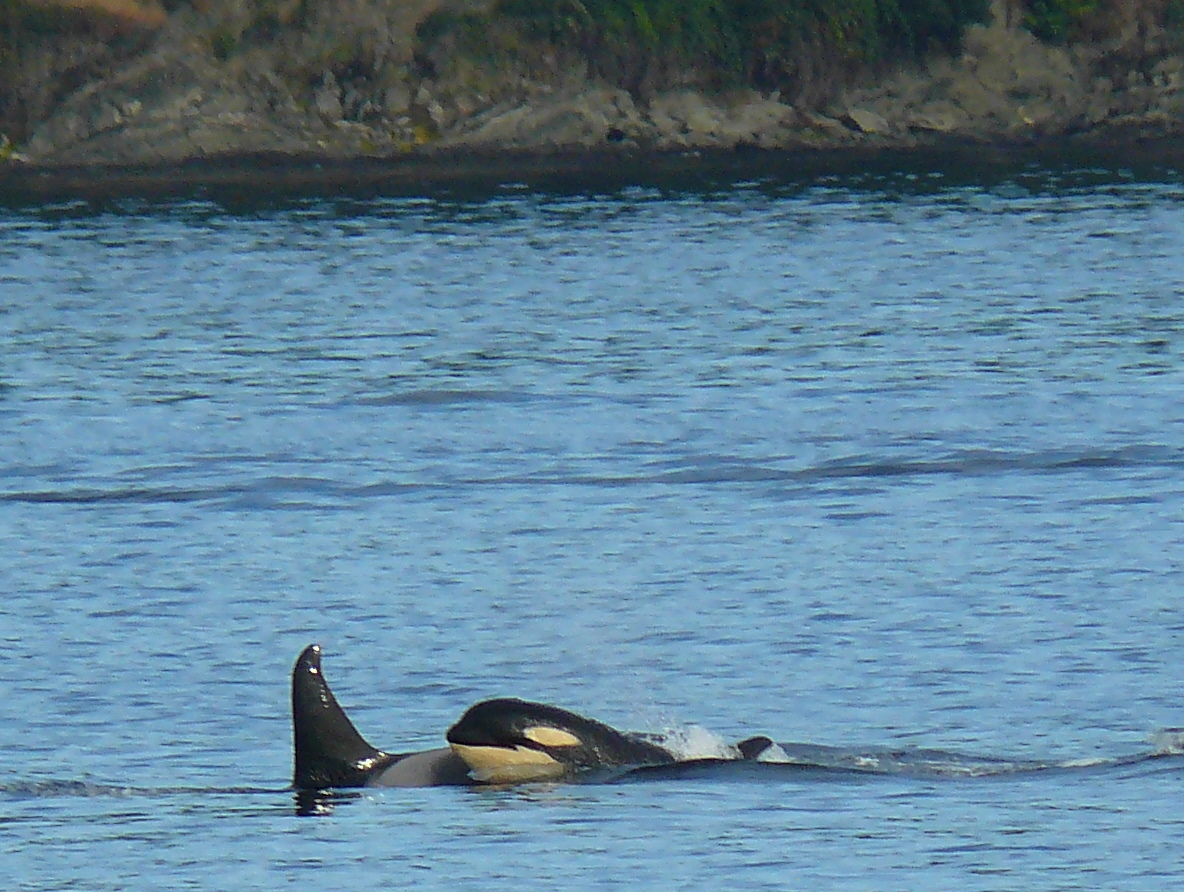
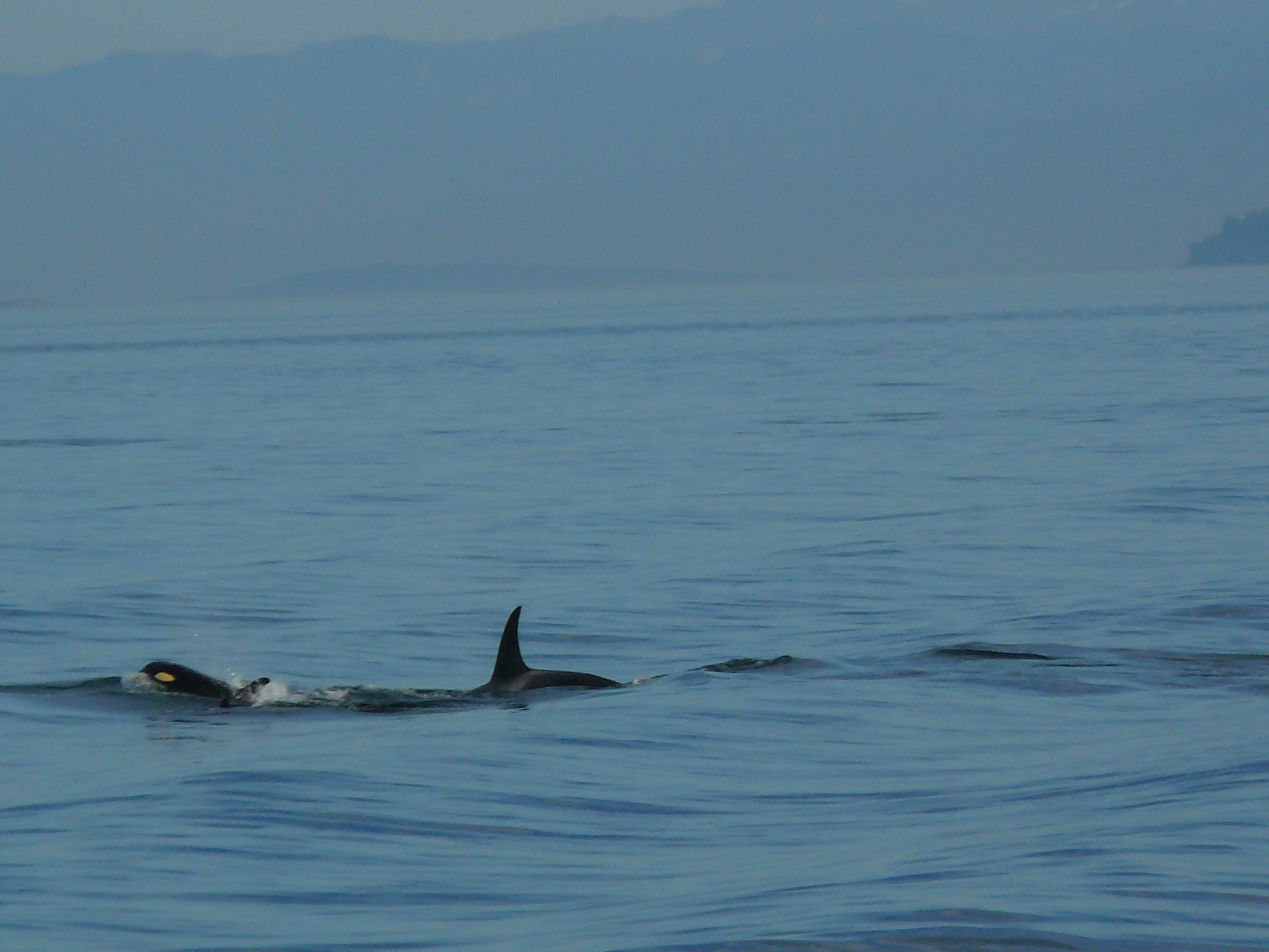
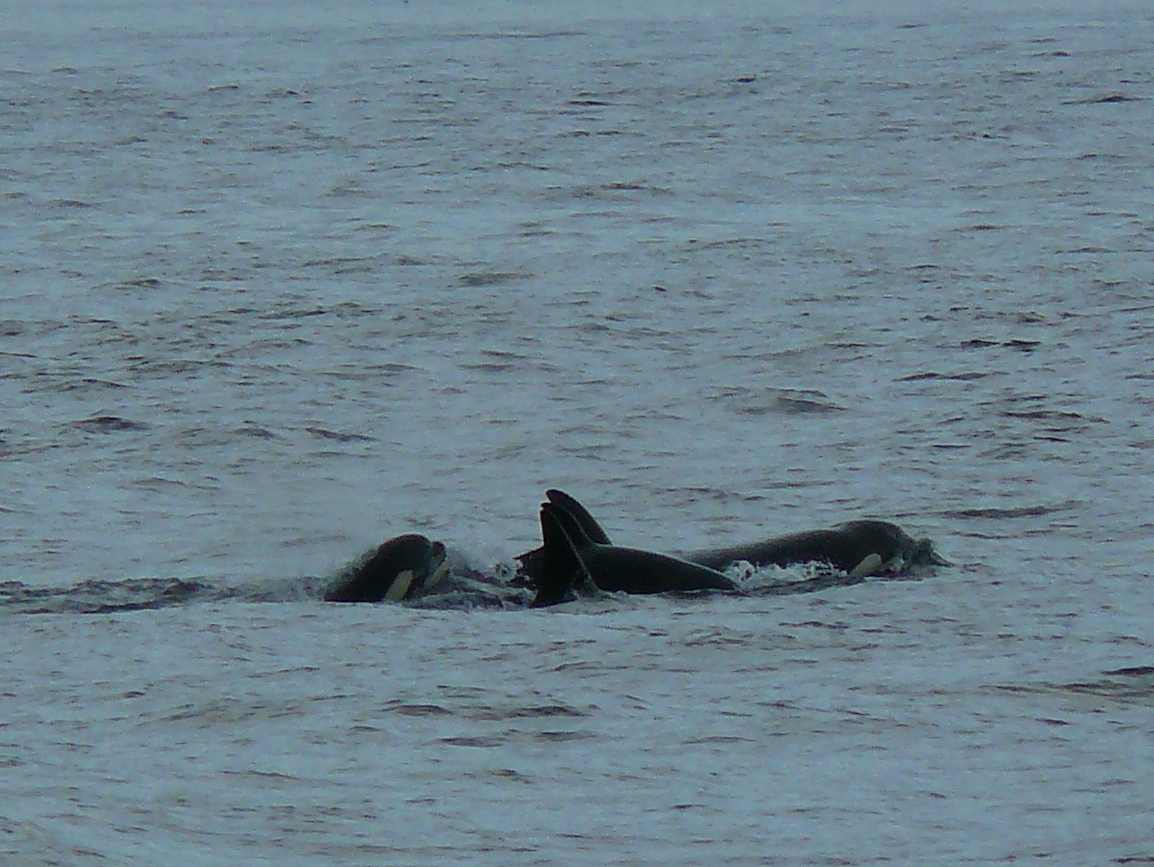
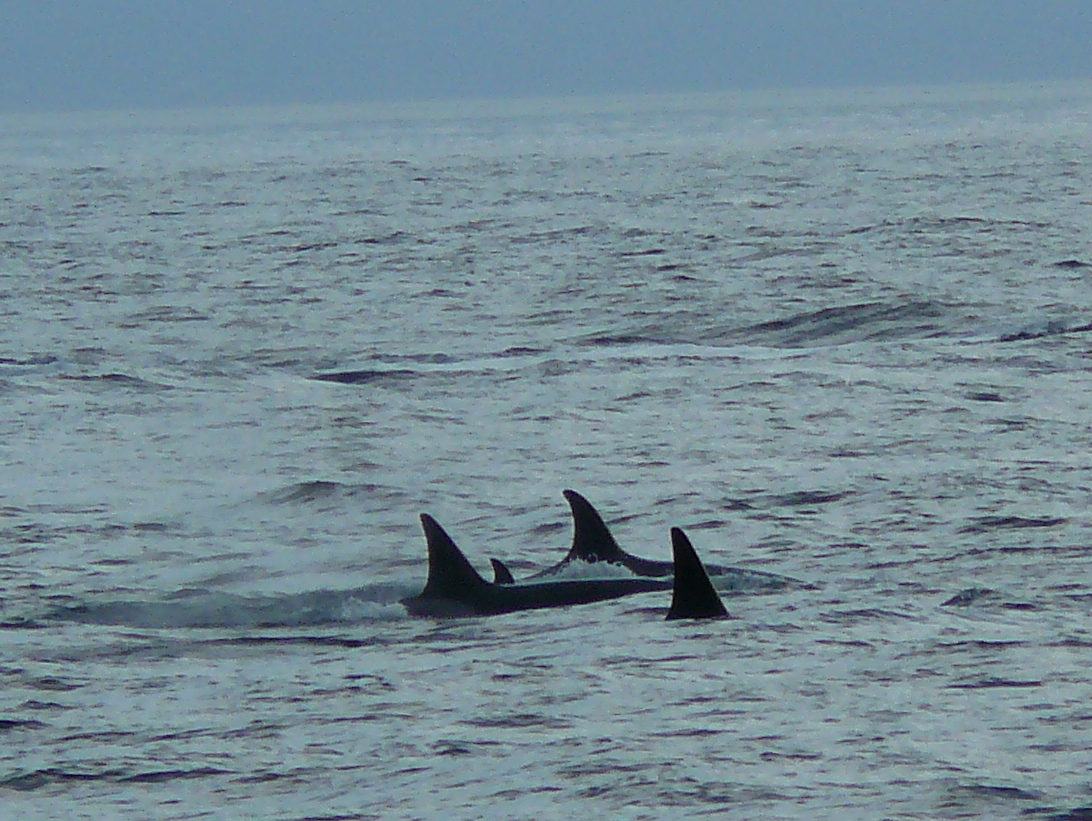
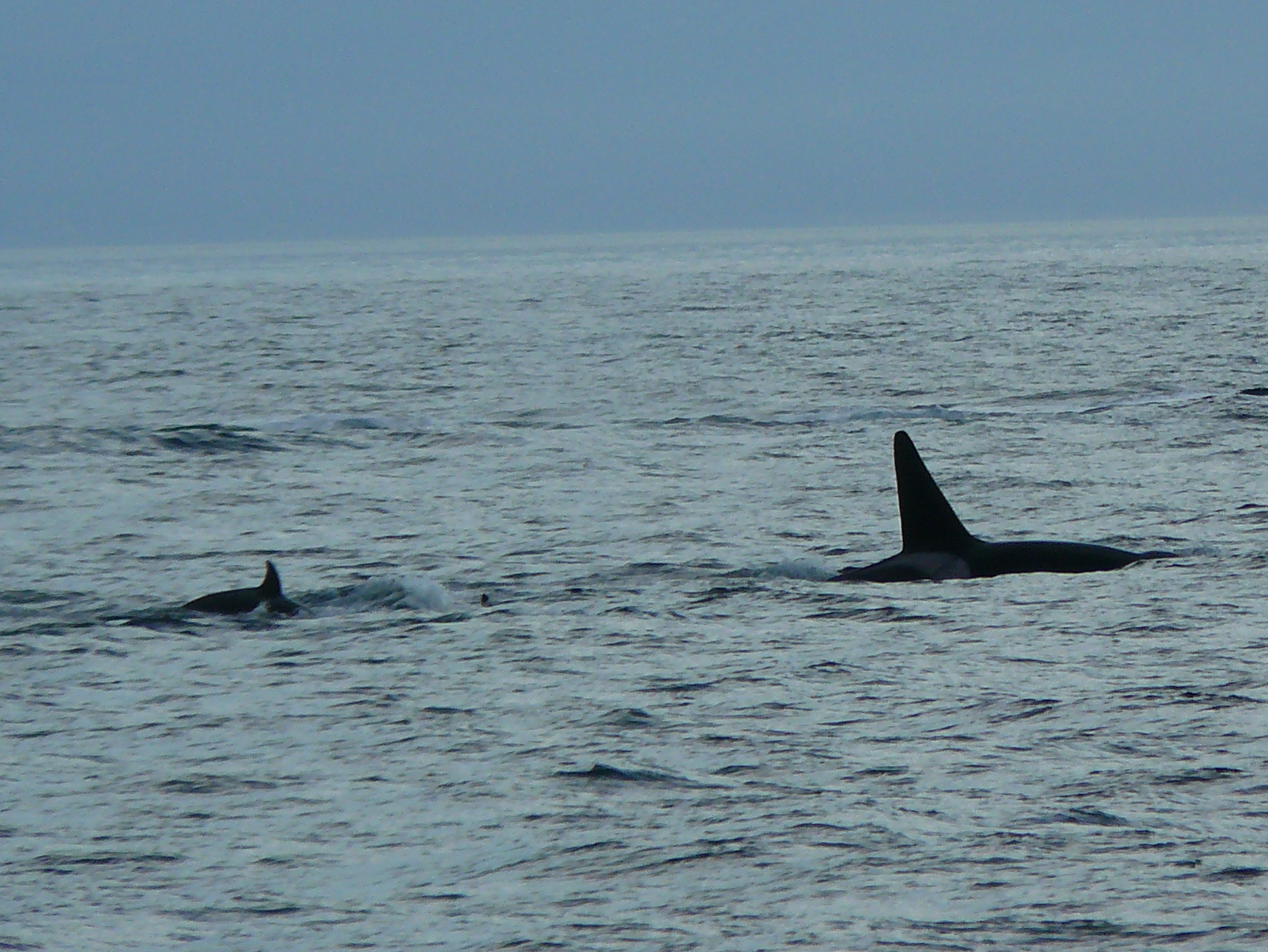
Autumn has arrived, we’ve had a gale come through, yet the whales are still here looking for salmon! They had been in the Strait of Juan de Fuca, so I checked the tides and saw a strong 8.6 flooding tide, peaking around 6:30pm. I thought if they were going to stay in the Salish Sea, they would take advantage of the last of the currents to head up Haro Strait. I drove (by car) to the San Juan Island Westside Land Preserve at about 5:45pm, no Orcas, so I headed south to see if they were still milling about. Pulling over at False Bay, I spotted a trailing group of whales heading northwest! So I went back to the Hannah Heights area at 6:30pm, delighted to see the Killer Whales all spread in small groups, out in Haro Strait traveling northwest. After awhile I noticed a female with 2 youngsters stopped, just logging-resting at the surface. Then the whales up north turned and swam back, rejoining the other groups. I wonder if that female was a matriarch deciding they were going back south, enjoying the slack water, utilizing the ebbing tide?! The sun had set, light fading, 7:30pm now, yet I stayed until I couldn’t hear their strong breaths anymore. They were going out of sight and sound, time for me to go home too!
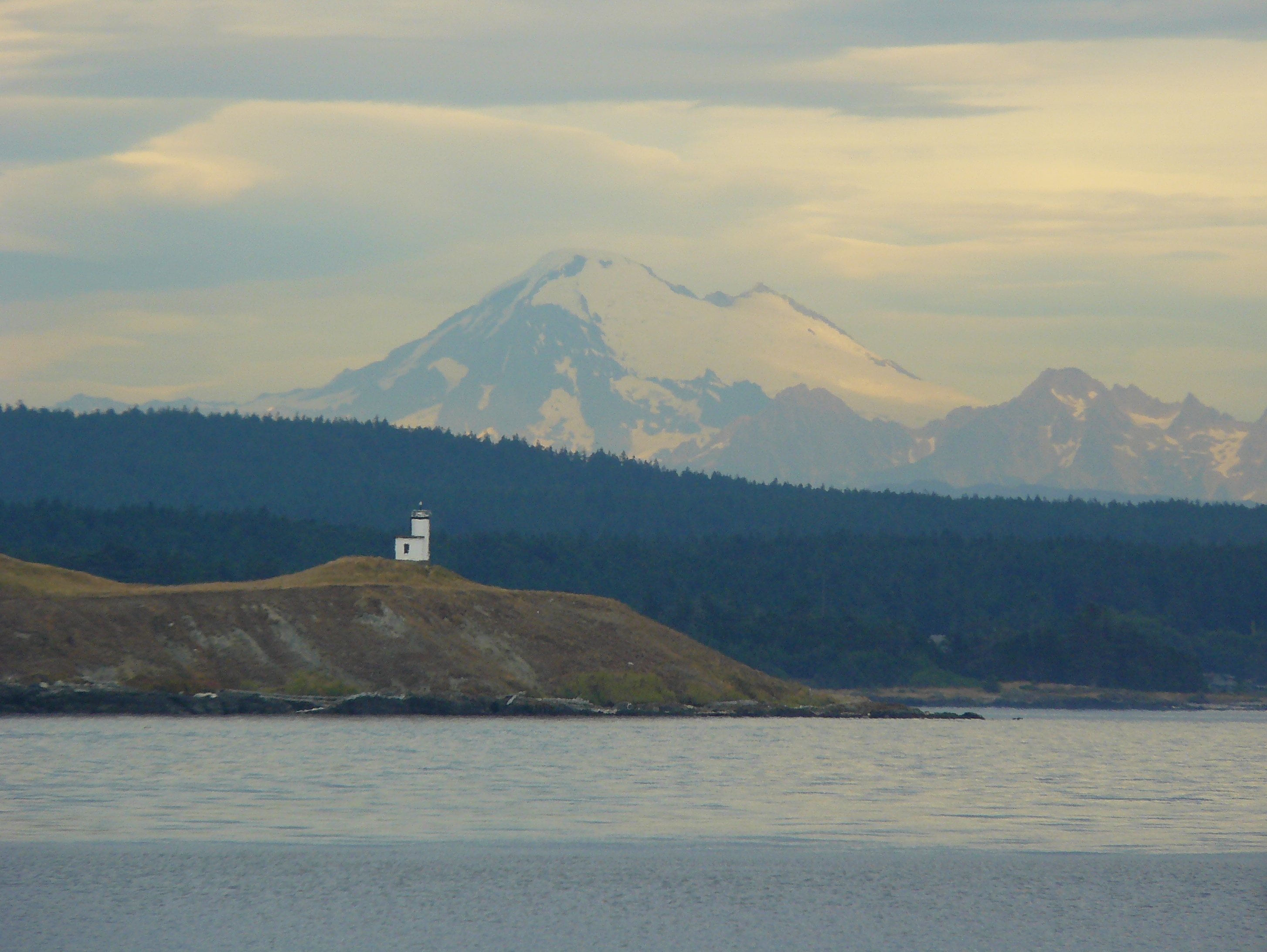
San Juan Channel full of Harbor Porpoise, Harbor seals, and Steller Sea Lions residing on Whale Rocks. Many marine birds and Phalaropes migrating through. Members of all the pods, J-K-L, out in the Strait of Juan de Fuca, off of San Juan Island, between 3:10pm to 4:25pm. Slack water and 1+’ ebbing tide, with Matisse cloud colors and sun breaks, showed long-range visibility of the orcas spread out, and a beautiful light glow on the Olympic and Cascade mountain ranges. We identified the big guy sighted first; L-41 Mega with sister L-77 Matia, heading toward Salmon Bank. They turned back and we noticed L-25 Ocean Sun. I had been sharing her story, thought to be Lolita’s mother. Lolita is the last survivor of community members captured, still in the Miami Seaquarium, and I was attending a rally, to educate people and bring her home, in Seattle on Saturday. We also talked about the Sea World current court case. Also how toothed whales, dolphins, porpoise communicate through their vocalizations and echolocation, and perhaps with breaches and physical behaviors at times. Well, 83 year old L-25 Ocean Sun jumped out of the water, she breached 2 times!! A magical moment… We see a group closer to shore porpoising, speed swimming, had they all decided to travel northwest? Then some L-Podders closer to shore, lunging, hoping they caught a Chinook Salmon! We are also listening to J-K-L vocalizations, with the lighting and wildlife an extraordinary encounter!
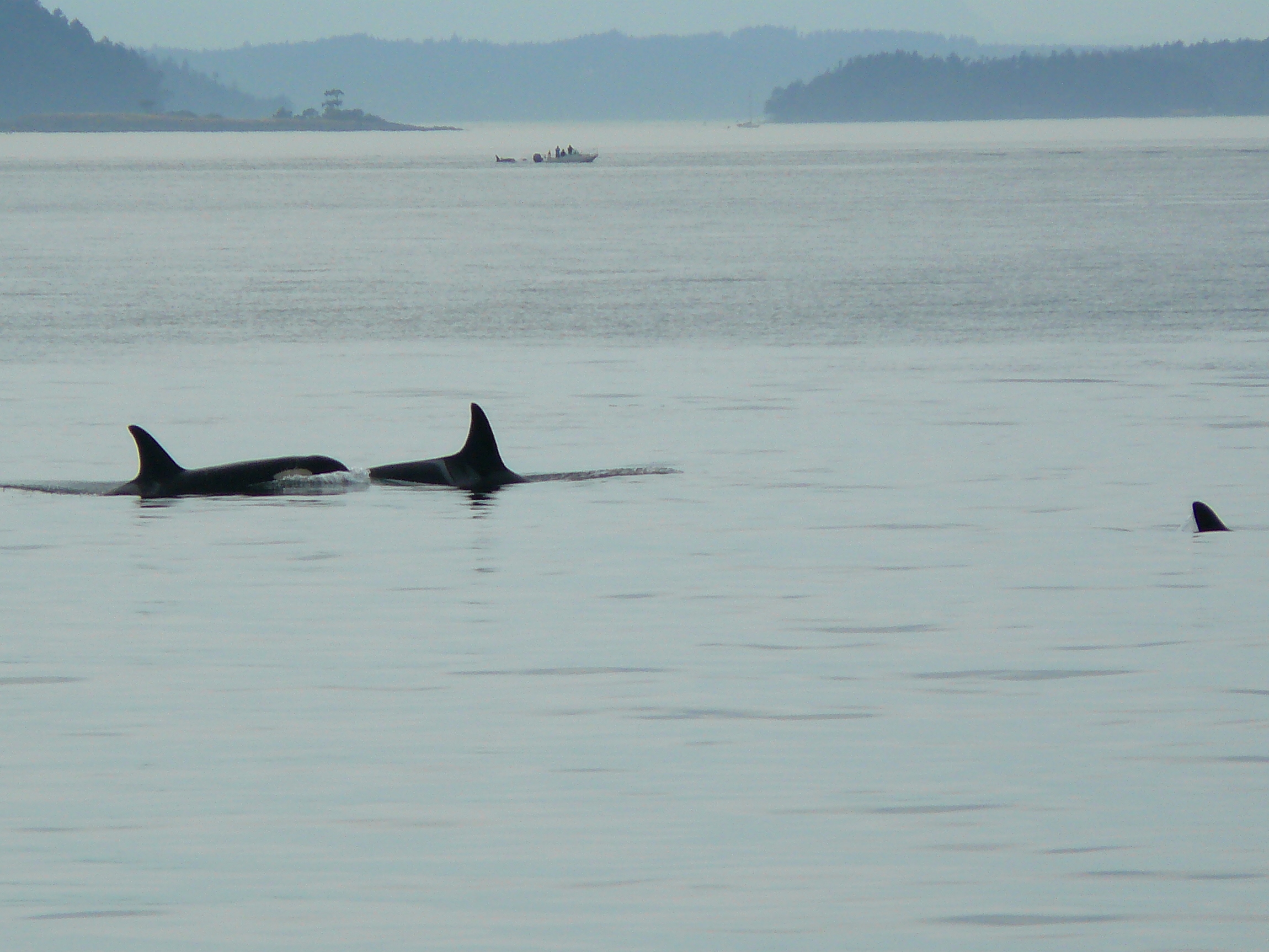
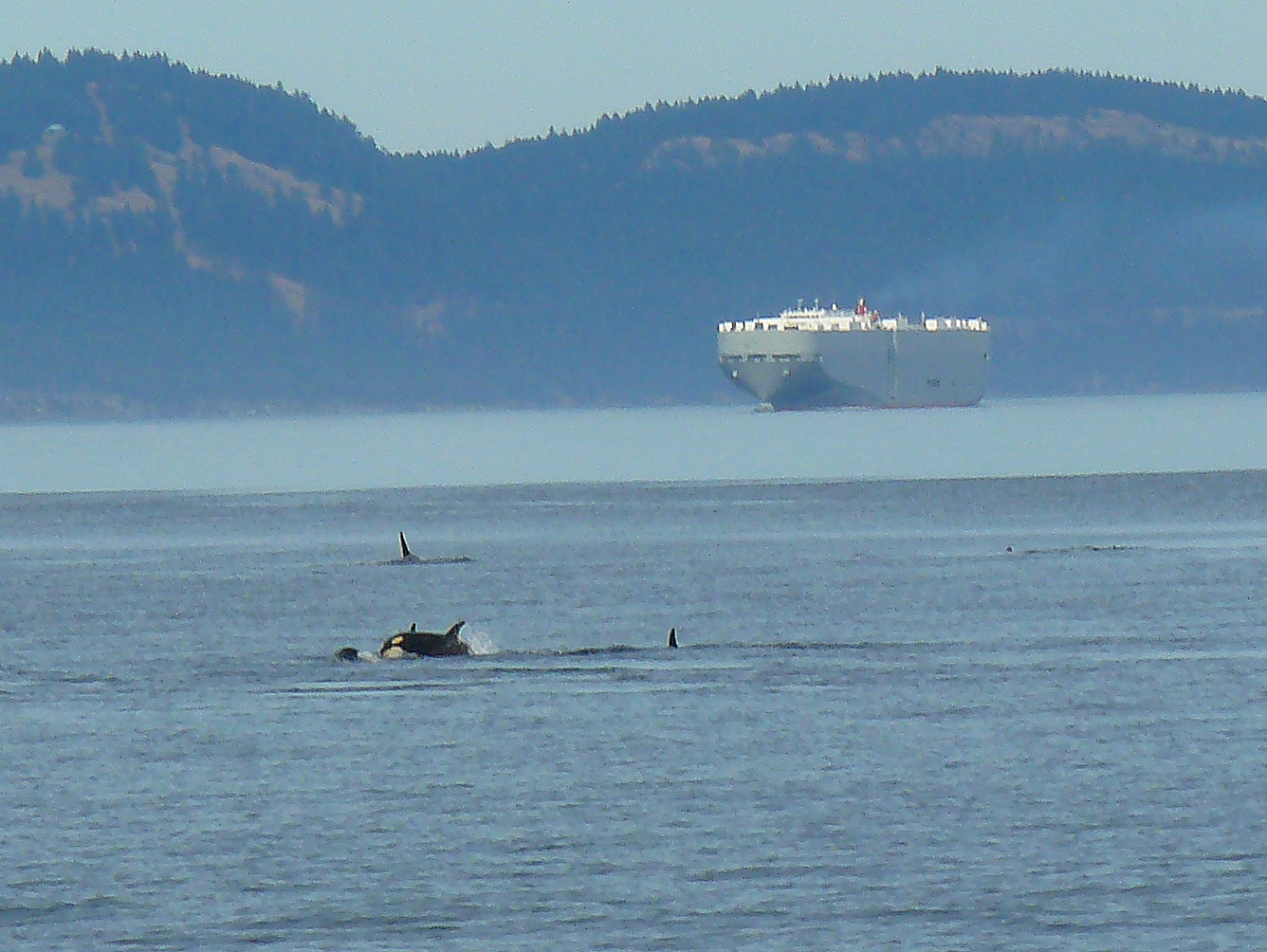
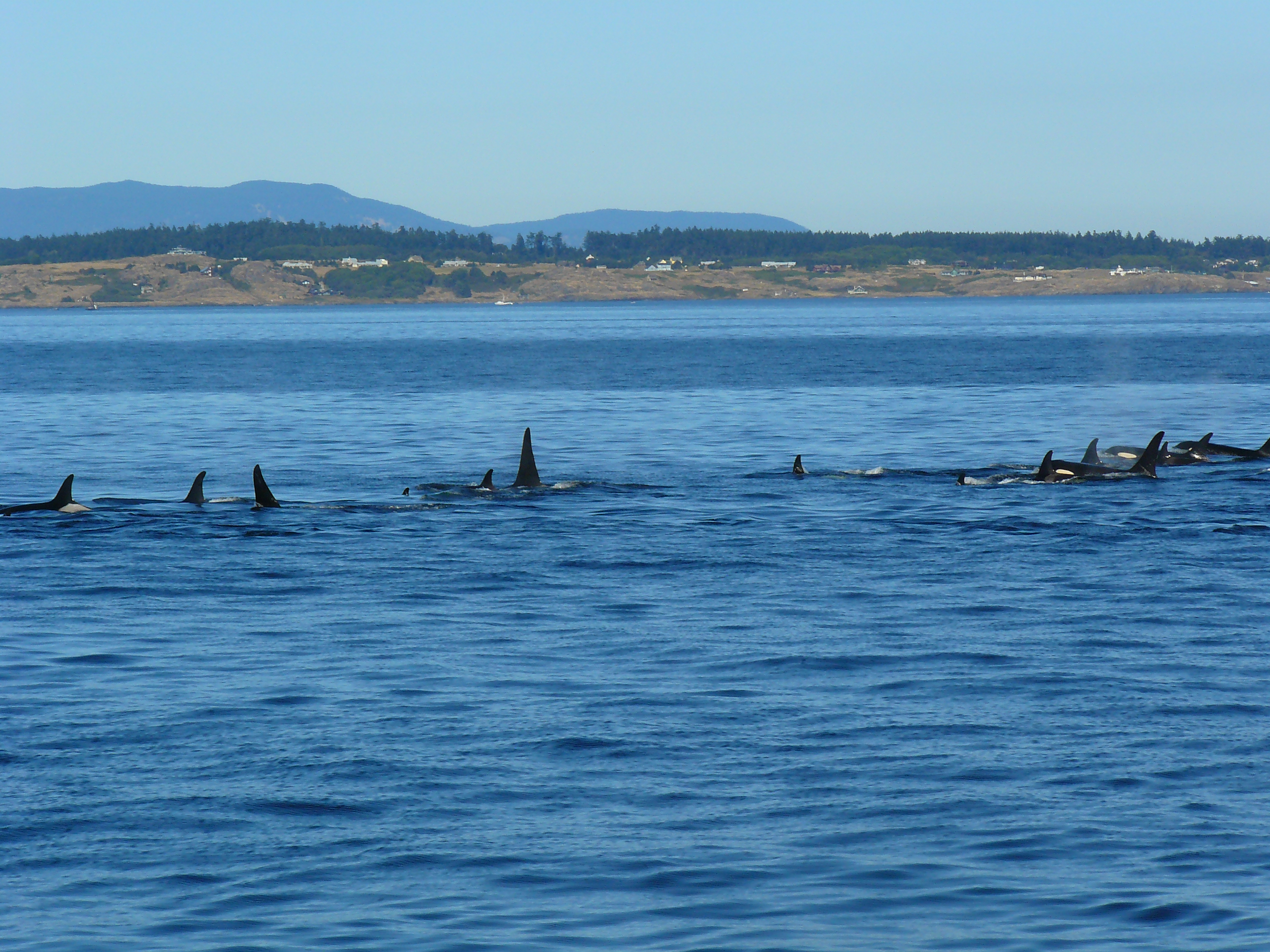
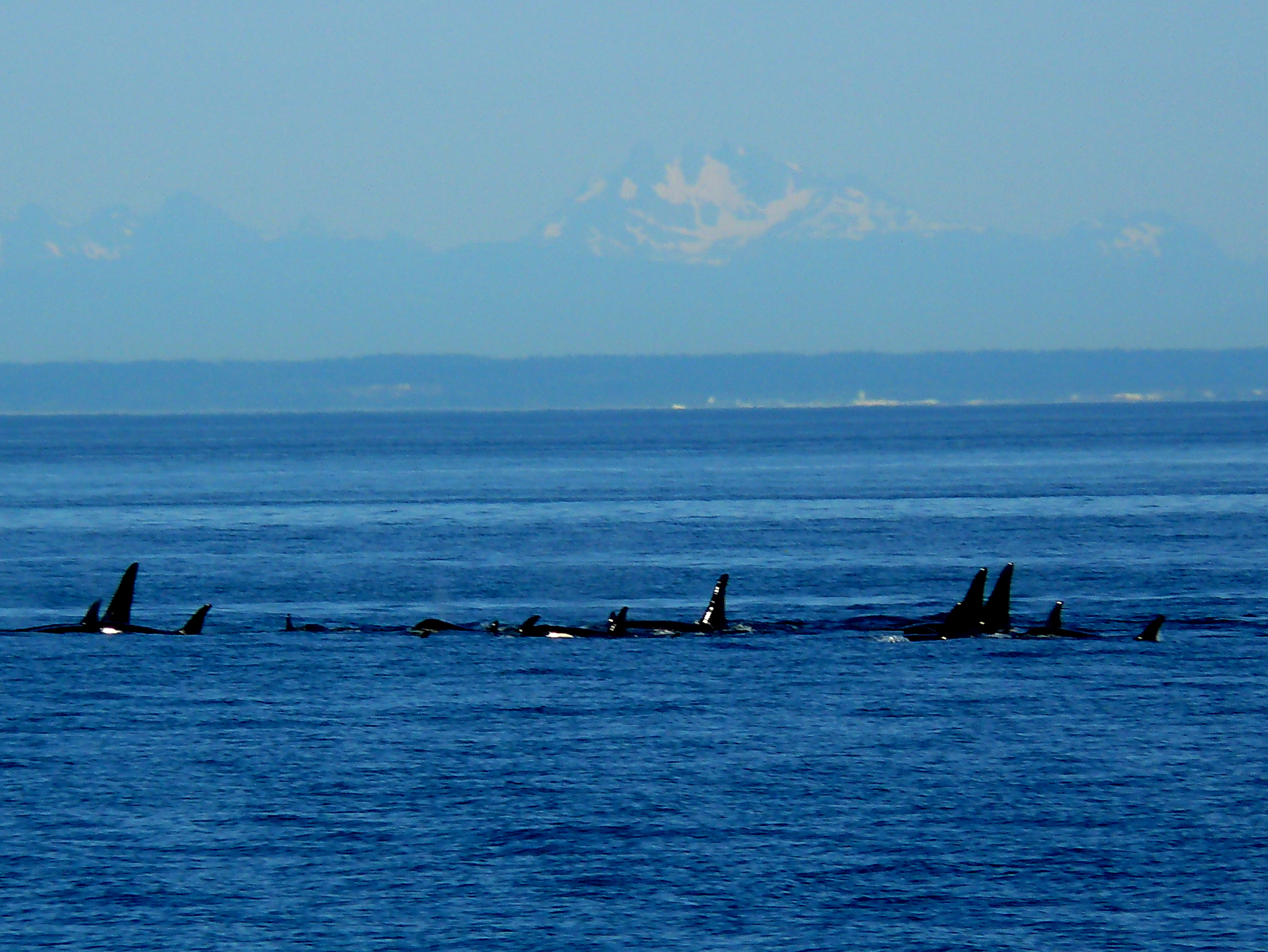
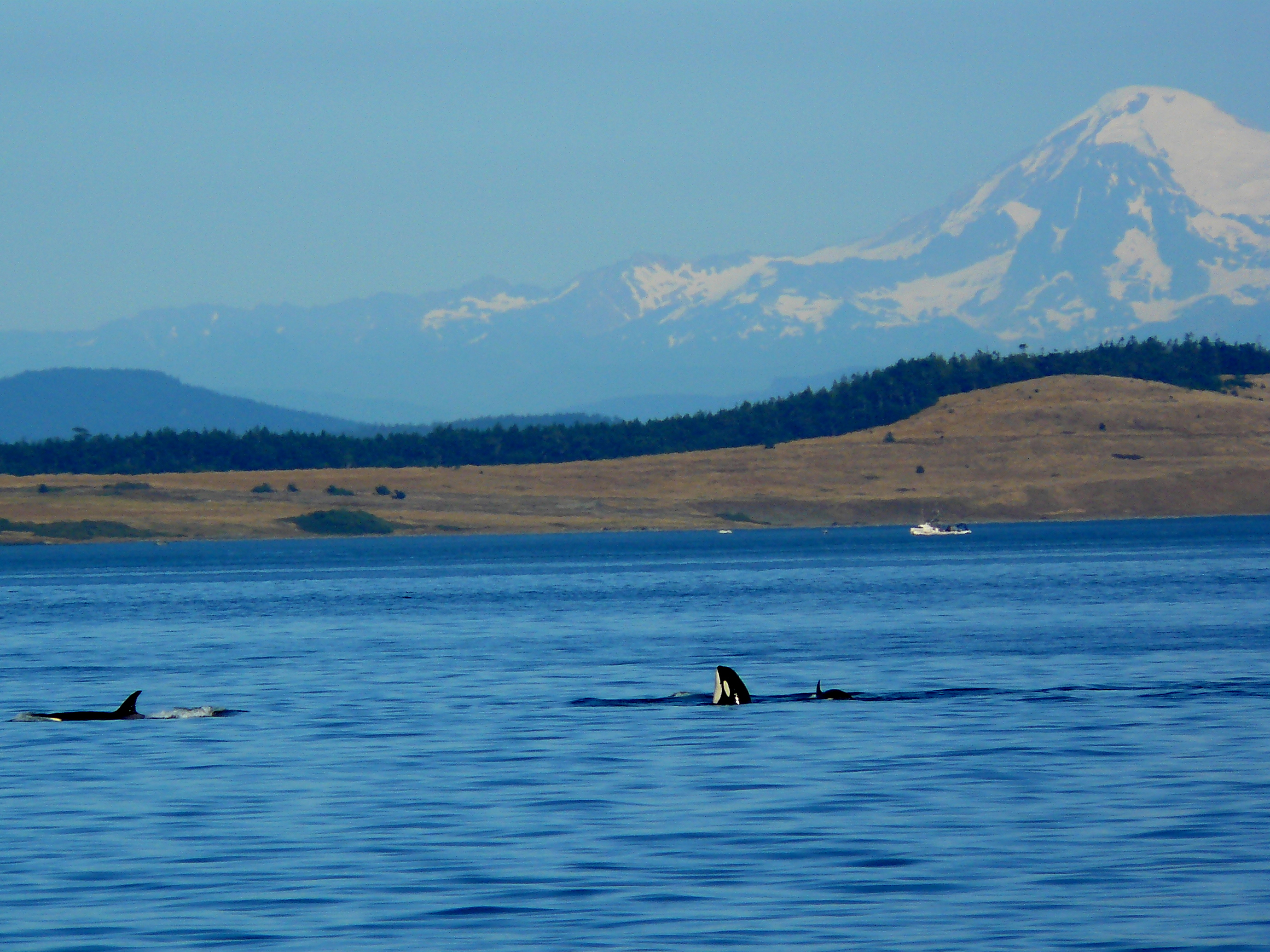
Another wondrous, memorable trip out into the Salish Sea! Calm, clear waters, like a pond with a minimal ebbing tide. More sun and many, 50+? whales heading northwest from about 3:15pm to 4:30pm, past Spieden and Stuart Islands. J-Pod and L-Pod Orcas spread out, some males further out in Haro Strait, while females with youngsters closer to shore. L-55 with the newest calf L-118 and the rest of her family were the trailing group, so they sped swam- ‘porpoised’ to catch up! All the groups gathered together as they had to decide which way to go at Turn Point. I guessed they were going to turn right, into Boundary Pass, and sure enough they did! L-Podders don’t go the other way through Active Pass, as much as J-Podders do. They spread out again, heading toward Saturna Island, surfing the wake of a large cargo ship, and a parting breach. Breathtaking to see the whales and waters, island and mountain backgrounds.
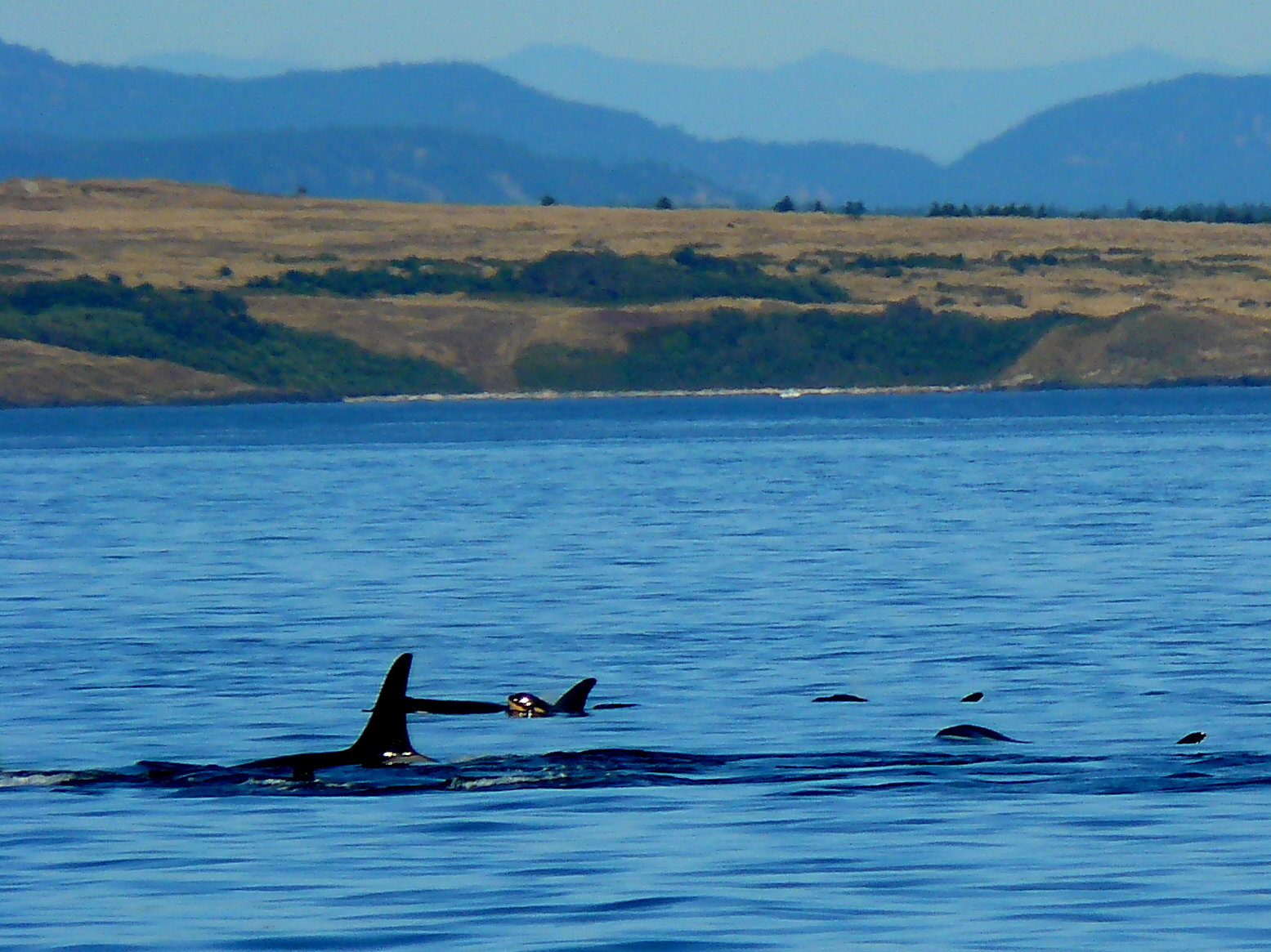
Another sunny, beautiful September summer day, with a minimal ebbing tide and slack water, I think the whales enjoy it too! J-Pod and L-Podders spread out in the Strait of Juan de Fuca from Salmon Bank to Middle Bank, all the way out to Hein Bank, a favored fish hunting region. From about 3:25pm until 4:30pm, the Orcas were slowly milling about, making direction changes, chatting-vocalizing! Young, 16 year old J-30 Riptide and 21 year old L-84 Nyssa seemed to be goofing off, playing, and frisky, as they swam close together and we saw J-30 going on his back, flashing his ‘pink floyd’! Maybe he was showing off, competing with L-84?! Dolphins and whales have shown as frisky behavior as us humans! Many Steller Sea Lions, Harbor Seals, and Harbor Porpoise in San Juan Channel.
J-14 Family
J-19 Family
J-30 Riptide on his back, showing his pectoral fin, and L-84 Nyssa
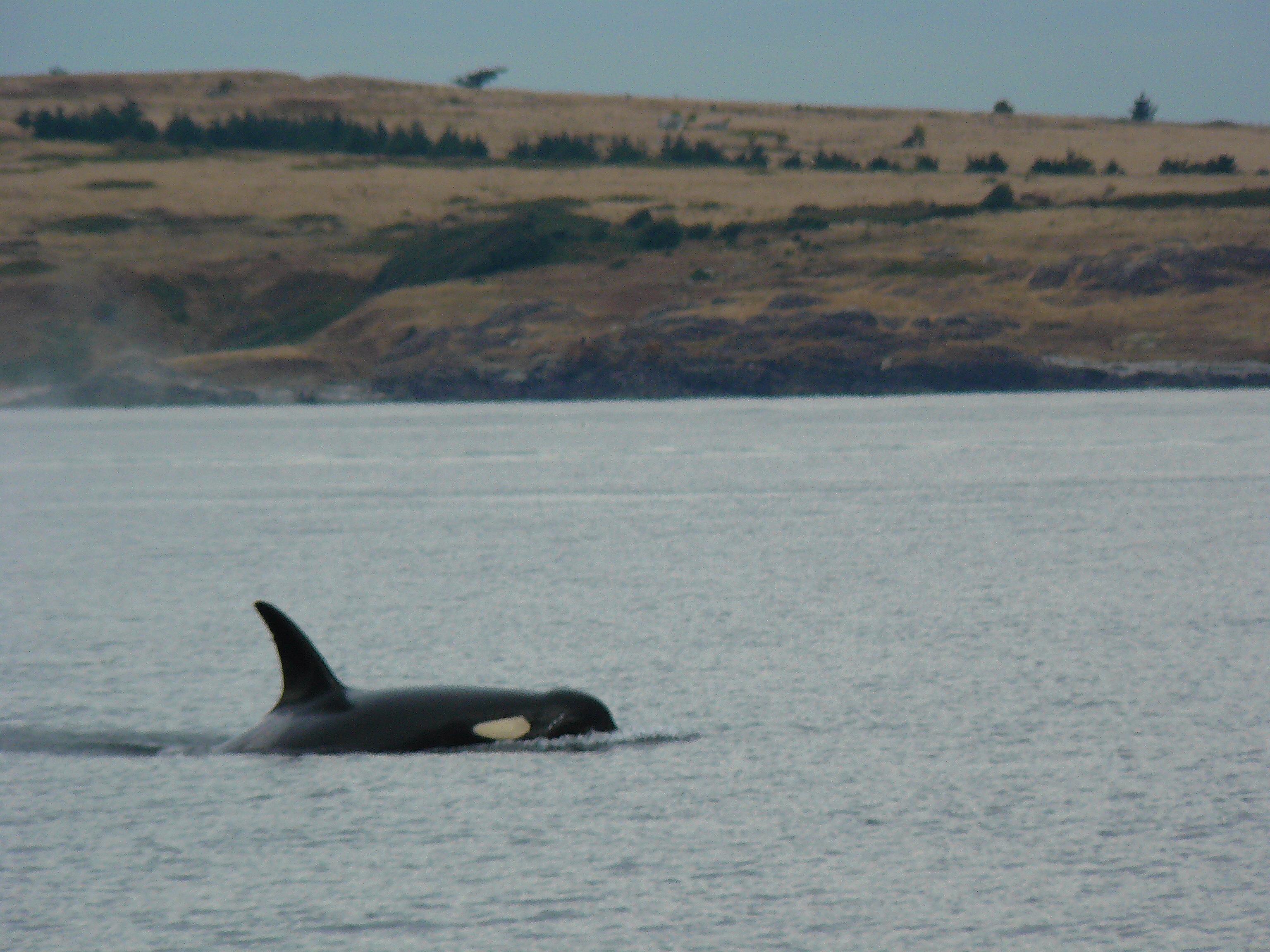
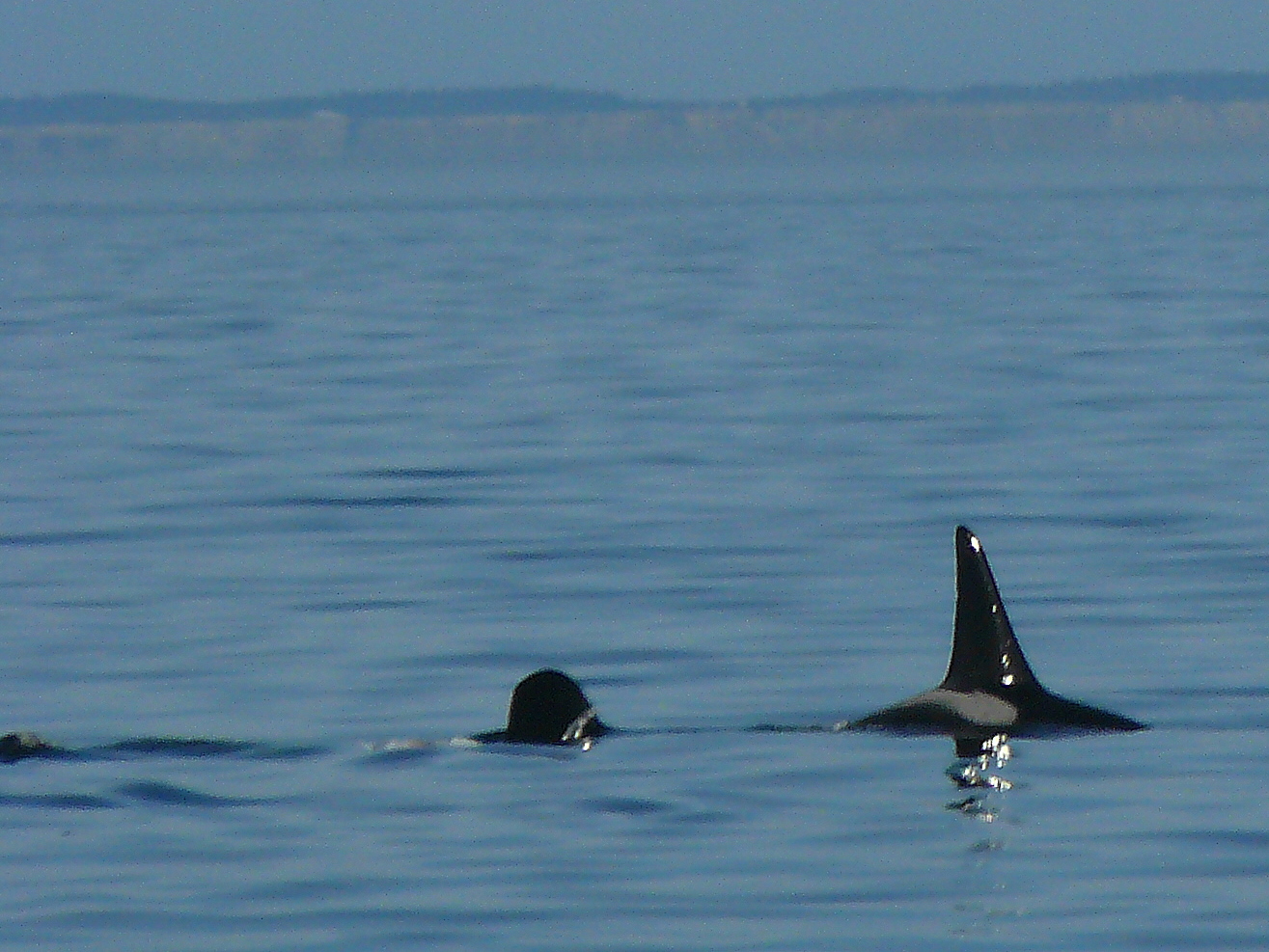
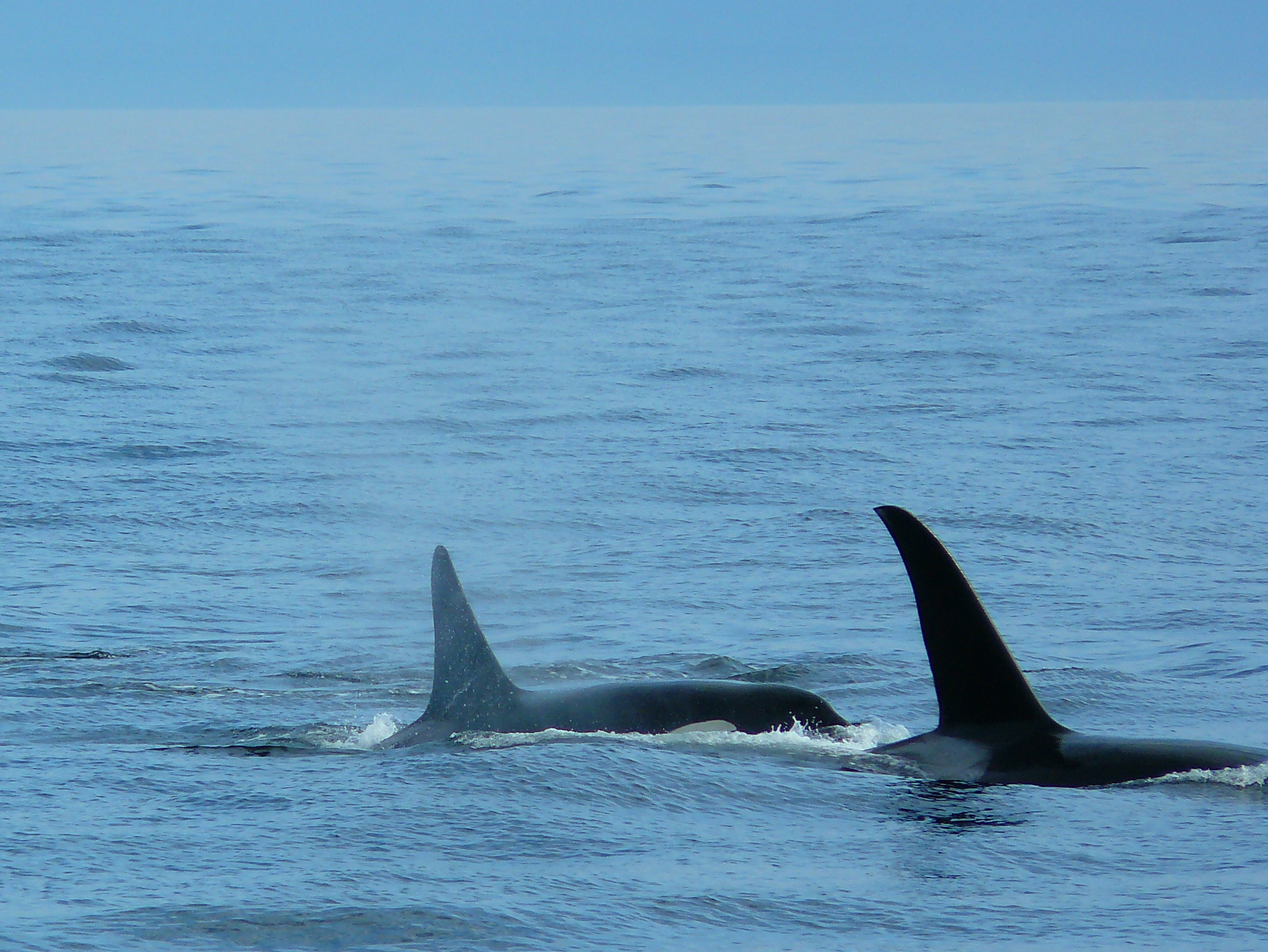
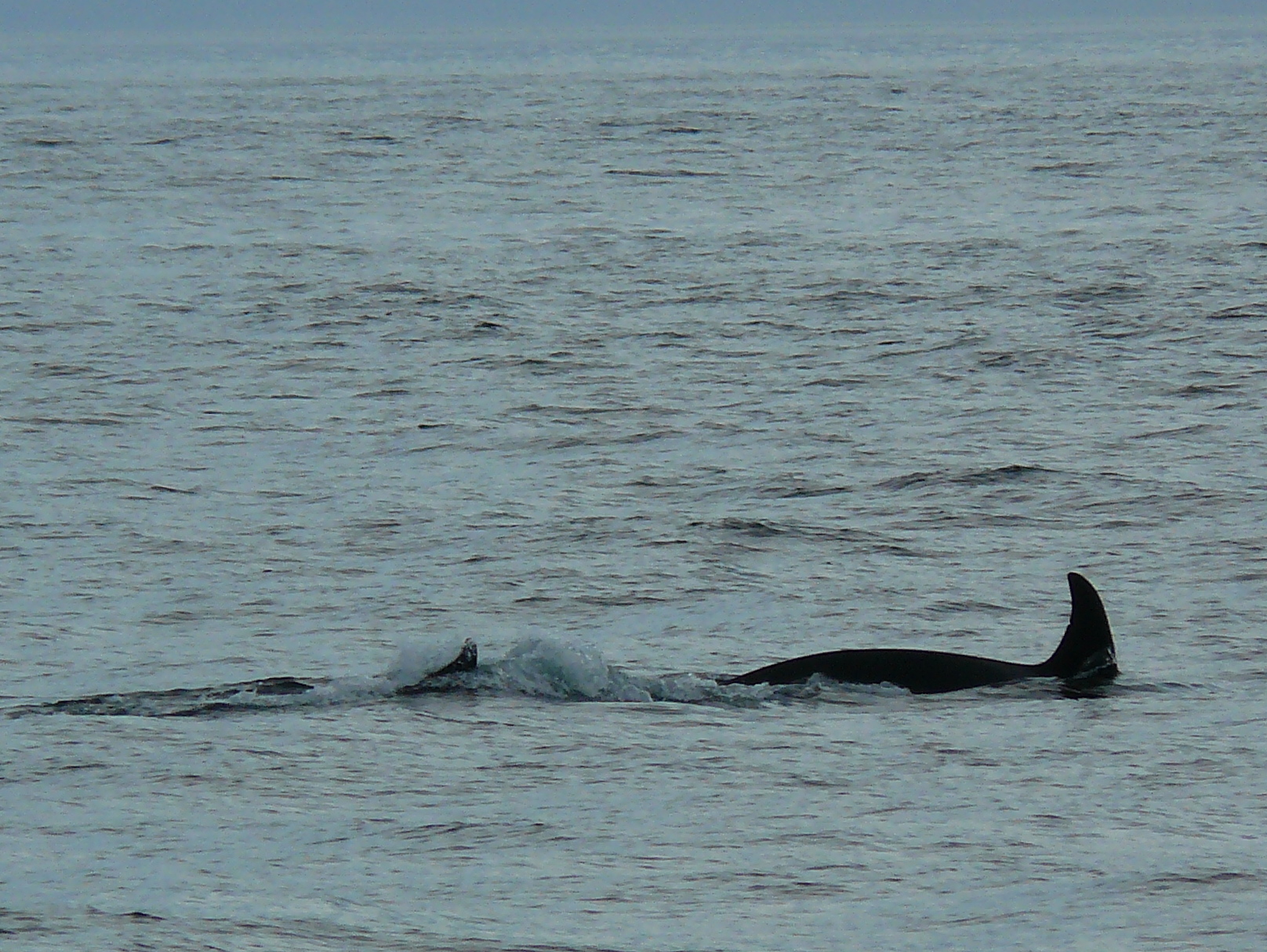
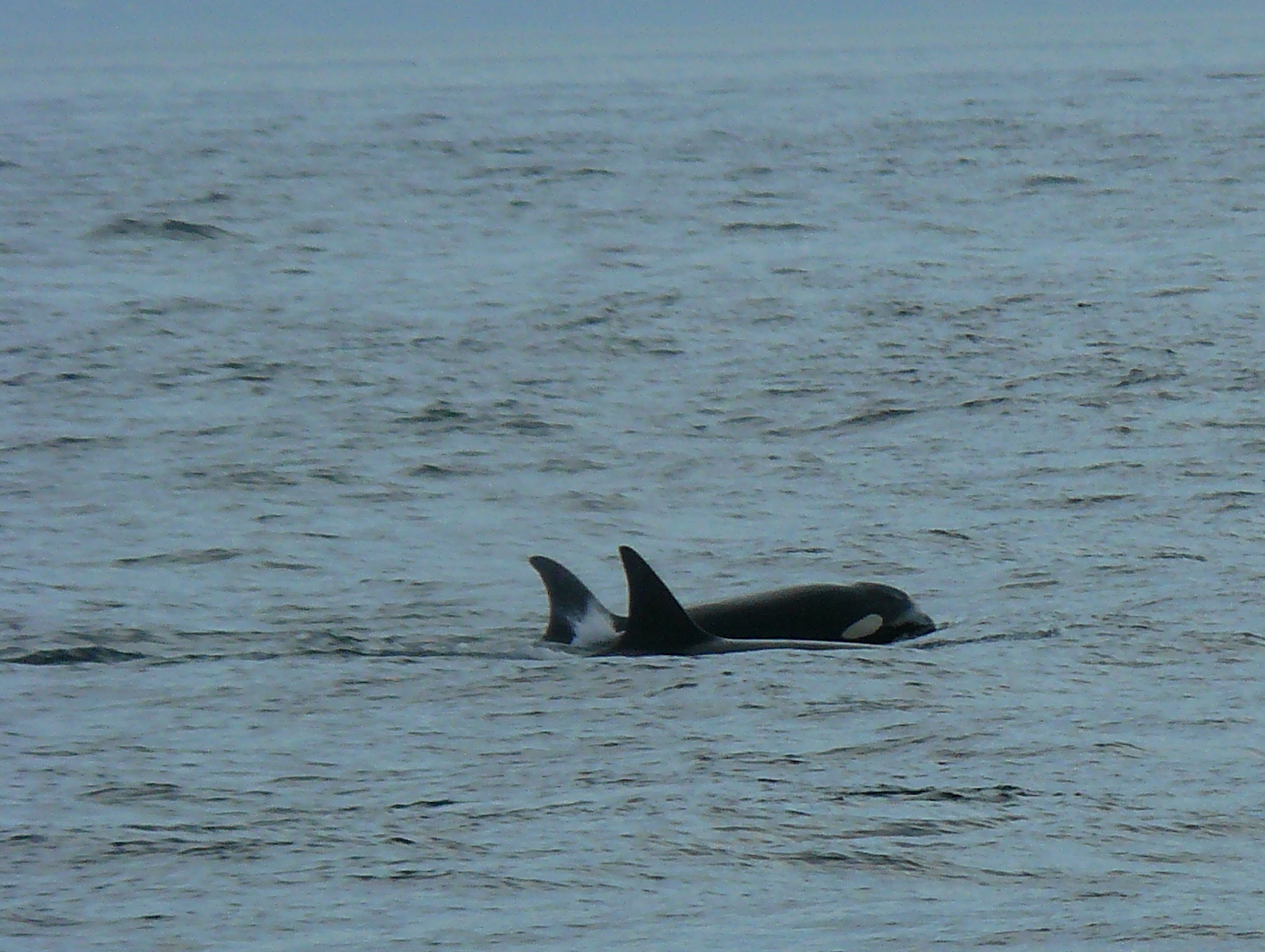
Monday the residents headed back out to the Pacific, and sure enough transient families are noticed! We went to Canada, south of Discovery Island in the Strait of Juan de Fuca, from about 3:55pm to 4:25pm, although a 4’ flooding tide, the water was smooth, the sun came out for a bit! Reports were of 33 year old T100 and her 3 youngsters, 38 year old T101 with her 2 youngsters, and a 27 year old male T102. We also saw a third group I think may have been 44 year old T30 with her 3 offspring, as that male looked like her son, 25 year old T30A. Nice to see the youngsters from 5 to 14 years old, and the mature transients, all 12 killer whales, traveling close together. Unusually, one whale kept coming up sideways, showing its belly! No porpoise or seals out there- maybe they got the word! Back towards Salmon Bank and San Juan Channel appeared Dall’s Porpoise, Harbor Porpoise and Seals, and Steller Sea Lions.
Over the years I have noticed something about the Orcas, porpoise, migrating marine birds, Steller Sea Lions, Harbor Seals and pups, all the life of the Salish Sea, and September, is special. We see more gatherings of the pods, more active above surface behaviors, in some of the warmest, nicest conditions. Are the whales well fed from the spring and summer salmon? Are they planning their expanded travels to find enough salmon to sustain them in the fall and winter? Are they socializing, saying their goodbyes, like we are to them? Off of Hein Bank in a fairly strong 7’ flooding tide at about 4:00pm to 4:30pm, we were awed by J-Pod, K-Pod, and some L-Pod families energetically spyhopping, breaching, cartwheeling, headstands-tail flukes held in the air!, tail fluke lobbing and slapping the water, pectoral fin slaps on the surface, and some whales moving upside down on their backs!! Wonderful to see J-2, 100 year old Granny just as active, and hear their chatter on the hydrophone. The kitten like K vocalizations are distinct and J’s S-1 call! We saw salmon jumping out of the water on our way back in, so hope the whales found the kings- Chinook Salmon, and are feasting well!
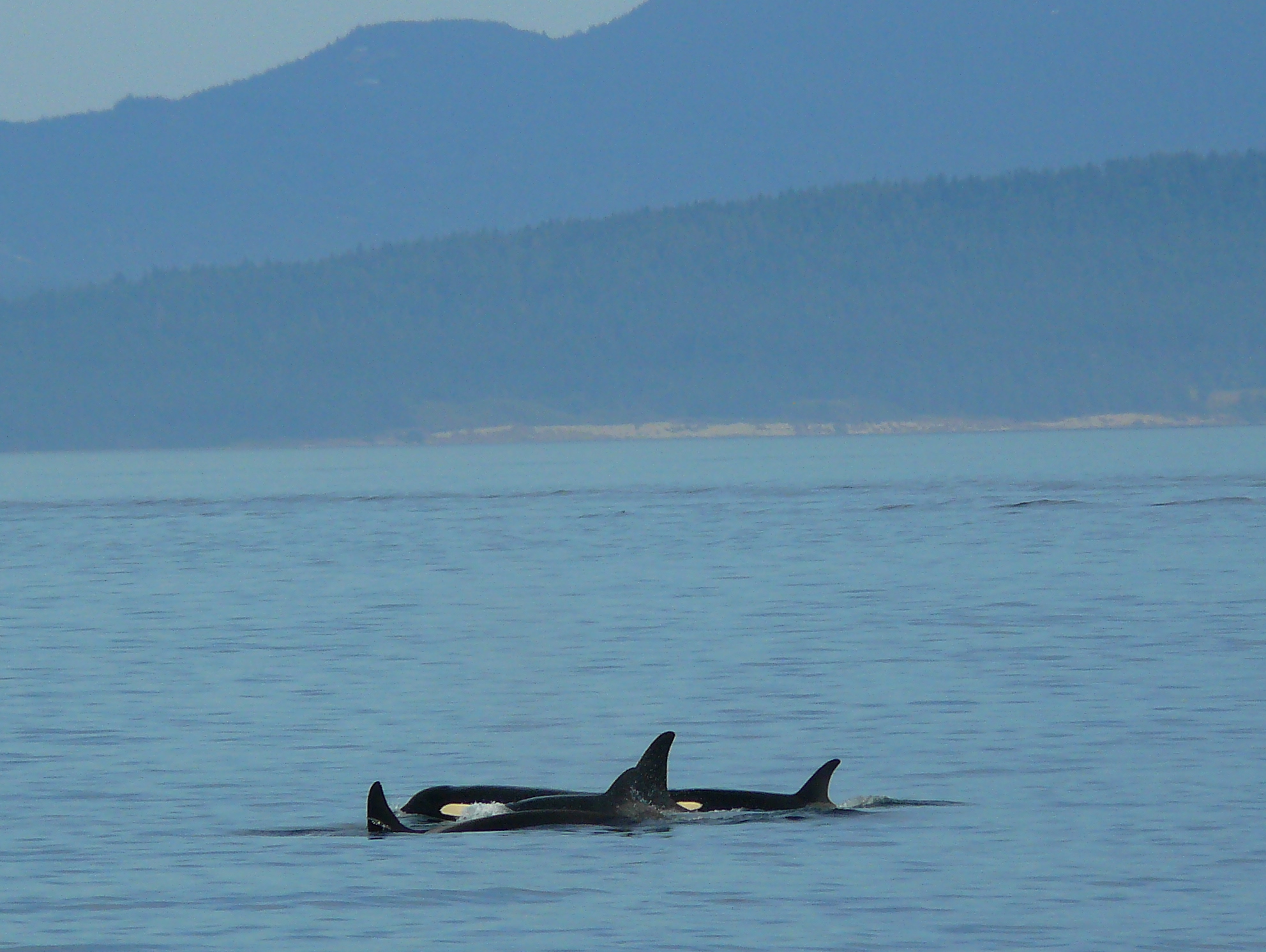
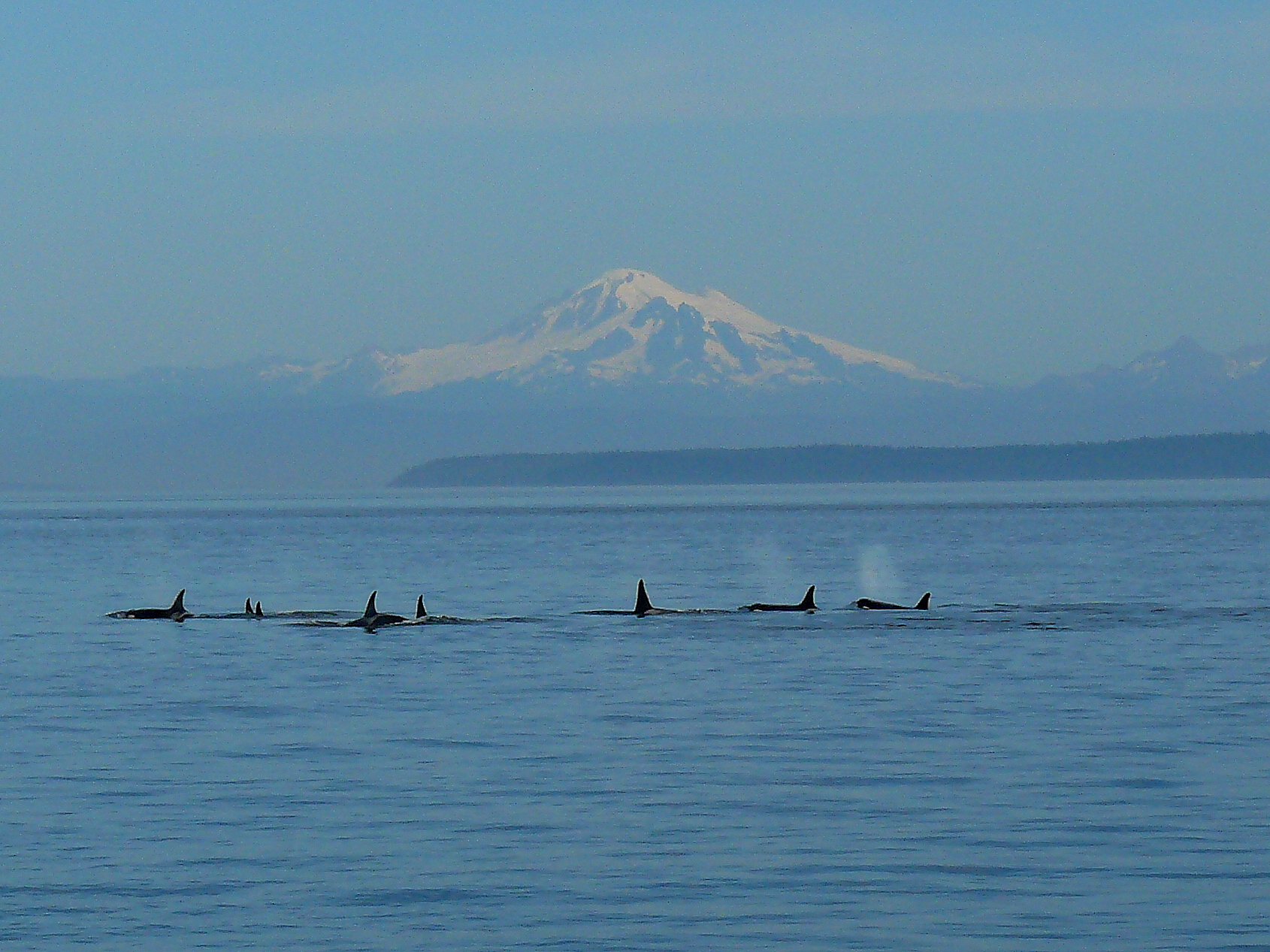
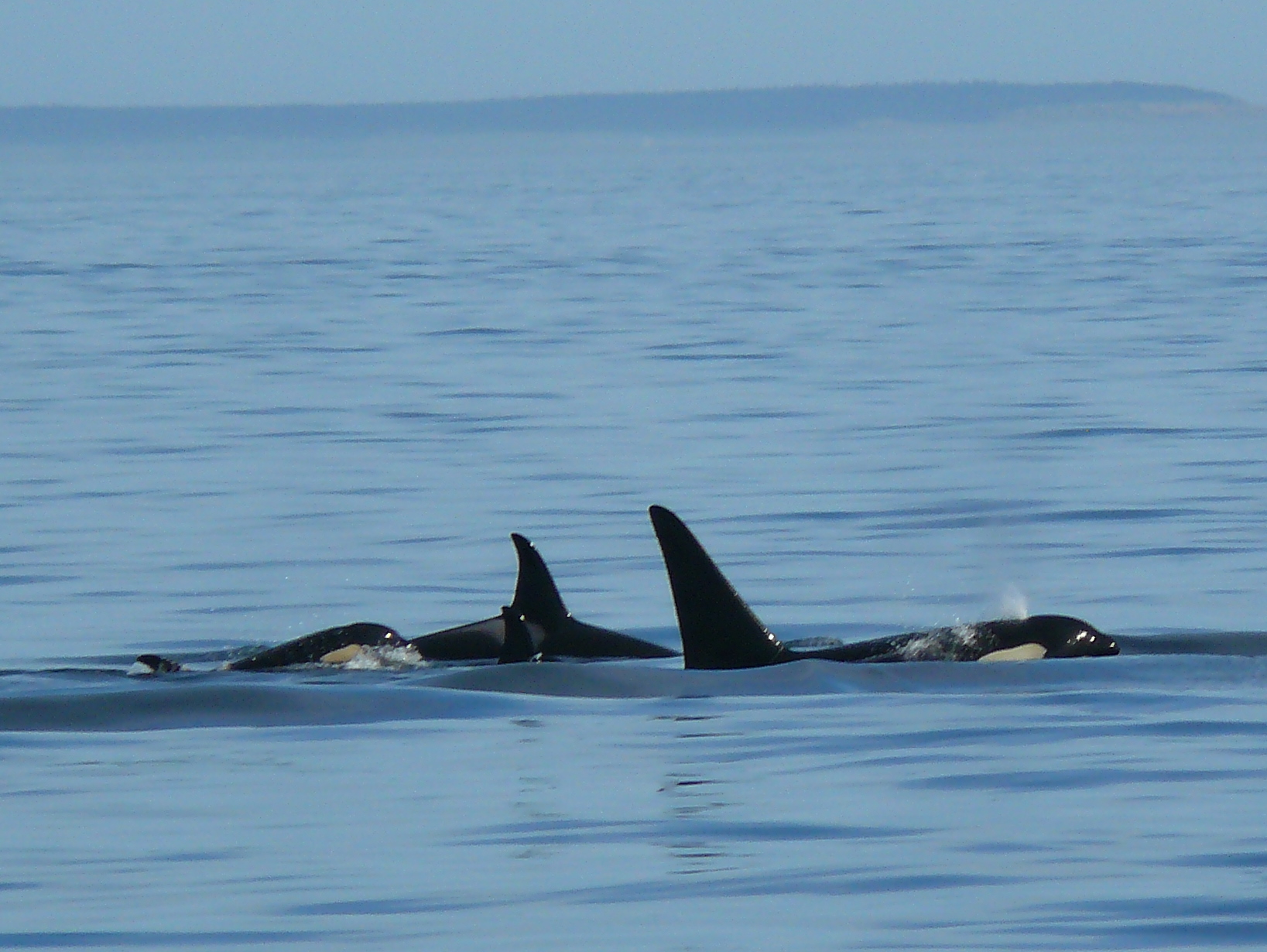
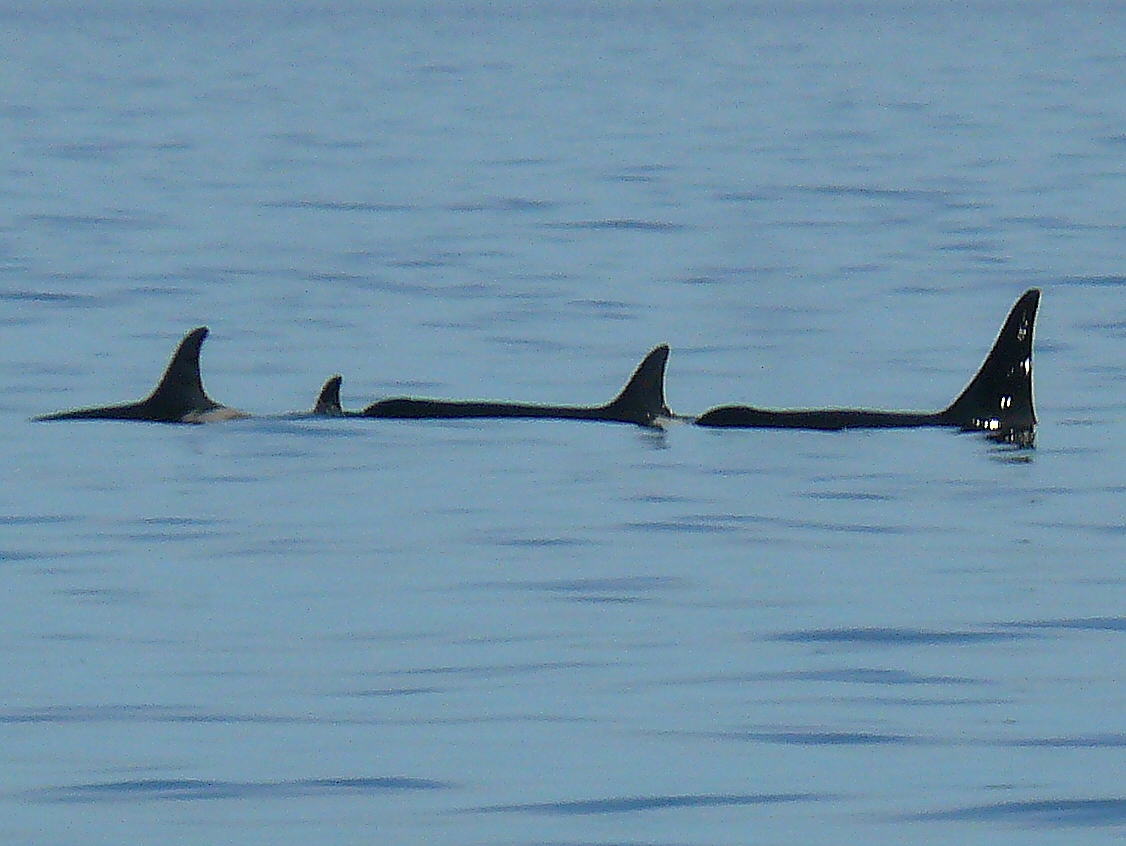
Resident Orcas had been out of our range, heading out to the Pacific Ocean, which is typical as their preferred prey, the summer Chinook Salmon finish their swims to spawning grounds and fall Chinook Salmon (hopefully) start coming into the Salish Sea. Today a beautiful experience, from 3:32pm to 4:30pm, to see 2 large groups of J-Pod, K-Pod, and orphan 19 year old L-87 Onyx! (He has been sighted with J-Pod for the last 2 seasons, so an honorary J-Podder now?!), I think it was also the warmest day of the year and we enjoyed the calm, glass like slack water, where the flooding, high tide had finished, then a mild ebbing, low tide, so not a lot of currents and good visibility. I wonder that the whales enjoyed it too, choosing to rest a bit, shoulder to shoulder, slowly swimming, zigzagging the area off of False Bay to Hein Bank in the Strait of Juan de Fuca. Hard to describe the magical encounter, hopefully the videos will share the moment!


 OnBoard Tours Whales