August 10, 2015
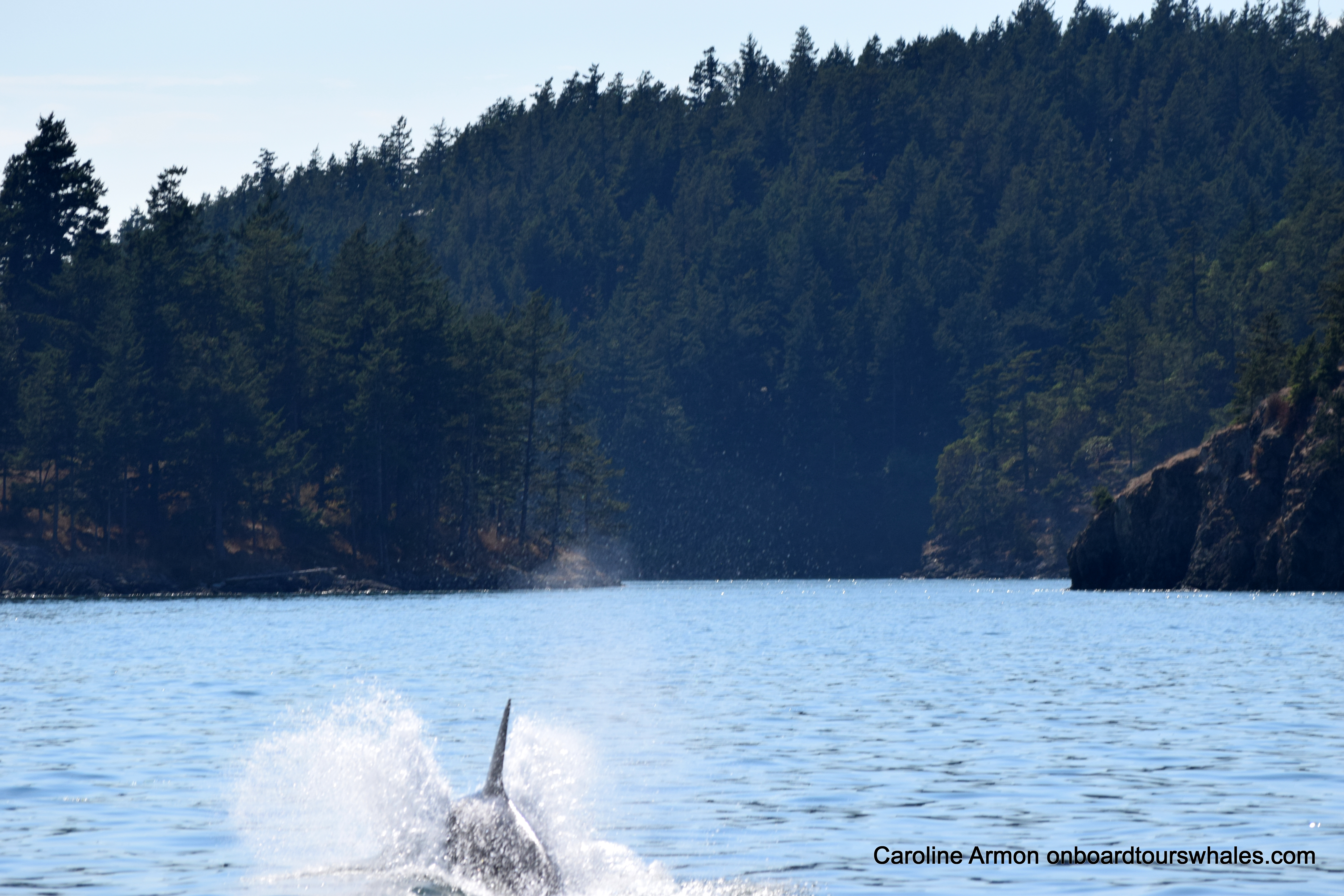
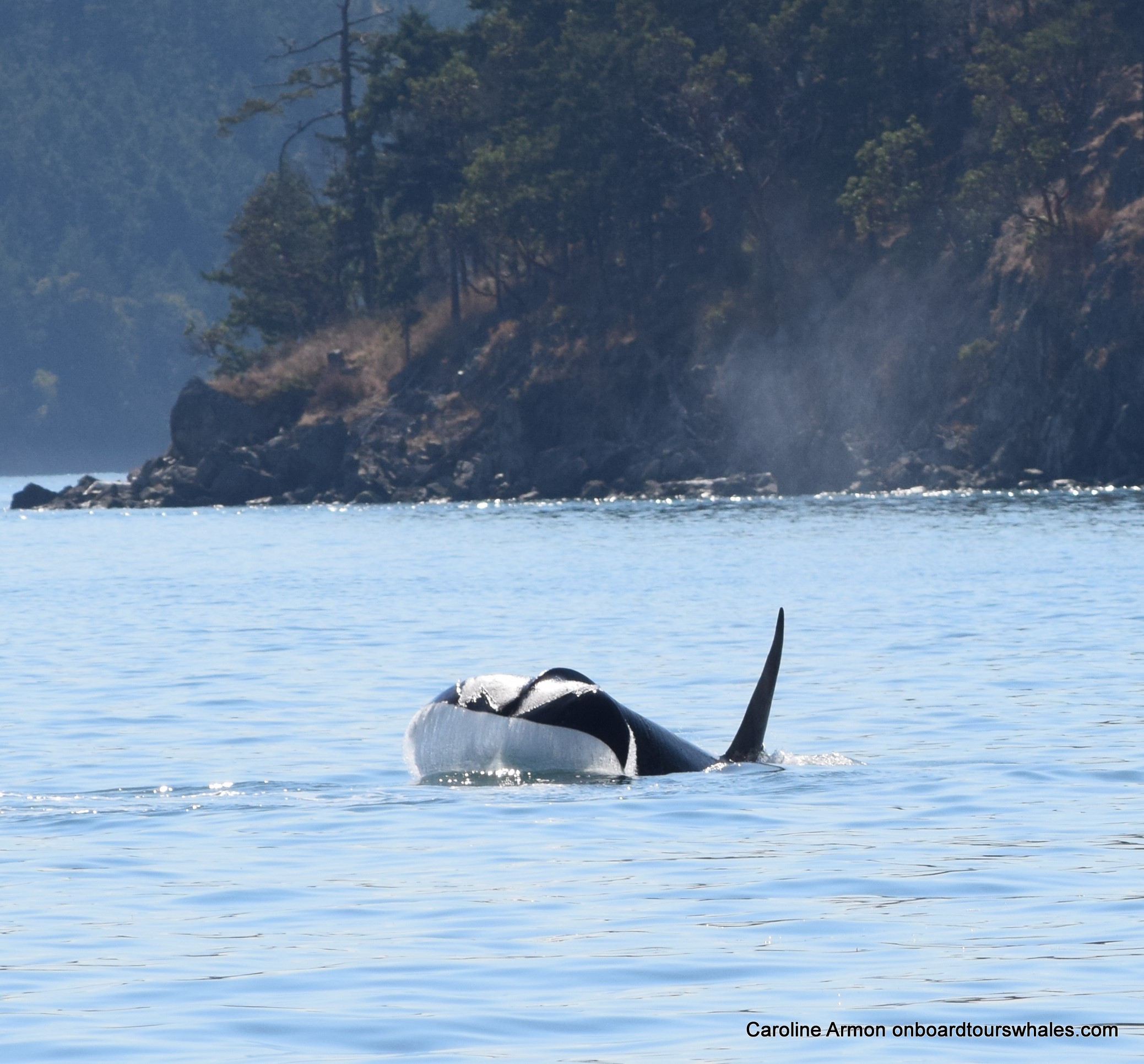
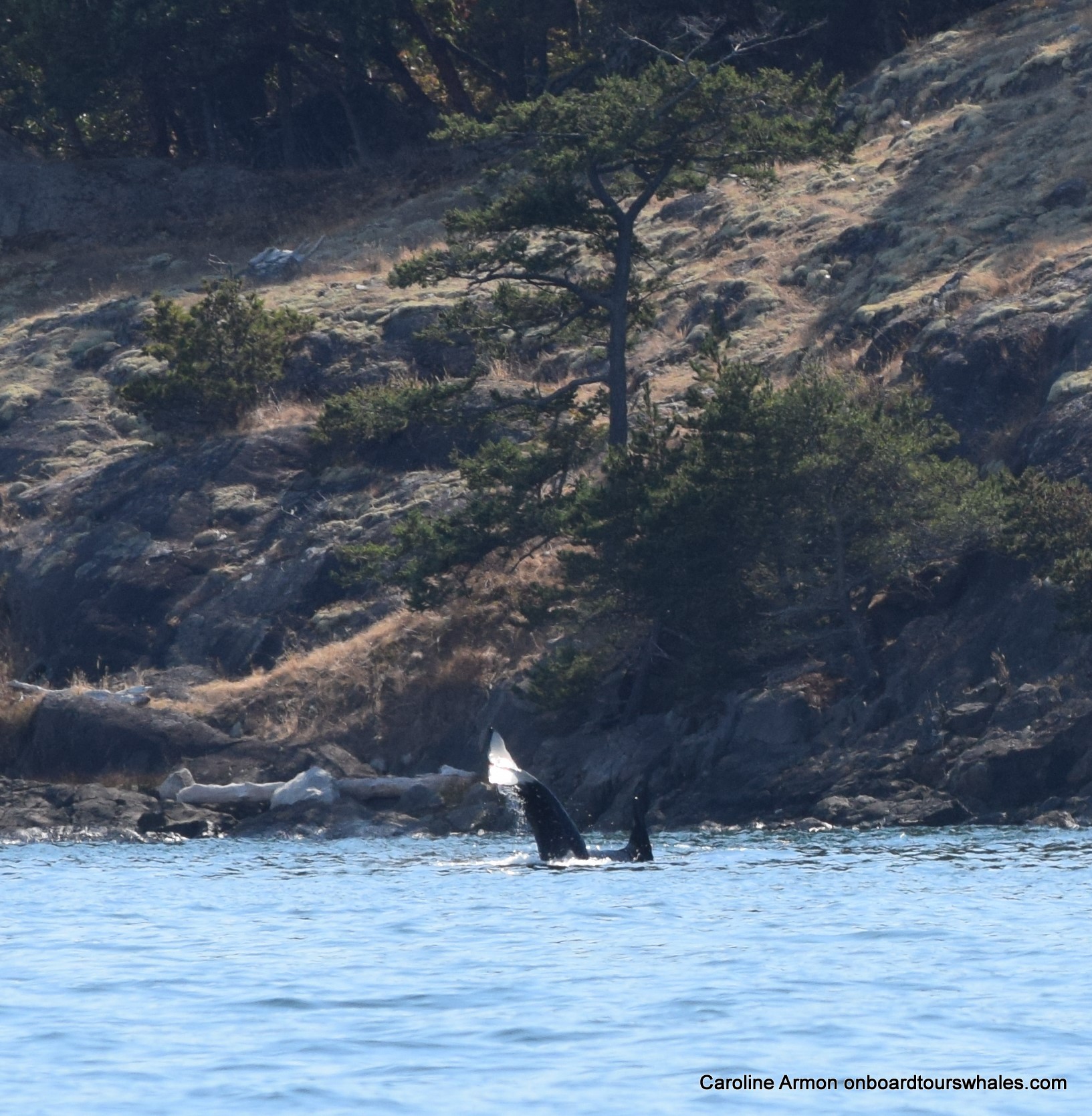
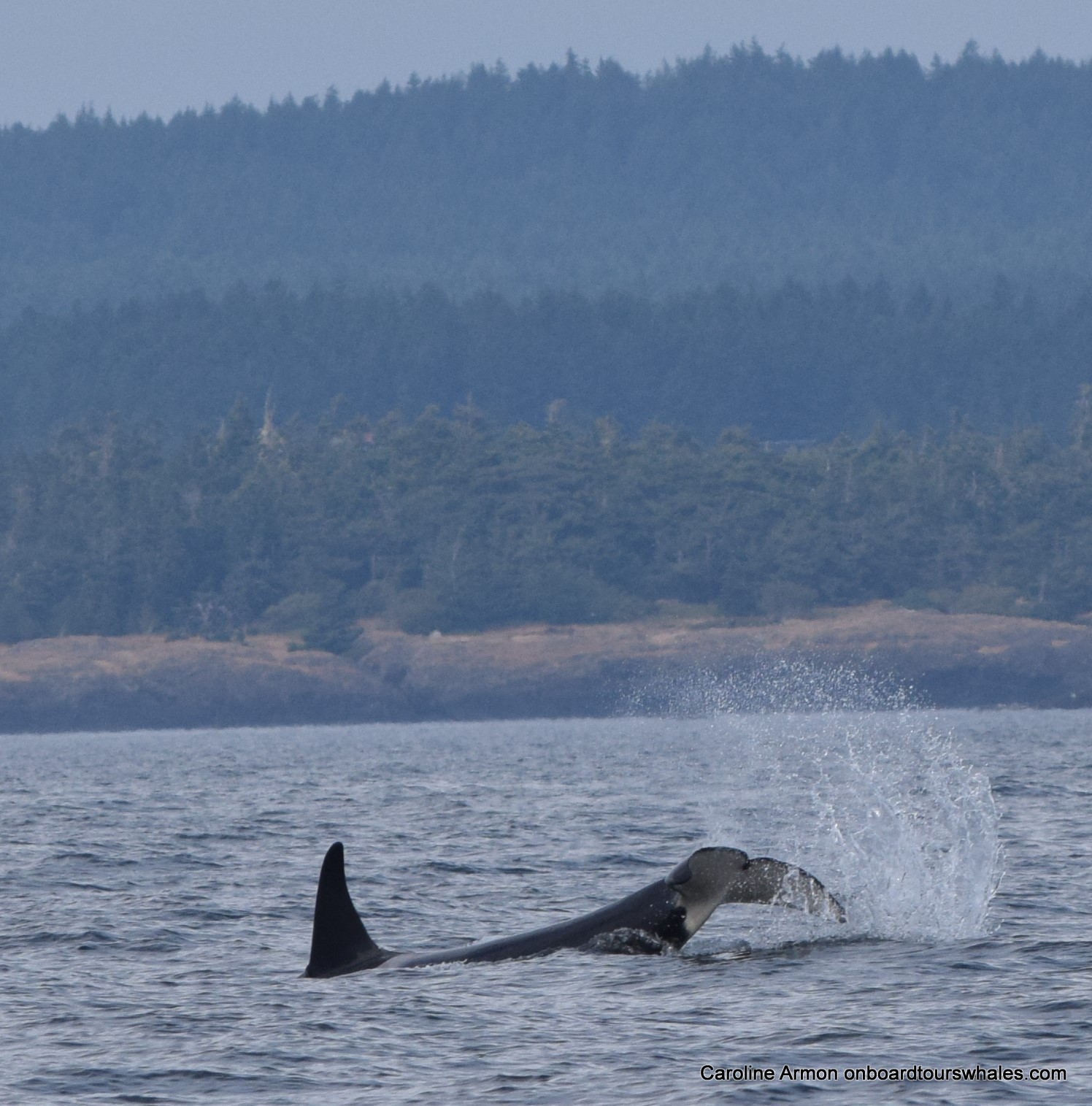
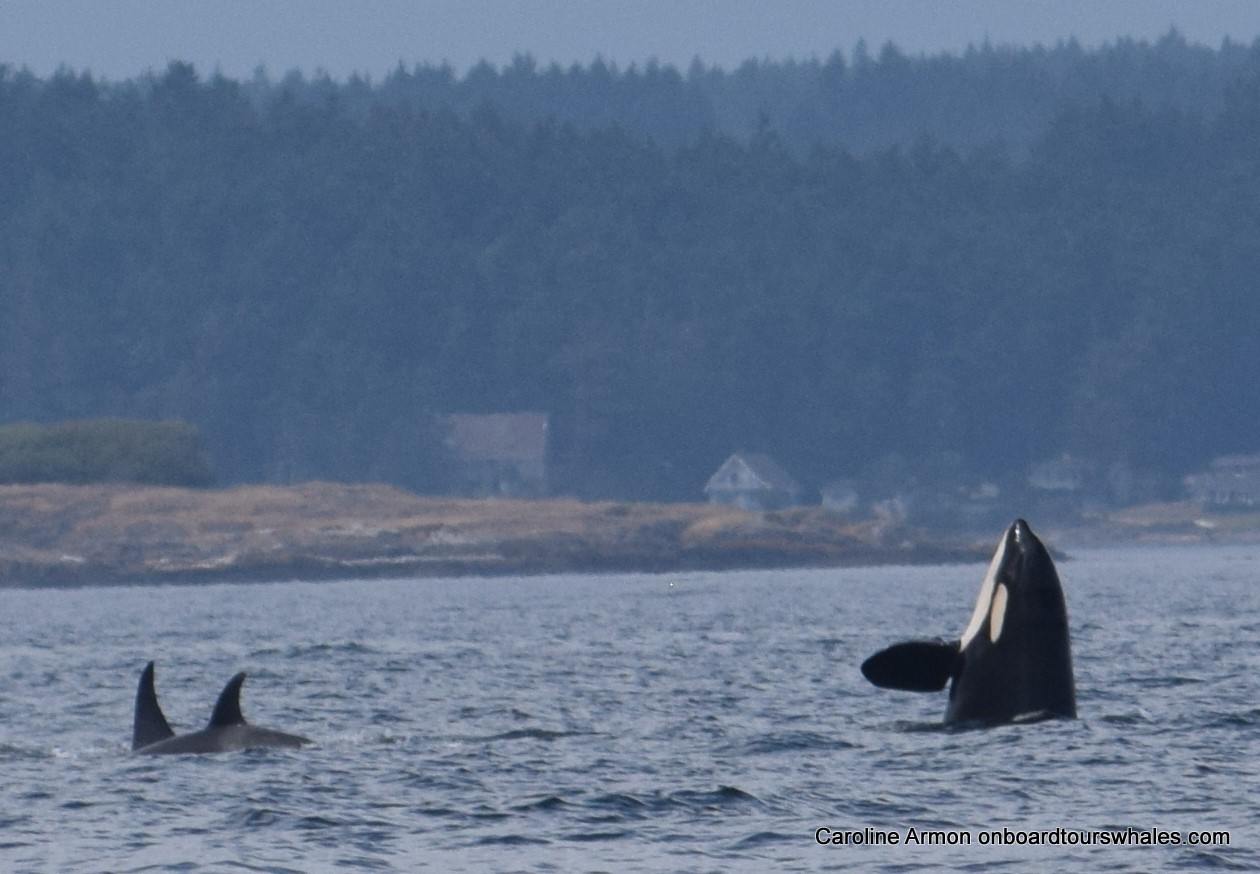
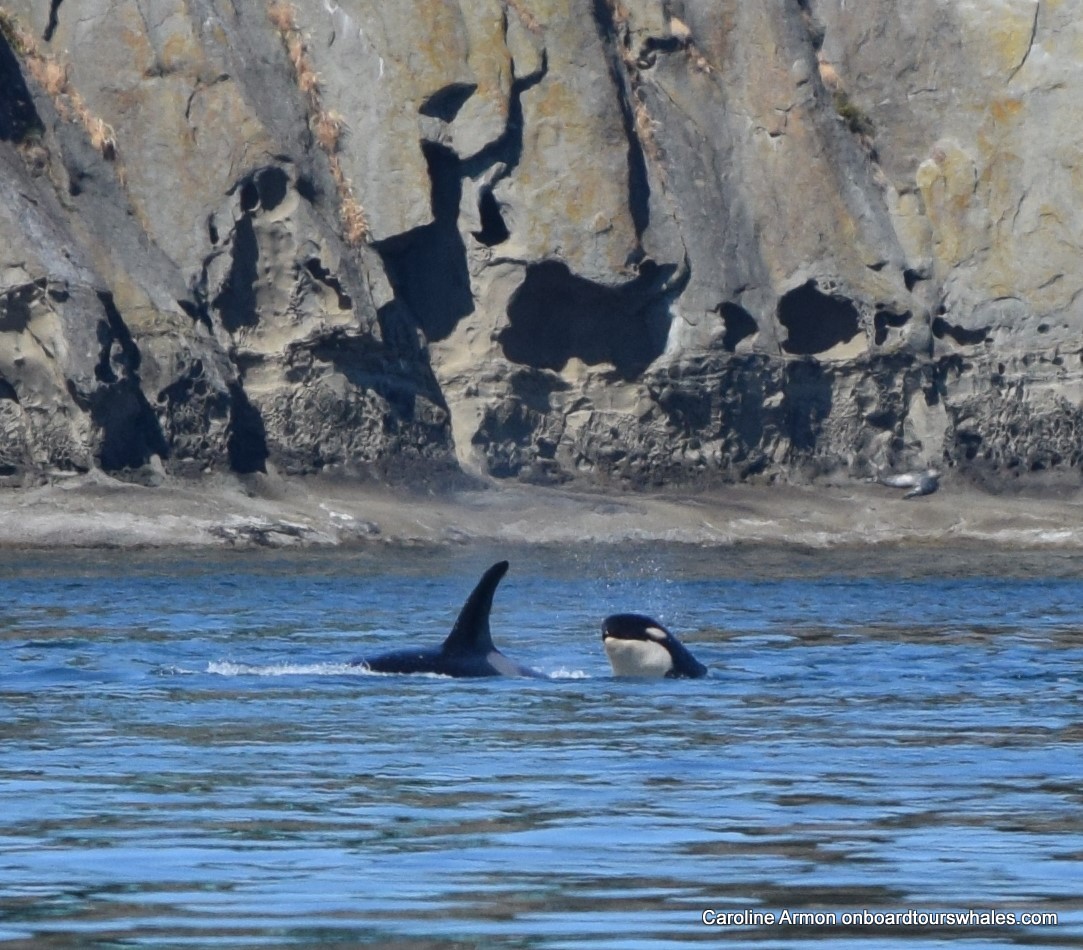
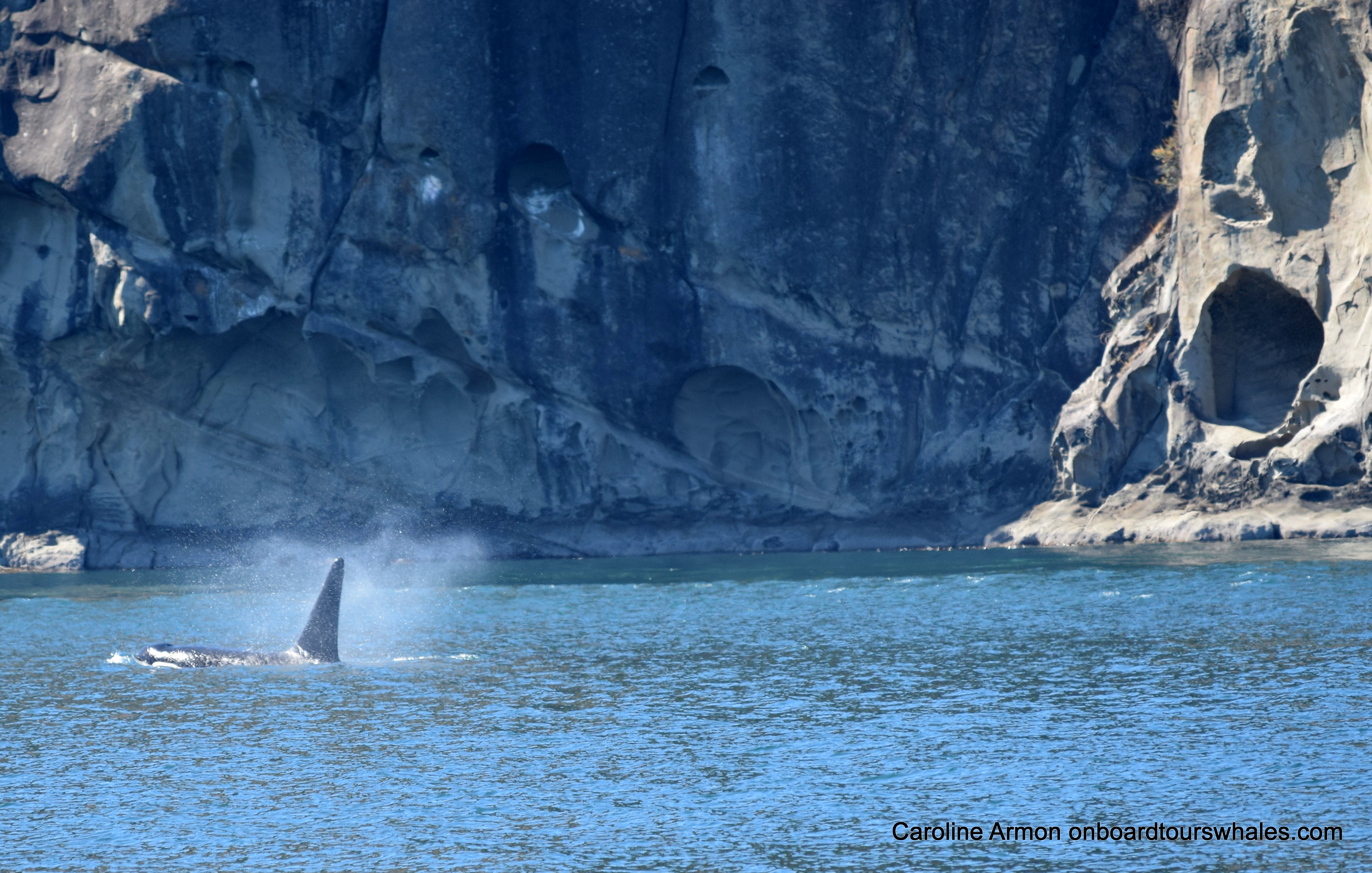
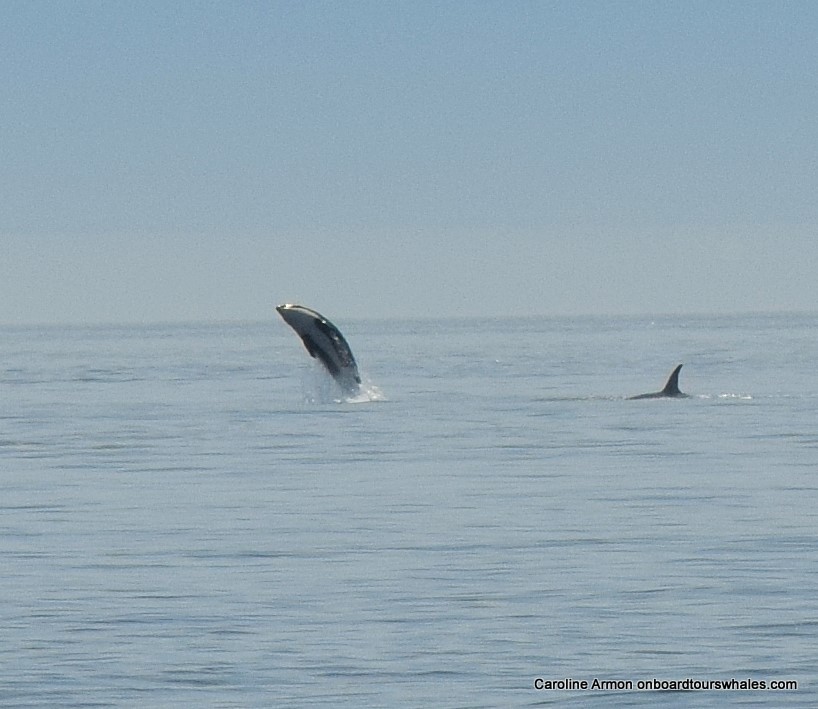
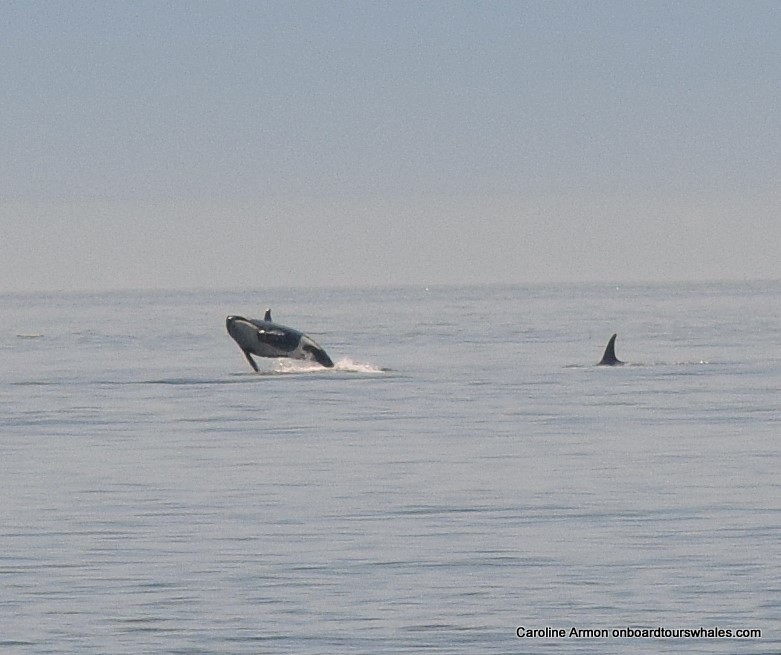
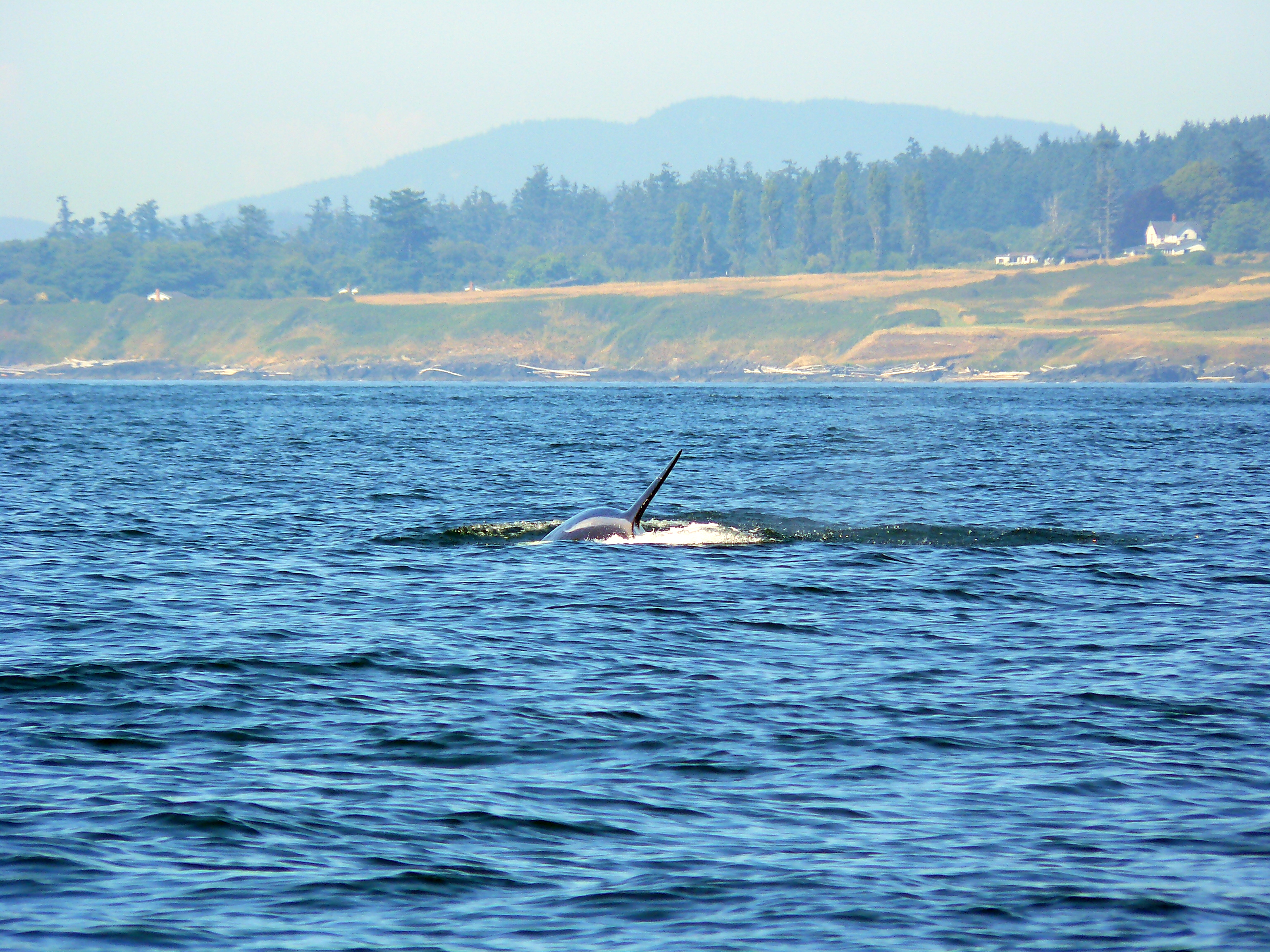
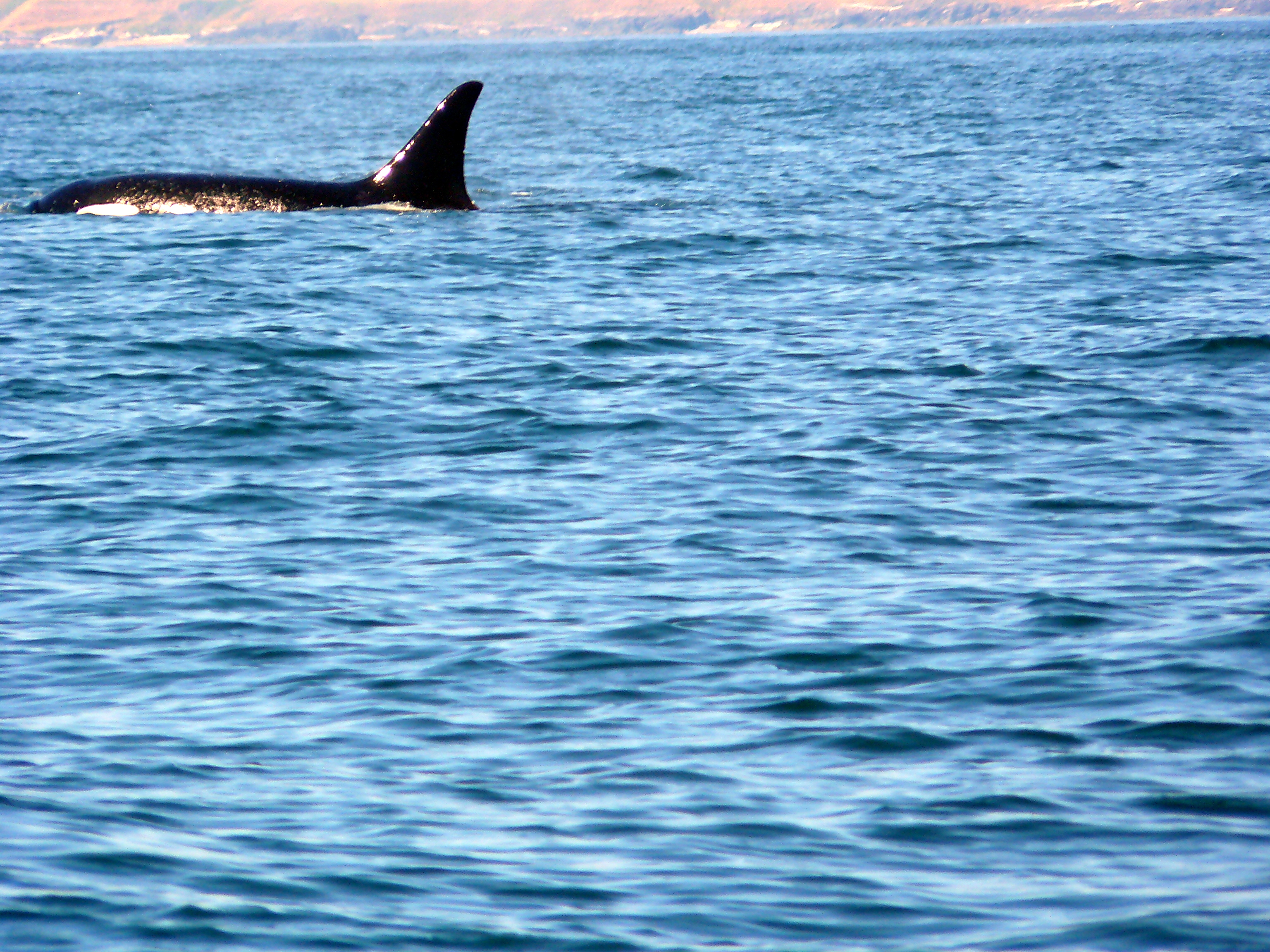
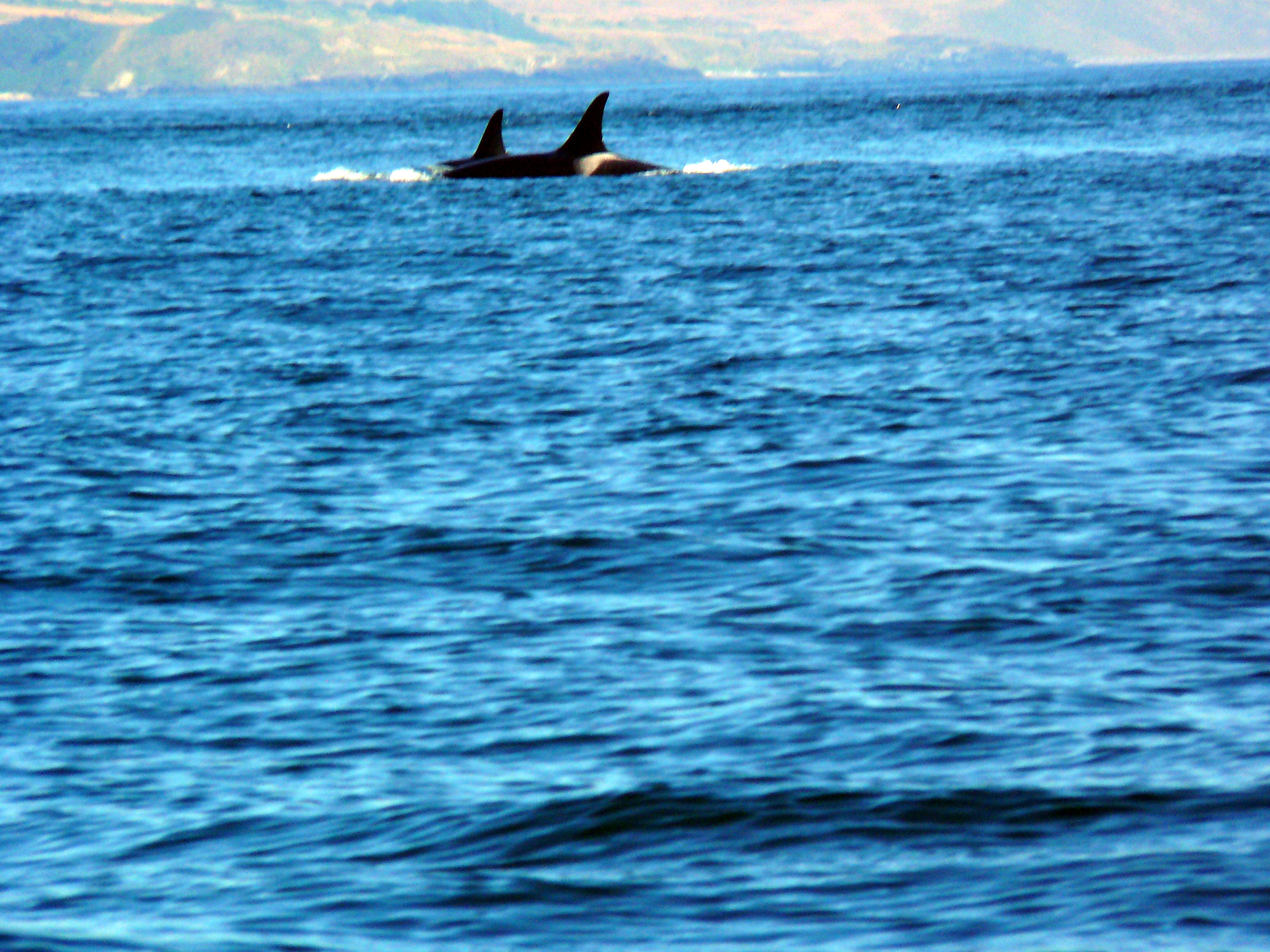
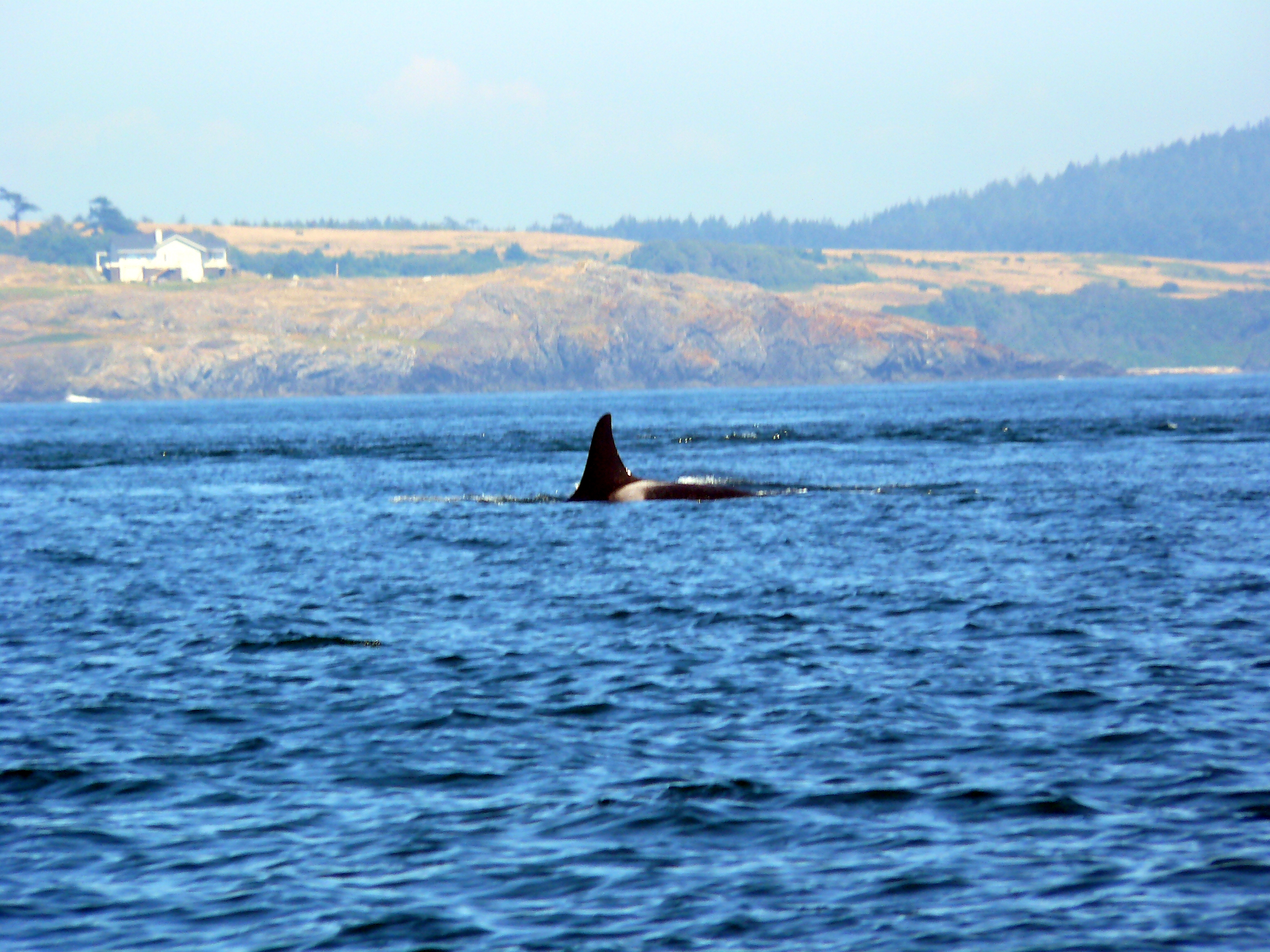
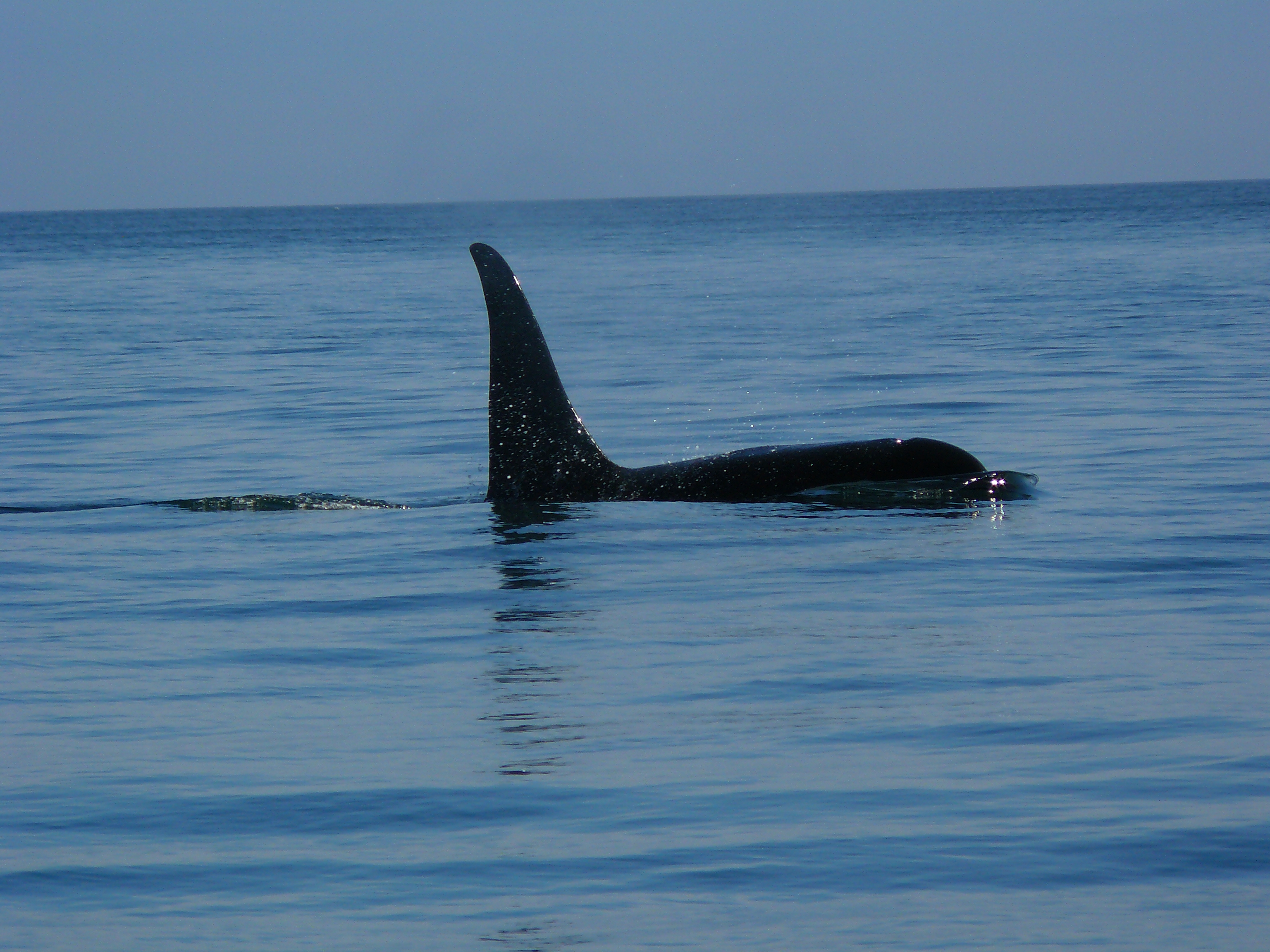
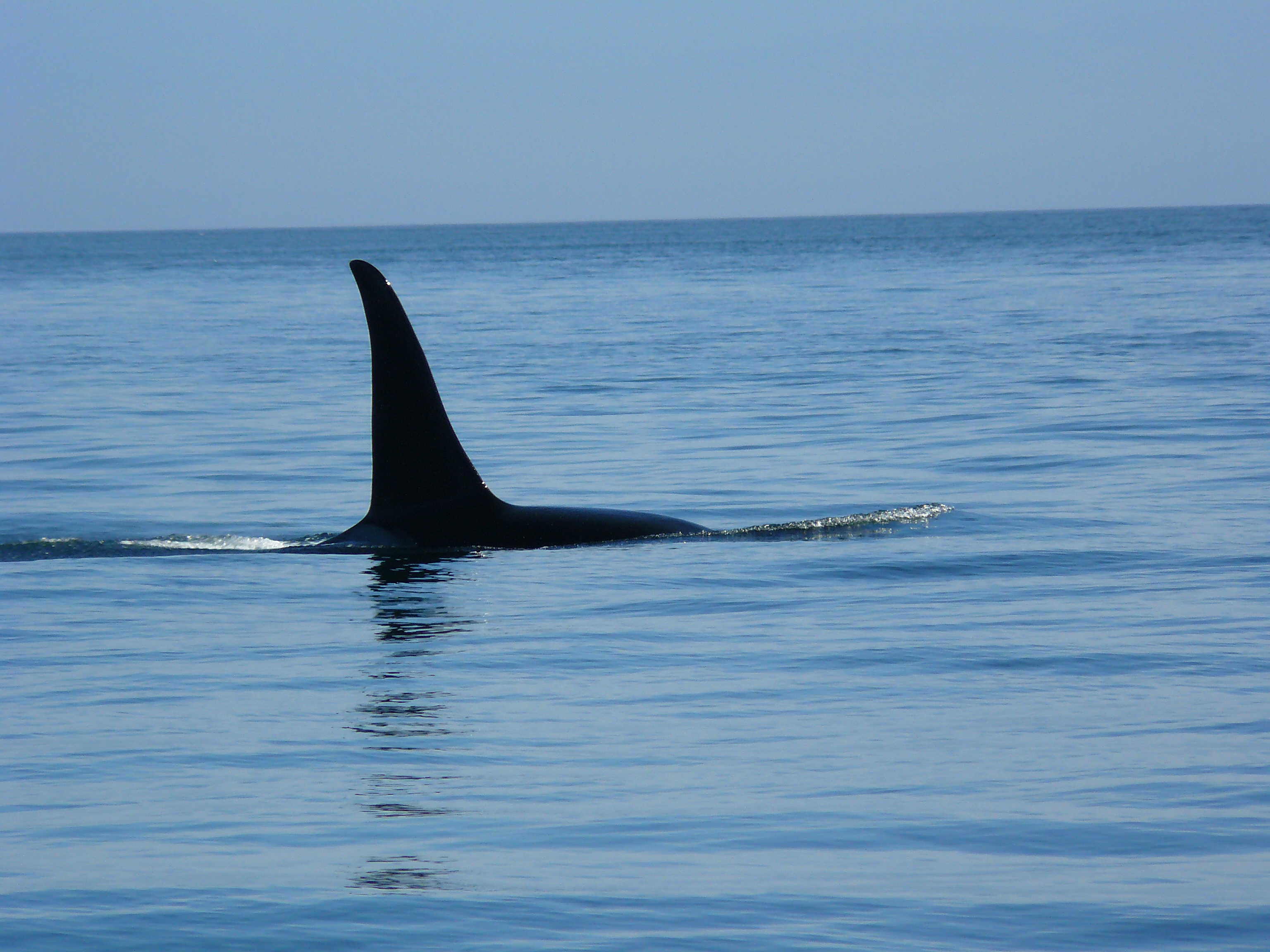
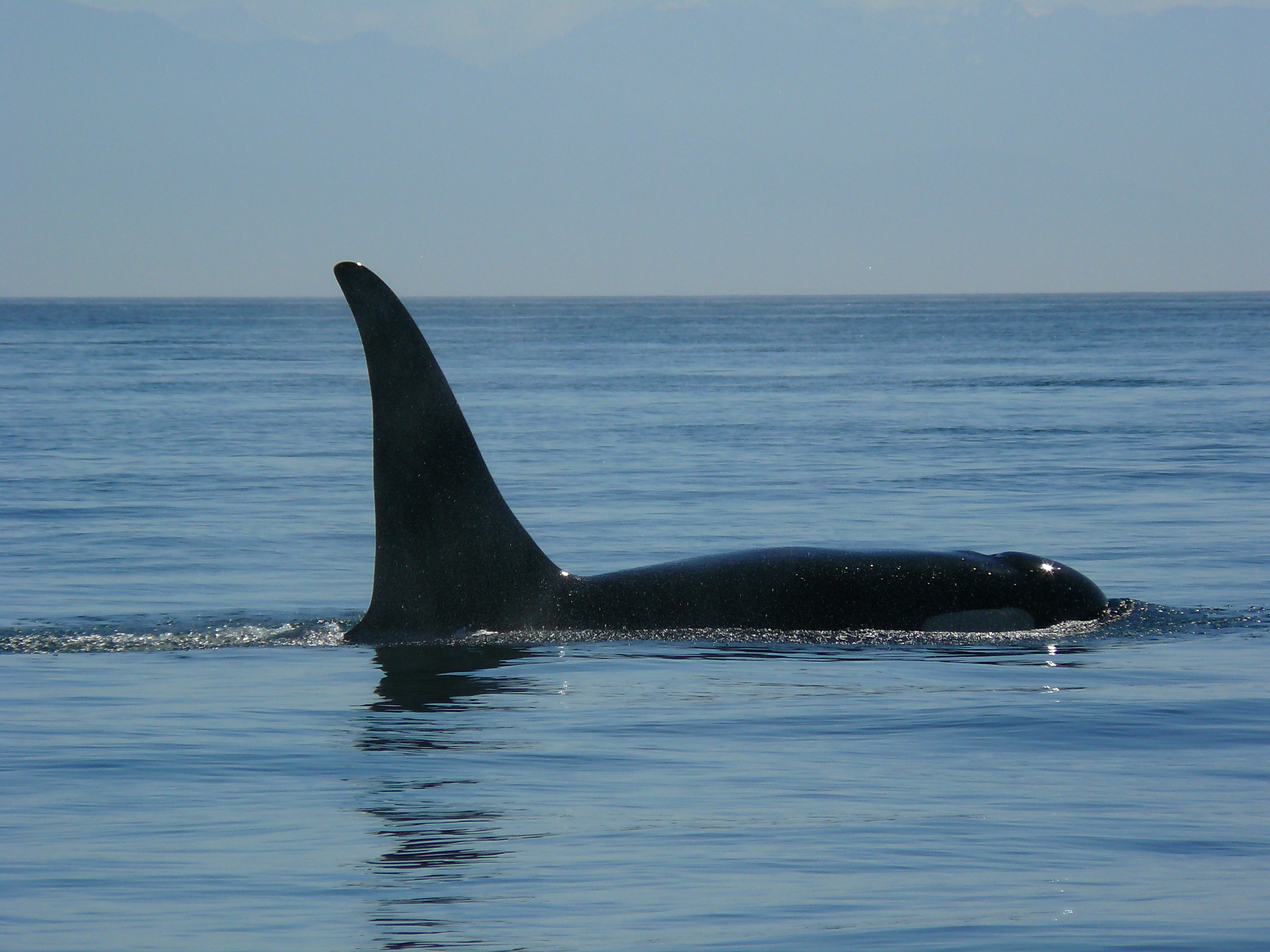
Monday afternoon, many Lpod and Kpod family groups were swimming down Rosario Strait. The 7’ flooding tide was ending, then a 1’ ebbing tide made for calm easy waters. I was able to identify the large L55 family, L92 & L90, L95 & L105 & frisky? L72;) (The Whale Museum will tell you their names) The orca were very surface active, vocalizing and chatting! We witnessed all behaviors- powerful breathing, fishing, lunging, spyhopping, breaching, tail-fluke lobbing, pectoral fin lobbing, playing, resting, and whale ‘flashes’ suggesting mating! These whales made an uncommon choice to follow the ferry route west between the islands, taking their time, holding the attention of awed folks from San Francisco, Mexico, and on the ferrys! A memorable day, the many orca families traveling together, hoping they were getting enough salmon, knowing these whales need our help in restoring salmon abundance for their very survival.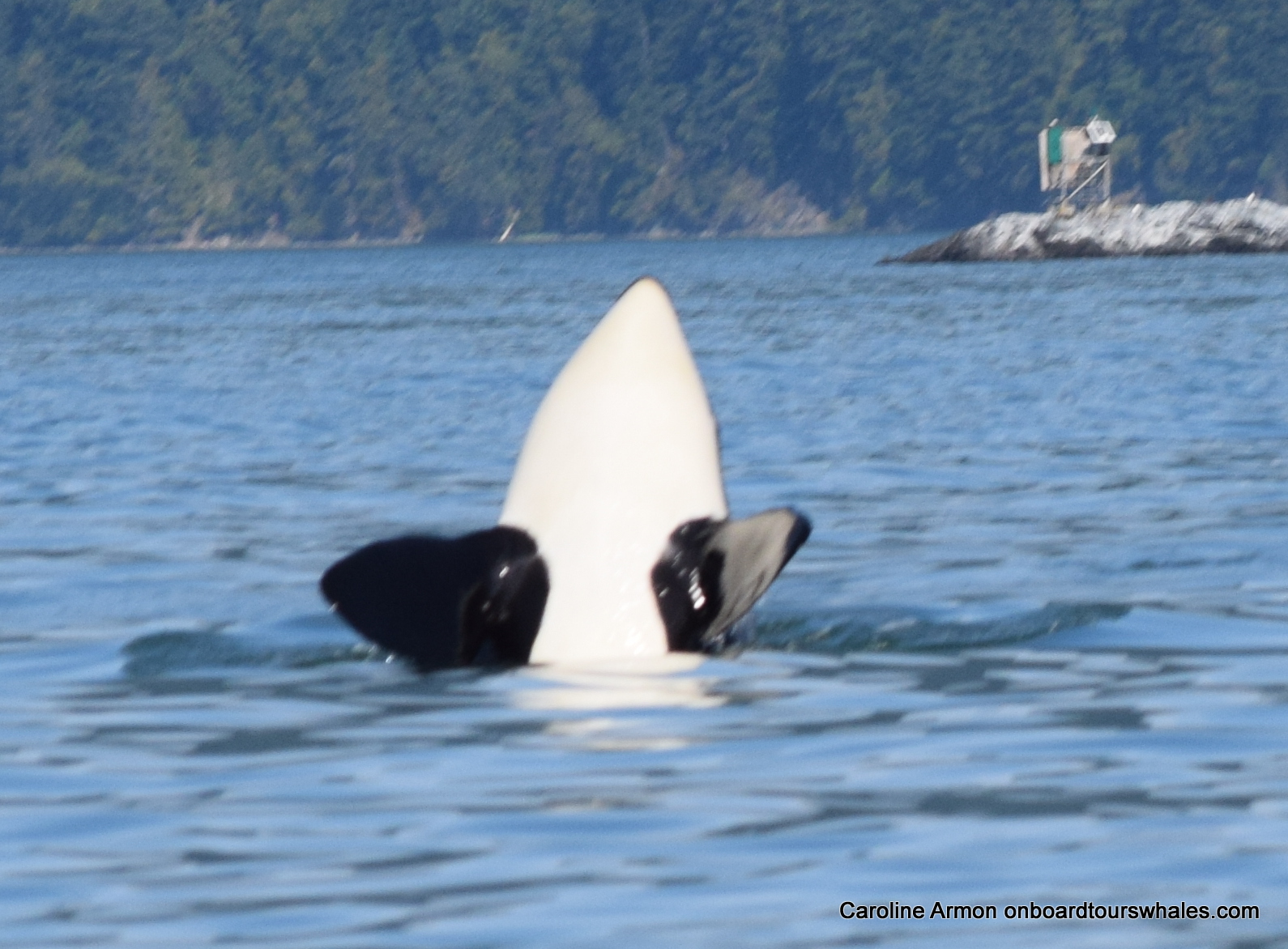

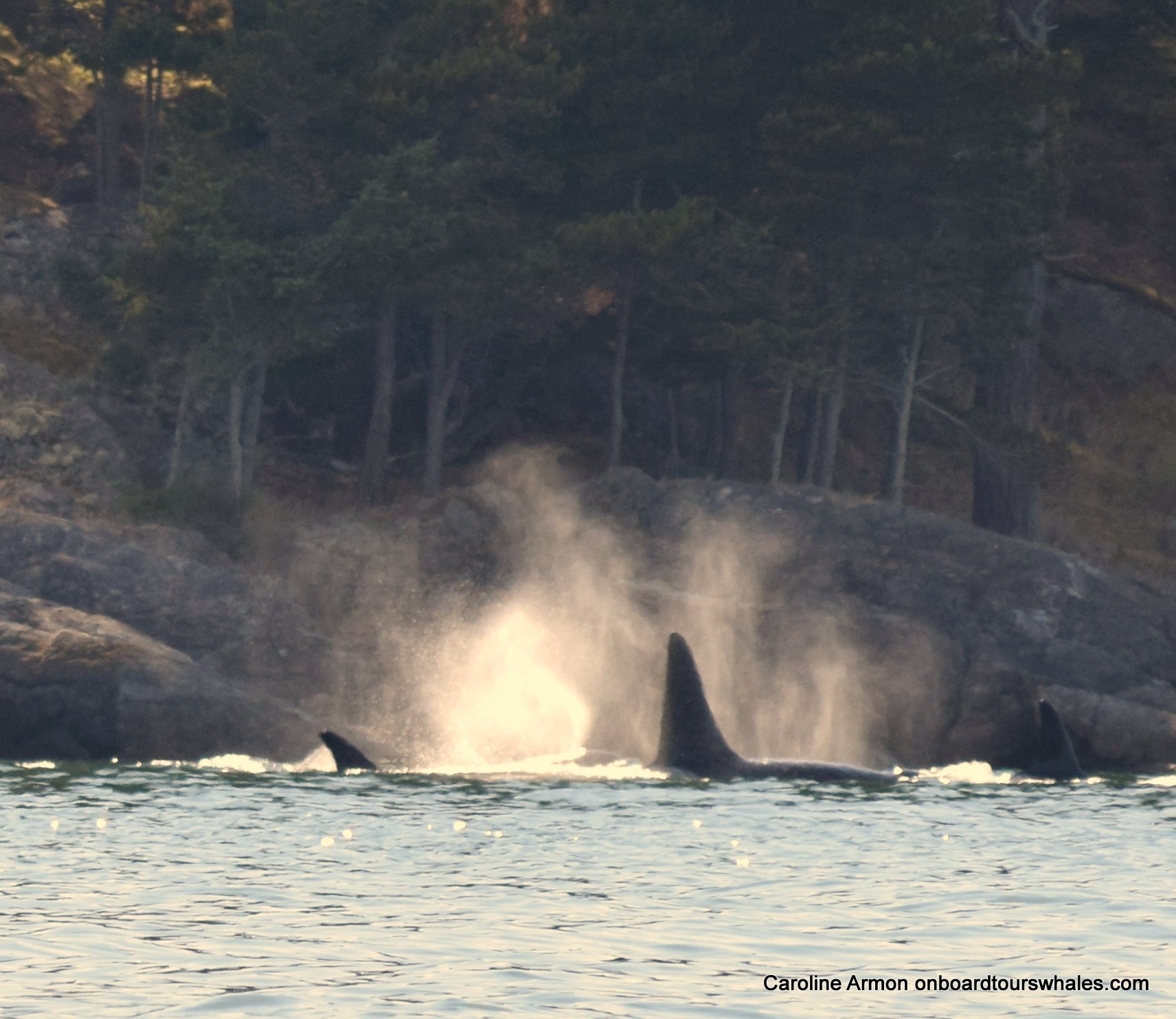
Active, Mating? Orca!
My Orca Photos July by Sea and August 2nd by Land!


Posted in Salish Sea San Juan Islands | Tags: breaches, flukes, Killer Whales, Orca Whales, Salish Sea, spy hop, tail lob, tail slaps
Blustery Afternoon Whale Day
August 3, 2015
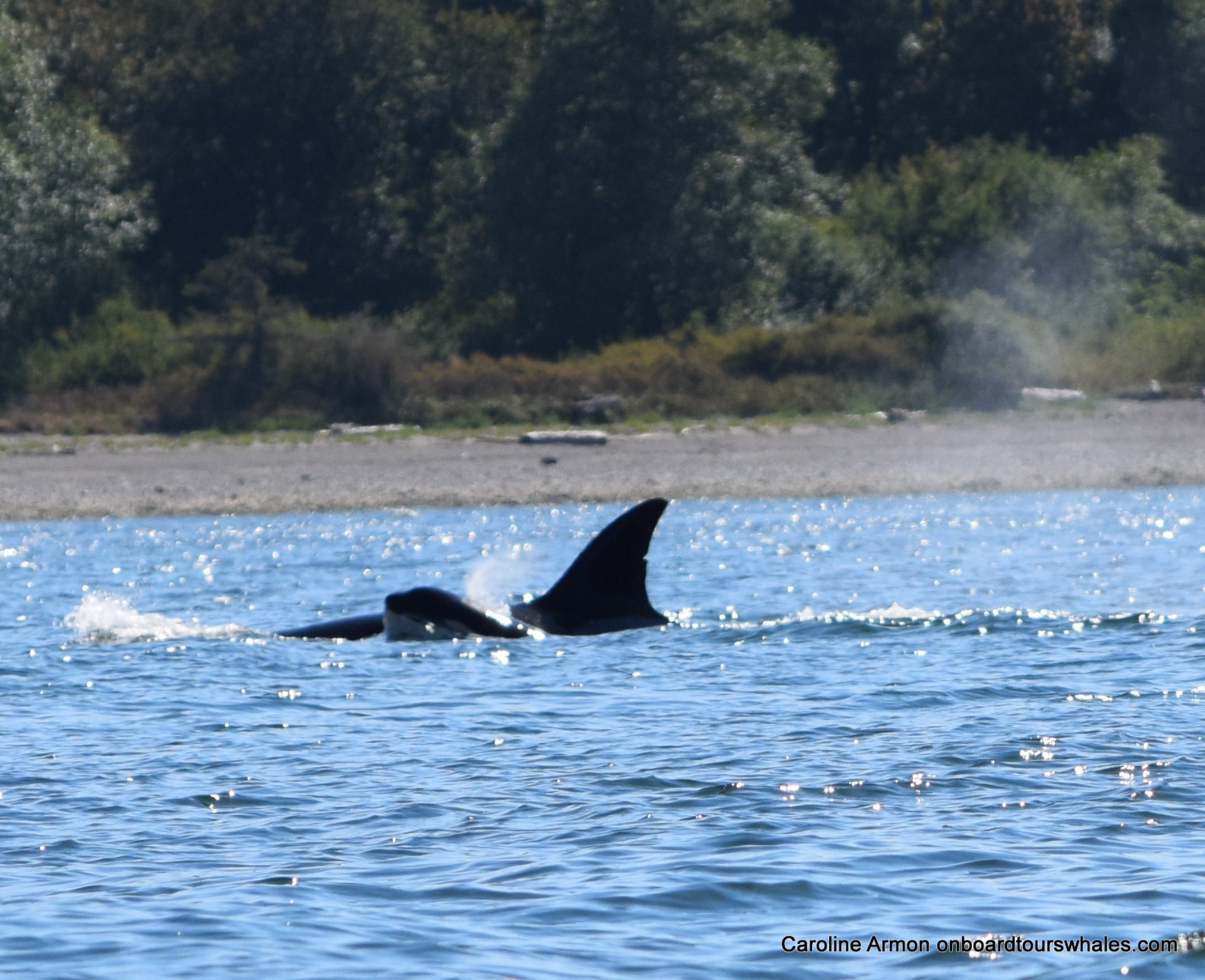
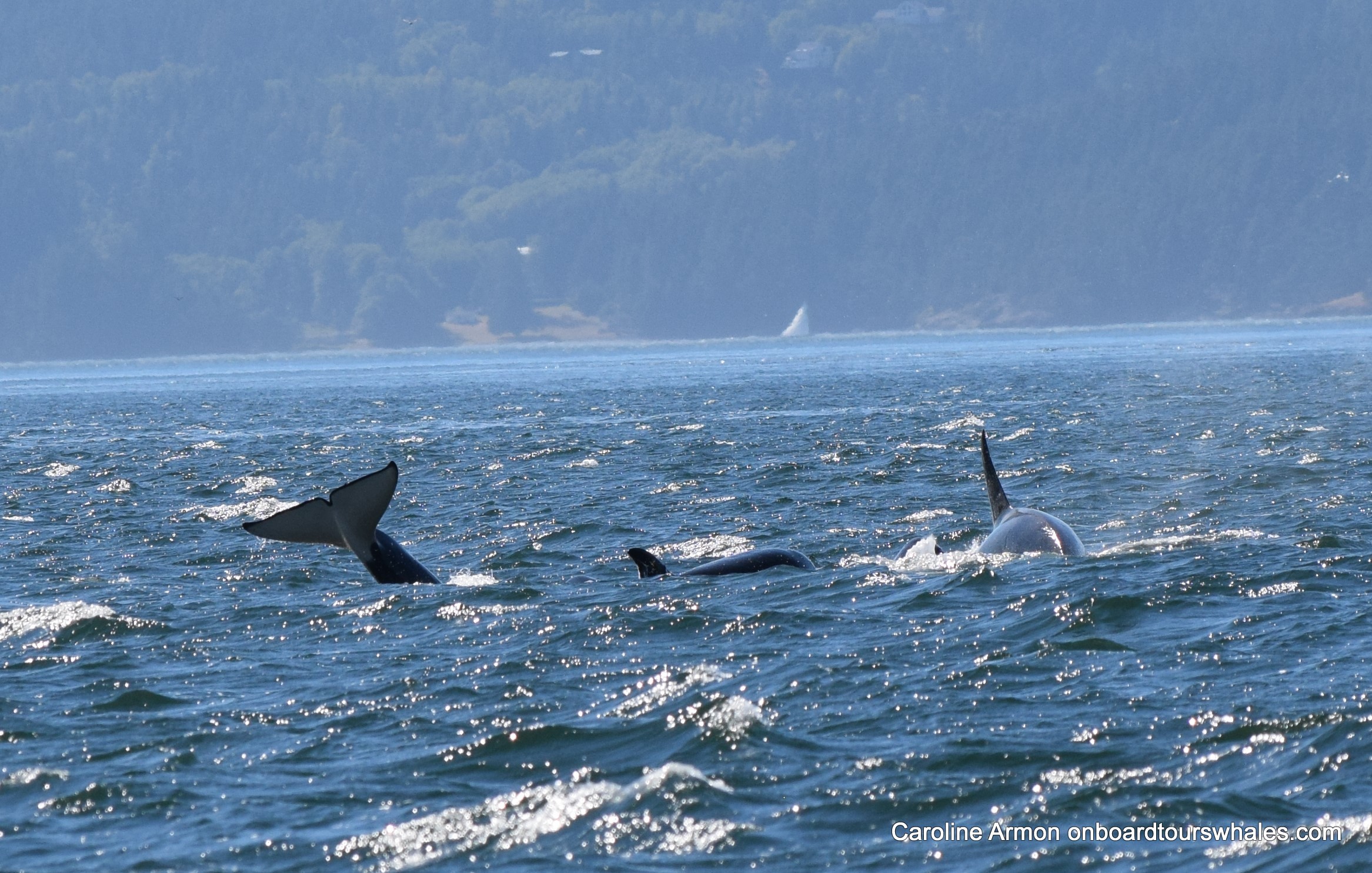
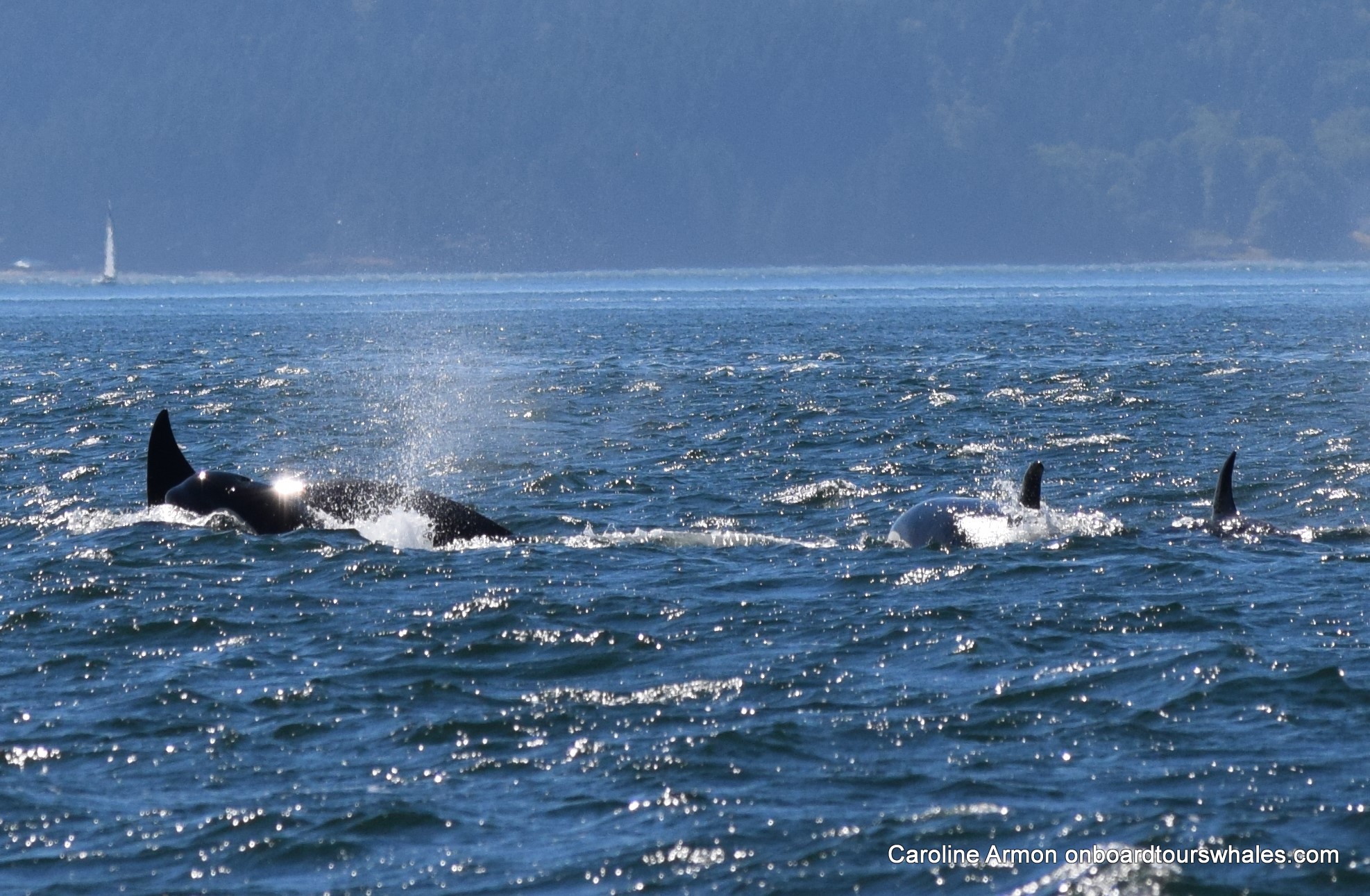
The sun shining and warm, yet windy with a strong 8’ flooding tide made for a fun boat ride through some choppy, tide ripped waters over toward Lummi Island. Folks from California, Finland, and Seattle were up for the adventure! Transient-Biggs, mammal eating Killer whales, T037A and family were on the prowl, they may have had 2 meals- harbor seal, porpoise? Fascinating the way they were working together, coordinating direction changes, lunging, and tail fluke slapping the water. It looked like a new calf was side by side with matriarch mama T037A!

Posted in Salish Sea San Juan Islands | Tags: Killer Whales, Orca Whales, Salish Sea, tail slaps, Transients
End Dam Extinction
I believe we are at a critical, pivotal moment to restore salmon to the Columbia River basin and the Northwest- historically our nation’s largest salmon runs.
The White House phone number to leave comments is 202-456-1111.
Call Monday through Friday between 9 am to 5 pm Eastern Time. All that needs to be said is “Breach the four lower Snake River dams to save the Southern Resident orca (or killer whales) and salmon from being dammed to extinction.”
Our Spotlight Species, Endangered Southern Resident Killer Whales– orca, need salmon to survive; up to 80% of their diet is Chinook salmon. Science has shown these whales depend on the salmon of the Snake and Columbia Rivers, particularly during the winter and spring.
Science has also shown salmon are a keystone species here in the Northwest, providing nutrients to not only the whales; also other marine mammals, birds, bears, humans, even plant life- the entire ecosystem.
The 4 lower Snake River dams are a major impediment causing the decline of salmon to the point of threatened and endangered salmon species.
Data now shows maintaining these outdated, deteriorating dams- by your tax dollars annually, extortionately costs much more than the significantly lower cost of breaching the 4 lower Snake River dams.
These dams now only provide 1-3% of the regions power. The majority of the regions stakeholders support the breaching of these dams.
President Obama has been personally presented with all this information and can issue an Executive Order, to breach the 4 lower Snake River dams. If he does not issue this Executive Order, it probably would take at least 10 more years to go through the bureacratic process to make this happen, at continuing excessive cost to taxpayers, and probable extinction of salmon stocks. The reality of extinction of Southern Resident Killer Whales is why they are one of eight federally NOAA identified ‘Species in the Spotlight’.
President Obama has recieved many petitions, letters, and emails supporting breaching the 4 lower Snake River dams, but the White House questioned why they weren’t receiving more phone calls supporting this Executive Order.
The White House needs to know the public supports this dam breaching to give the President the political will to take executive action.
We need to get the message out to everyone to flood the White House with calls as soon as possible to let the White House staffers know that people care, people want the iconic Southern Resident Killer Whales and keystone salmon to survive.
Please call, please share.
Thank You!
We can do this! 🙂
Posted in Salish Sea San Juan Islands
Meaningful Memories
10-20-14
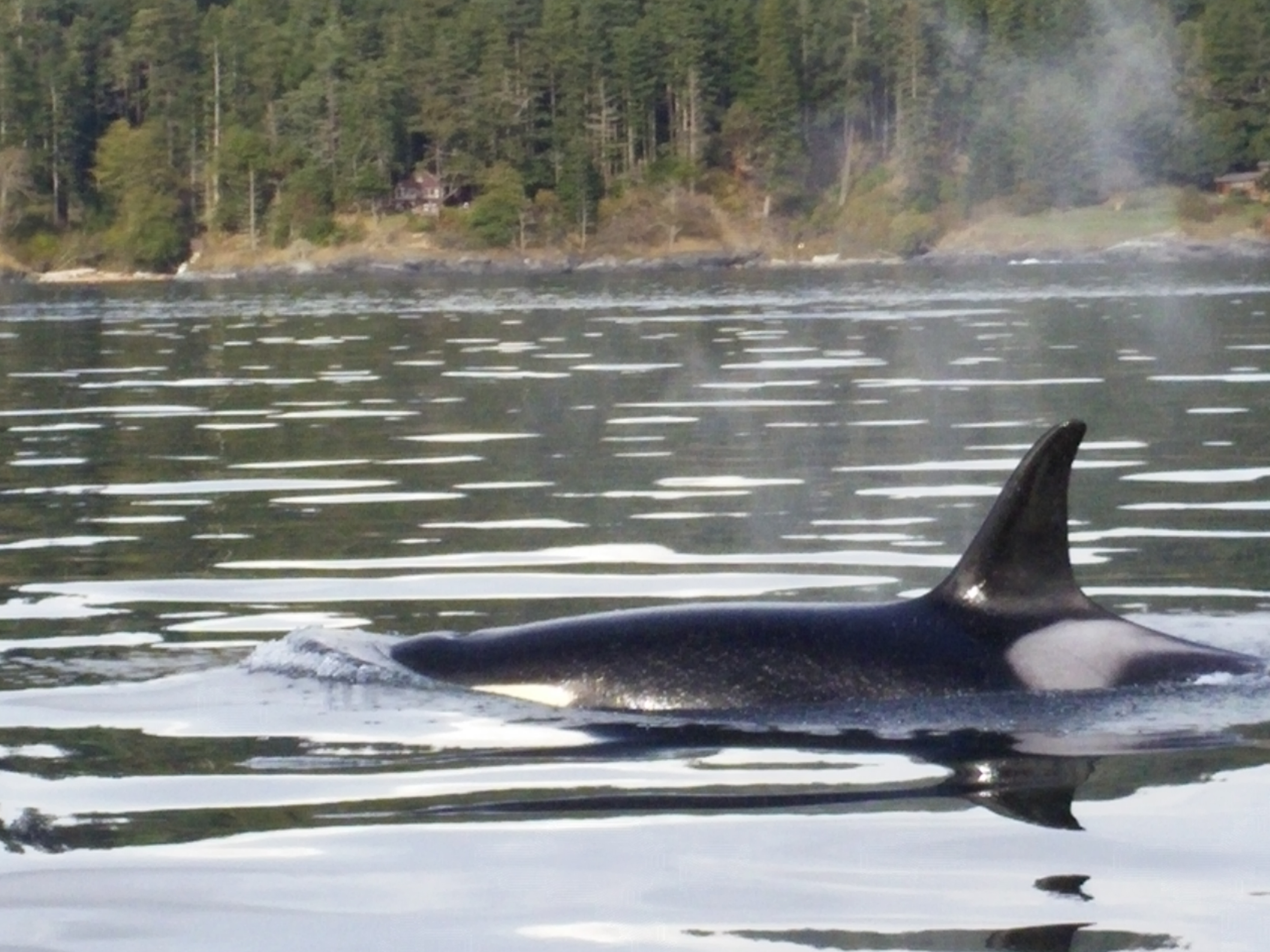
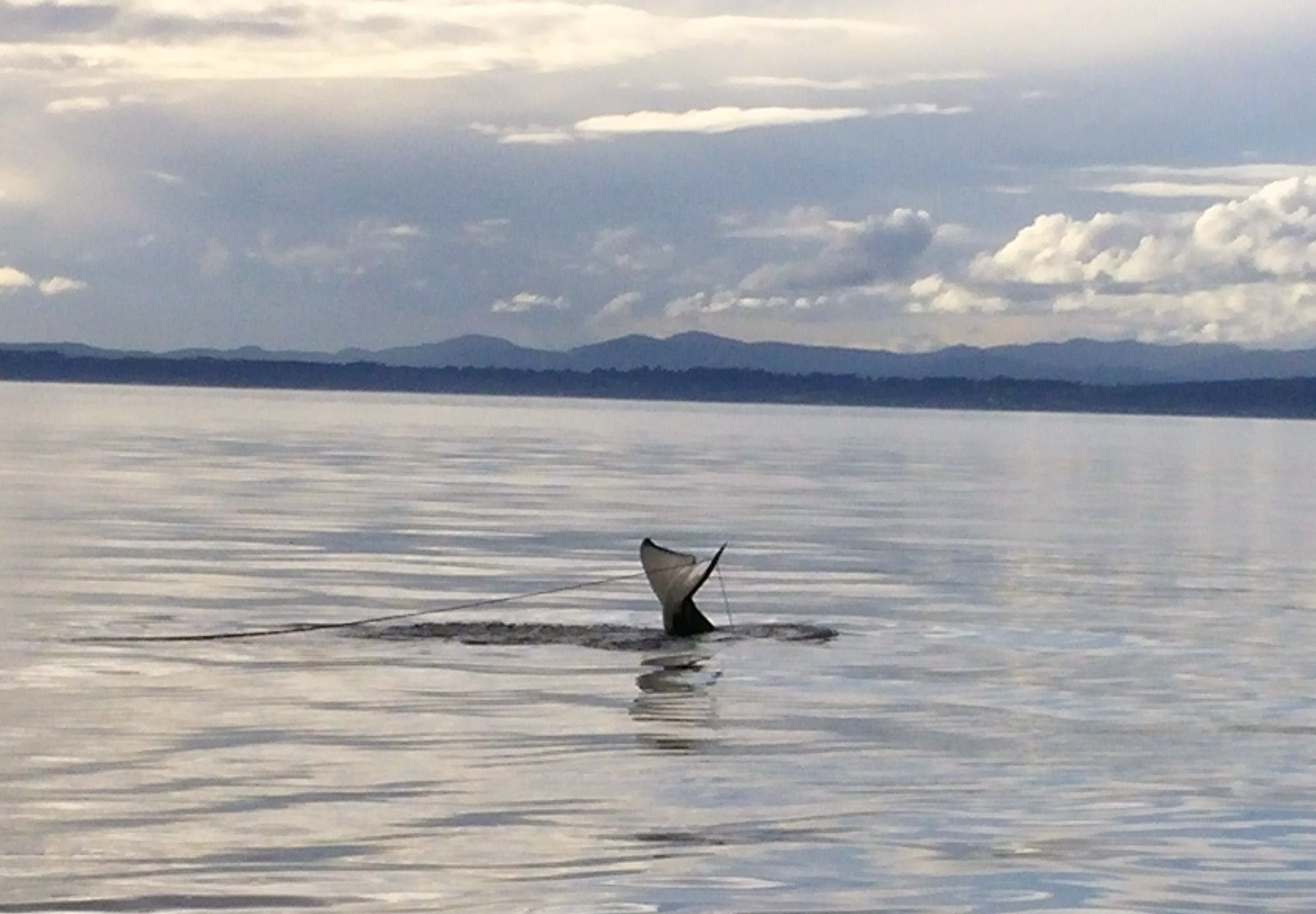
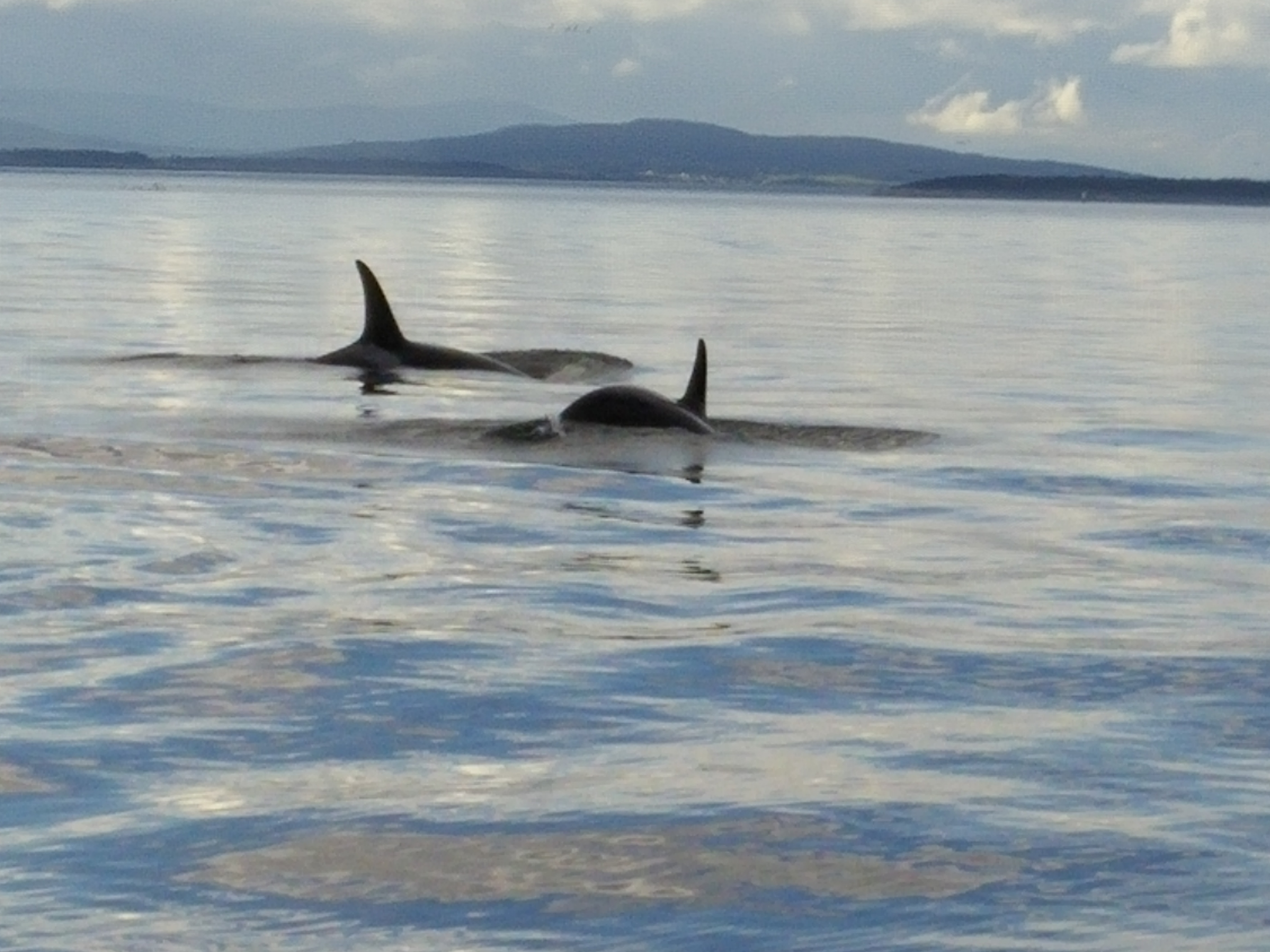
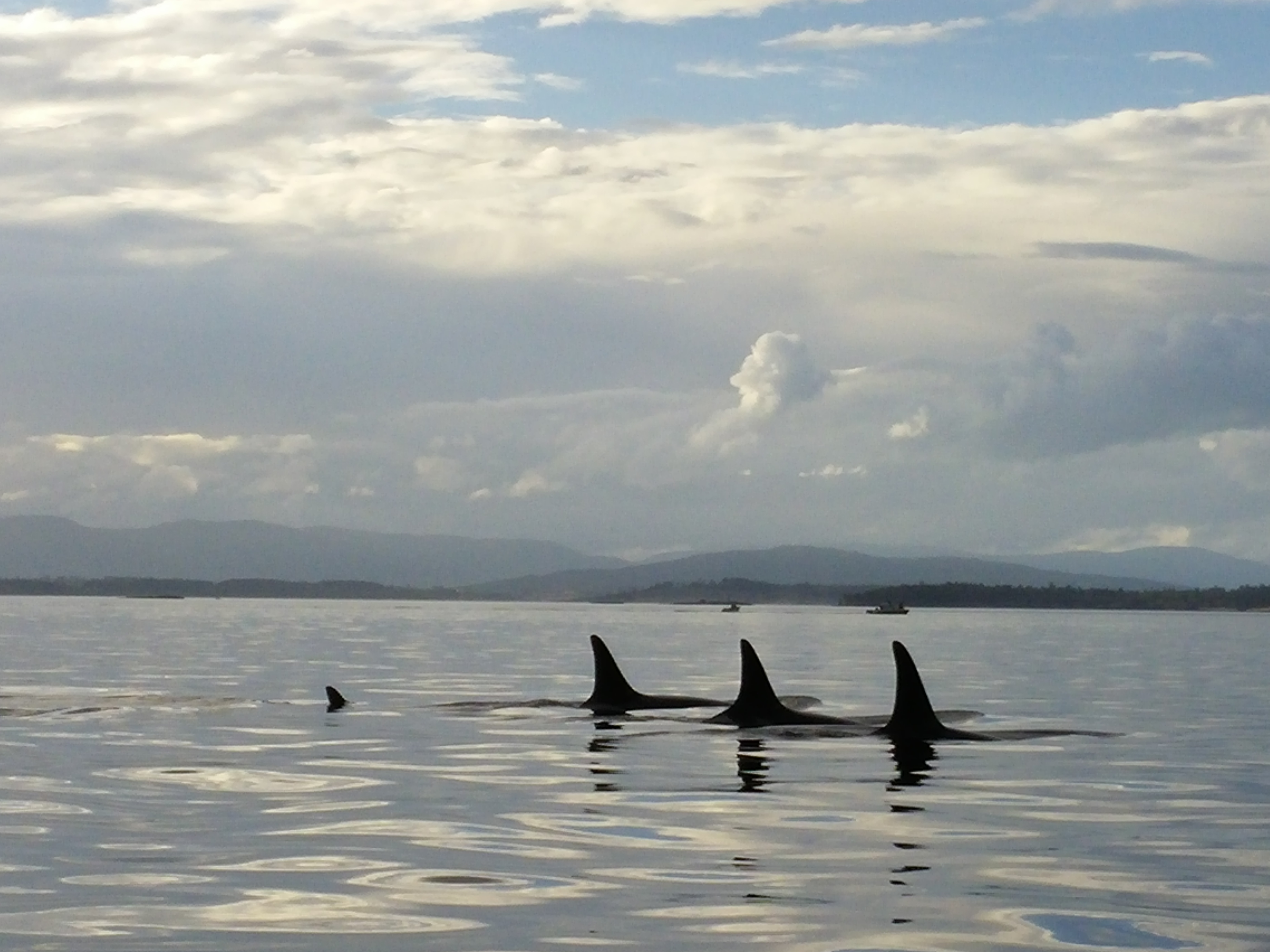
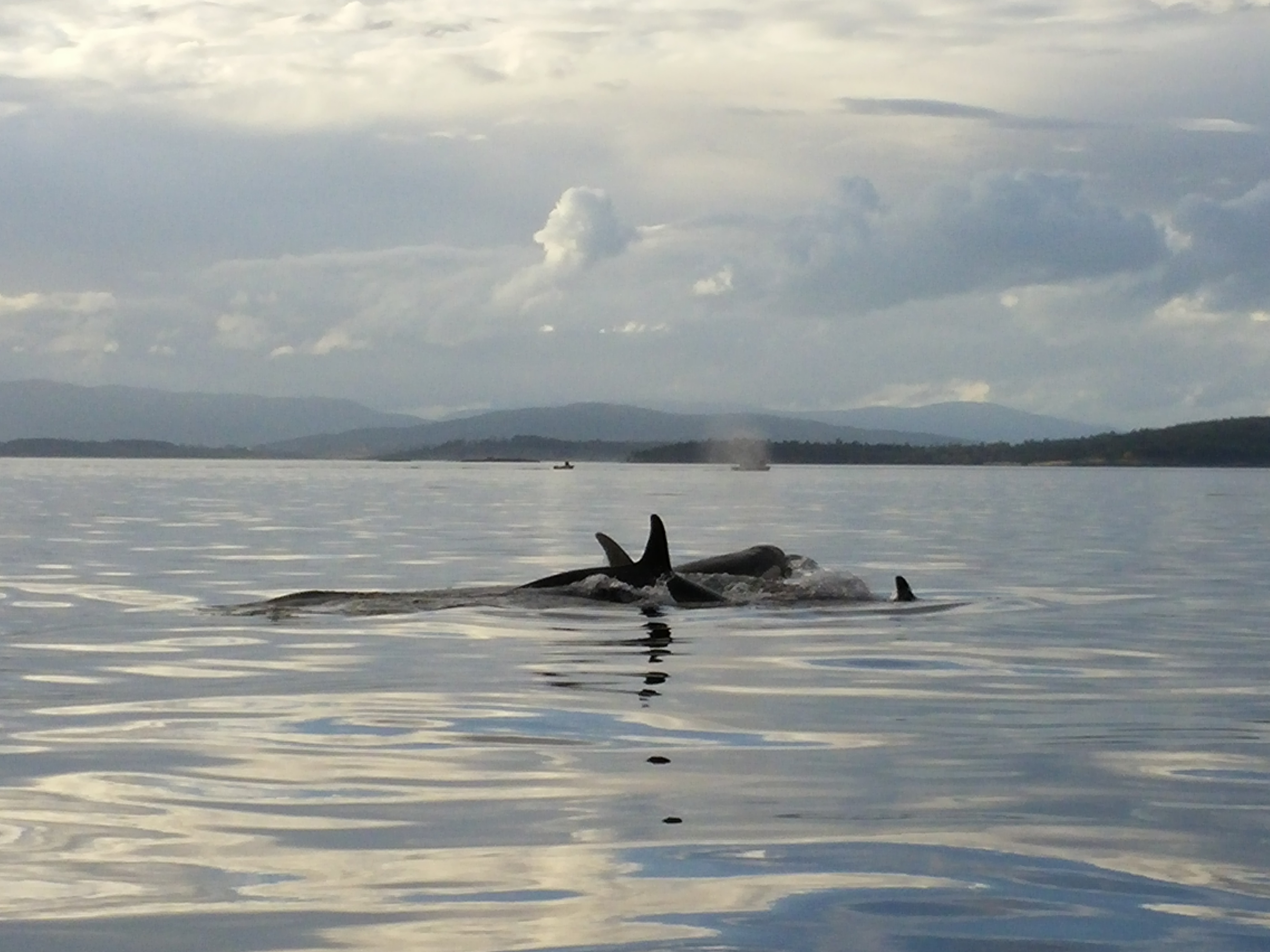
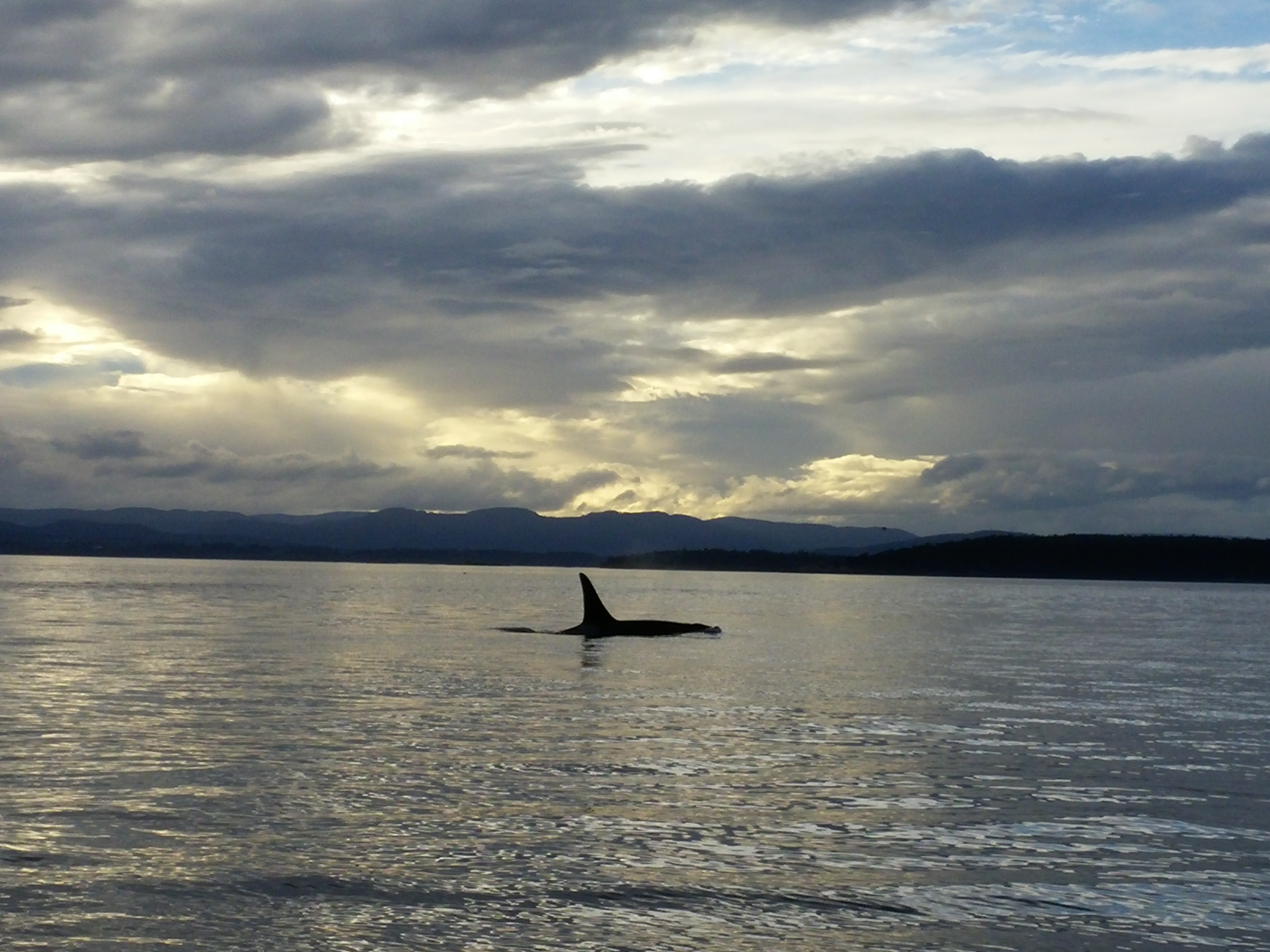
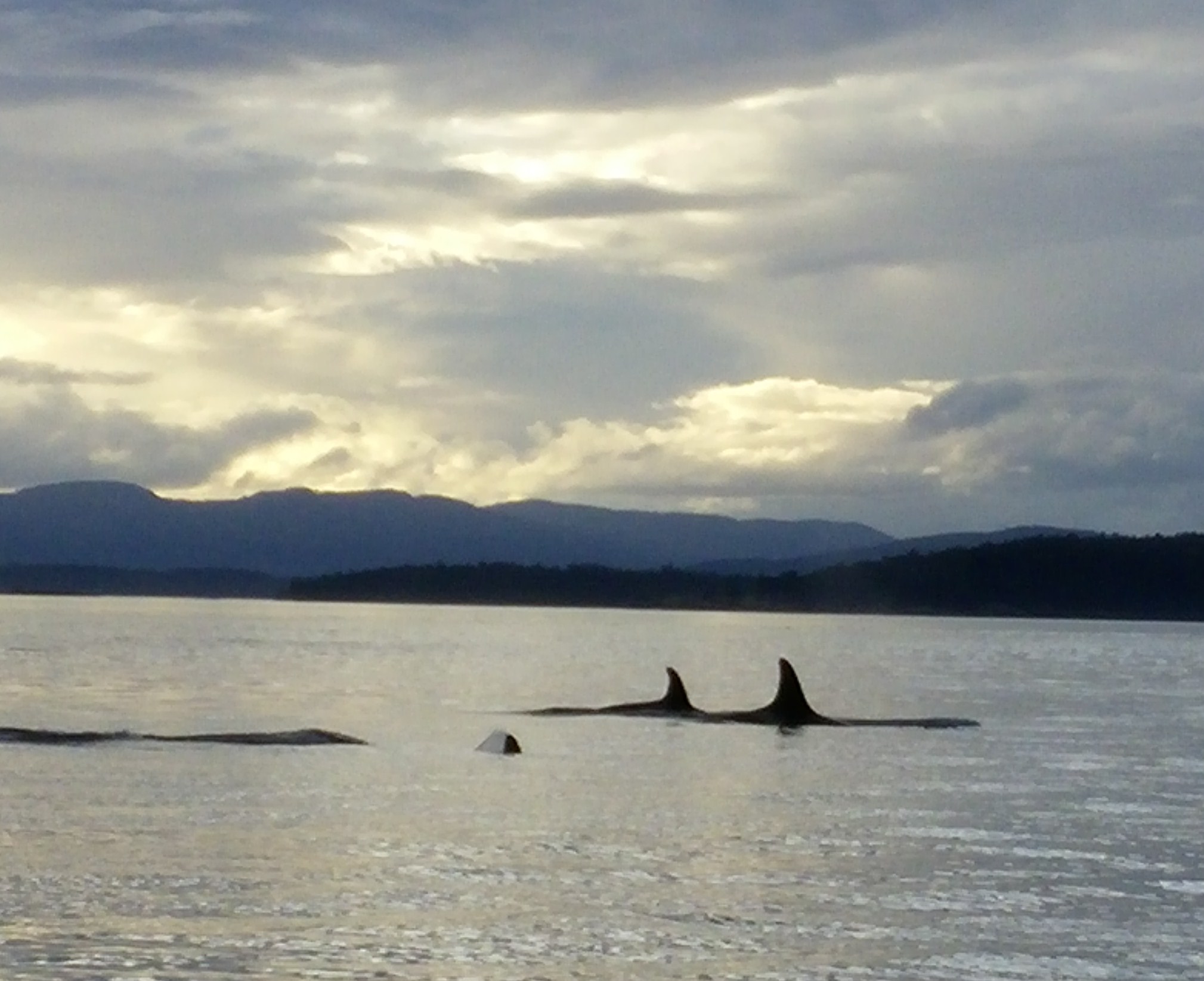
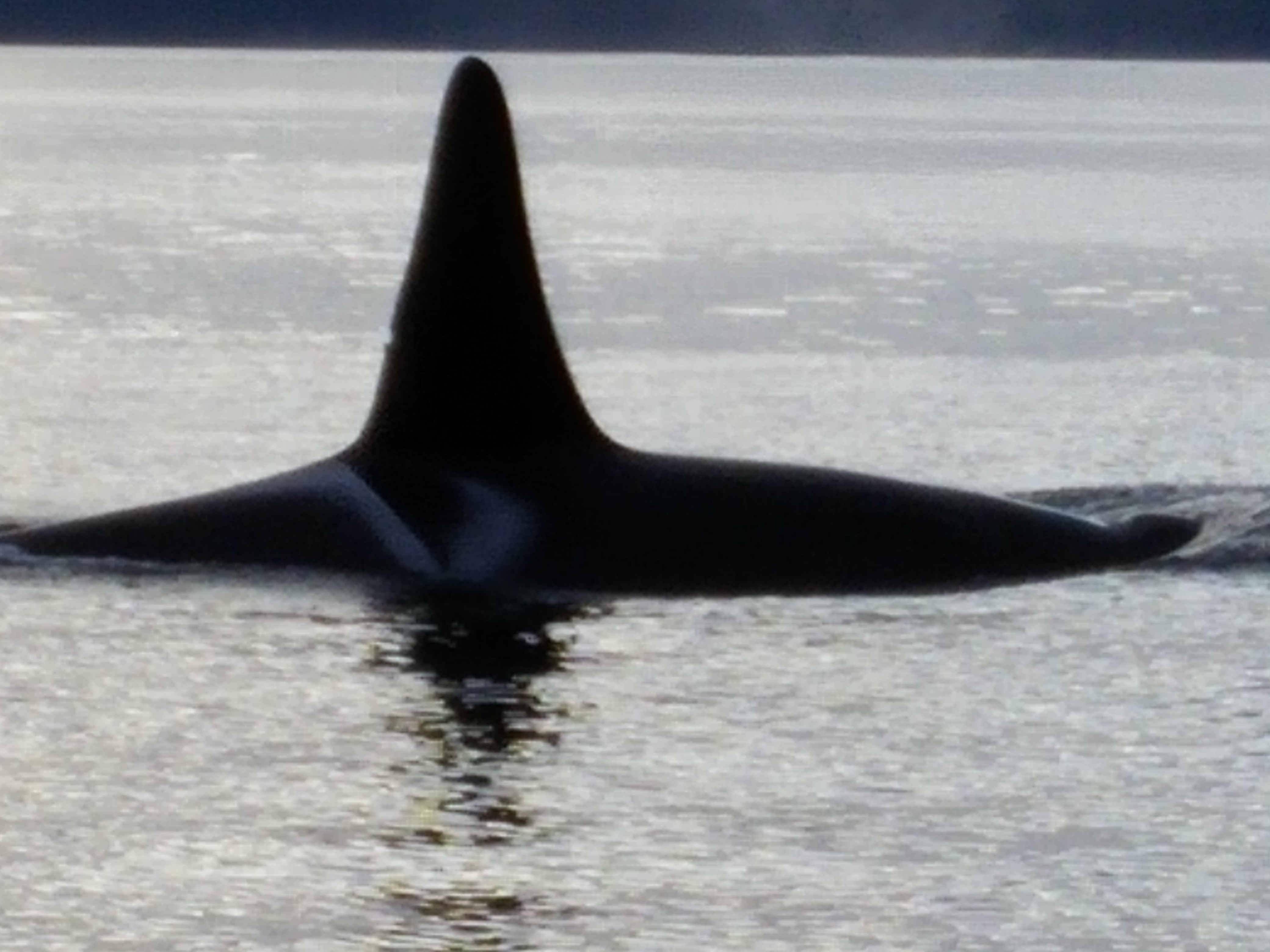
Timing is important and does work out sometimes. I was helping out at the Center for Whale Research when we heard L-Pod whales were sighted in the Strait of Juan de Fuca. Ken Balcomb, Erin Heydenreich, and I headed out to take photo identification, location, and behavioral data. The rain stopped and gave us two and a half dry hours. I was a very enthused passenger taking videos and photos with my smartphone.
The trip was bittersweet. Knowing the new baby L-120 born in September, and the first calf in the Southern Resident Orca community in two years that we’d been celebrating, hadn’t been sighted with her mother L-86 Surprise and relatives on the last few sightings. L-Pod families had been out in the Pacific Ocean for a few weeks. Most whale species sink when they die, so we will probably not know what caused the death. I believe the Orcas grieved their loss, I have seen Orcas and Gray whales grieve.
The Orcas were spread out from Eagle Point heading west and north. The first group and whale we see is L-86 Surprise with her son and relatives, but sadly no baby L-120, confirming the loss.
Our Orcas and our Salish Sea are indeed in dire straits. Lack of salmon, water quality and toxins, noise pollution, and our past impacts are taking a toll on our whale population; whales are sentinels of our seas.
They are not doing well, we are not doing well. No matter where you live, water, toxins, garbage runs downhill into the seas, and acoustic pollution probably affects most sea life. Our breath, water, food, and climate; our very existence and survival depends on our oceans, we are a water planet! Ken Balcomb, Erin Heydenreich, David Ellifrit and many others are unsung heroes, investing decades to bring this global shift in our awareness and attention to our ocean life and oceans. I keep hope, from when I started 20 years ago, in the awareness, collaboration, and our accumulating individual efforts to and do make a positive difference. Slow but sure changes are now happening.
We continued to document the spread out groups of L and K Pod families, seeming to forage for salmon. They did delight us with a few breaches, spyhops, pec and fluke slaps, kelping, and back floaters. We even heard a few above water vocalizations! I personally think the orcas know Ken and his boats, and are very comfortable around Ken. They have the brain and memory to recognize boats and people, through their extraordinary echo-location, sight, and acoustically oriented world. Just like we can recognize the sound and sight of our neighbor’s car.
The sky was overcast, casting a matte light extending visibility. The straits were calm, glass like, and slack water. As we headed up Haro Strait, we saw Dall’s porpoise and a humpback whale in the distance!
The Orcas milled a bit and Erin sighted and picked up a fish scale! so we can find out what they were eating. Then, ironically because I had just asked Ken about the ‘lags’- Pacific white-sided dolphins, poof! a group appears rapidly swimming toward us, across the boat stern wake! They were swimming away from and didn’t appear to be bothering the Orcas. They apparently can annoy, ‘harrass’ whales by swimming all over the whales and their rostrums- noses, and the whales react by trying to get away from the lags. I think of the lags as some of the hyperactive gossips of the seas!
Sweet to experience all the cetaceans and behaviors we did, then the sun melted a few clouds and we see a rainbow over Henry Island. Sentimental me feels hope.
Videos:



Posted in Salish Sea San Juan Islands | Tags: breaches, Center For Whale Research, Dall's Porpoise, foraging, Haro Strait, J Pod, K-pod, Ken Balcomb, L-Pod, Orca Whales, Orcas, Pacific white-sided dolphin, pectoral slaps, Salish Sea, San Juan Island, Strait of Juan de Fuca, tail slaps, vocalizations
Autumn Orcas
October 5, 2014
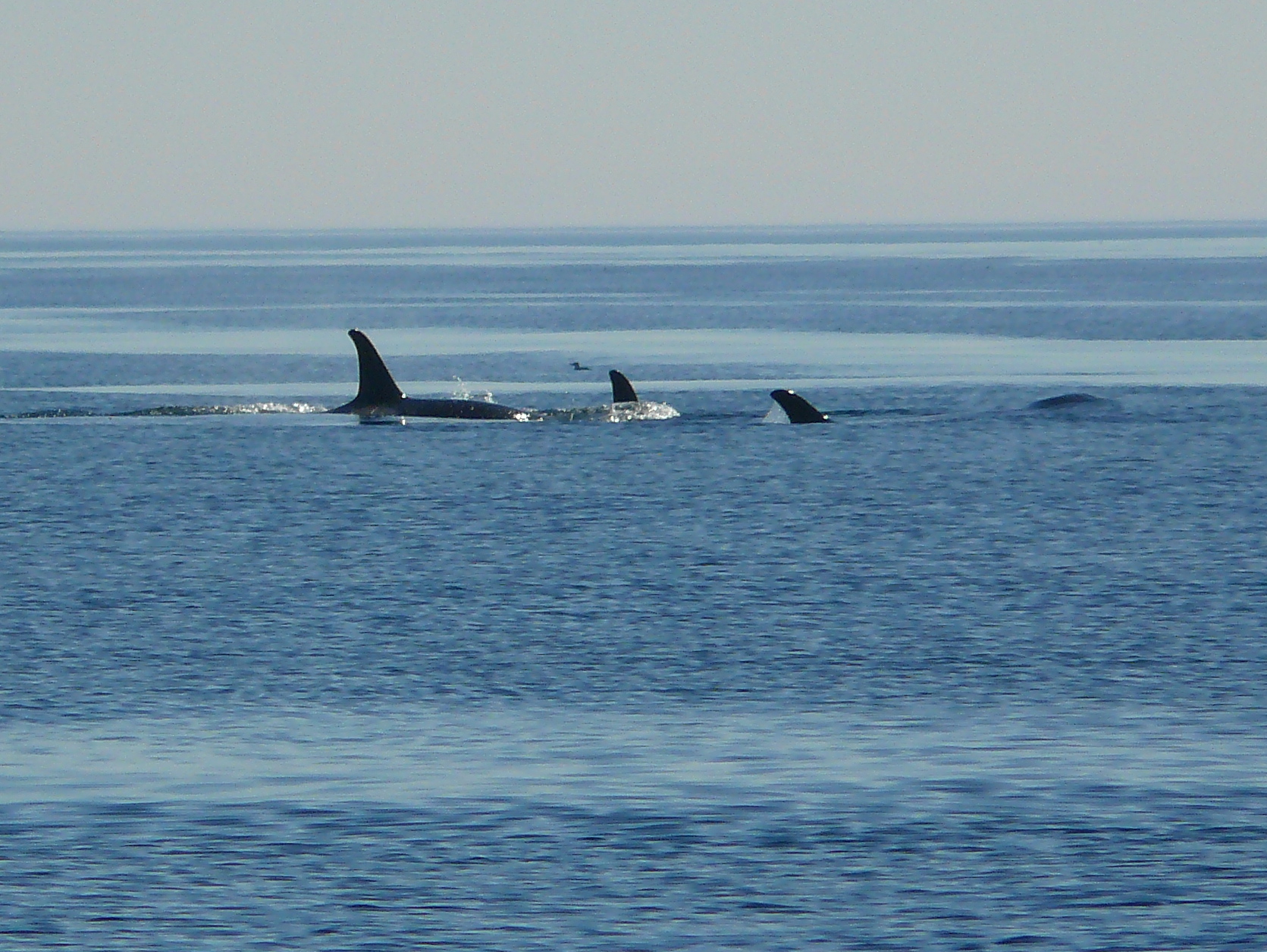
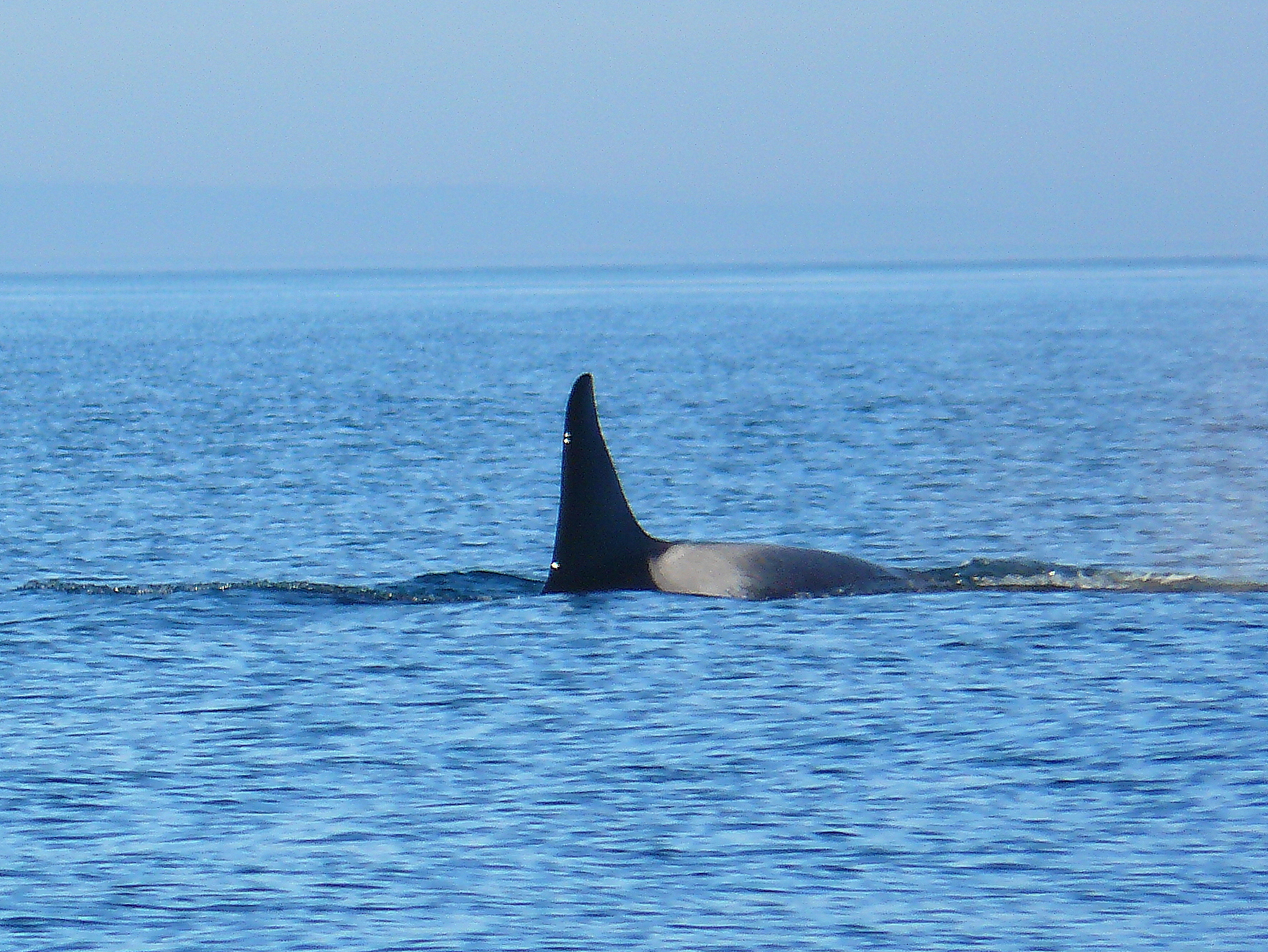
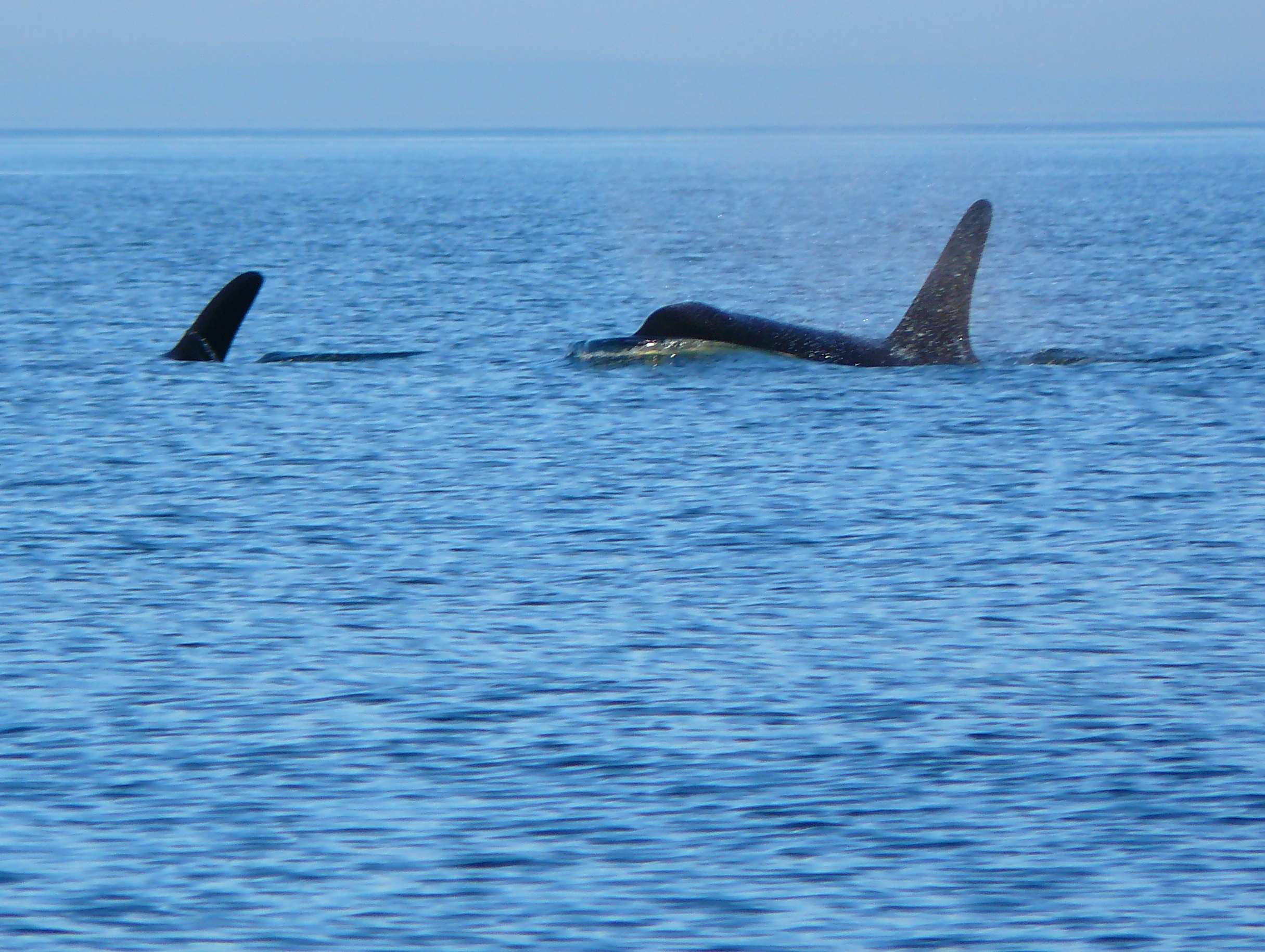
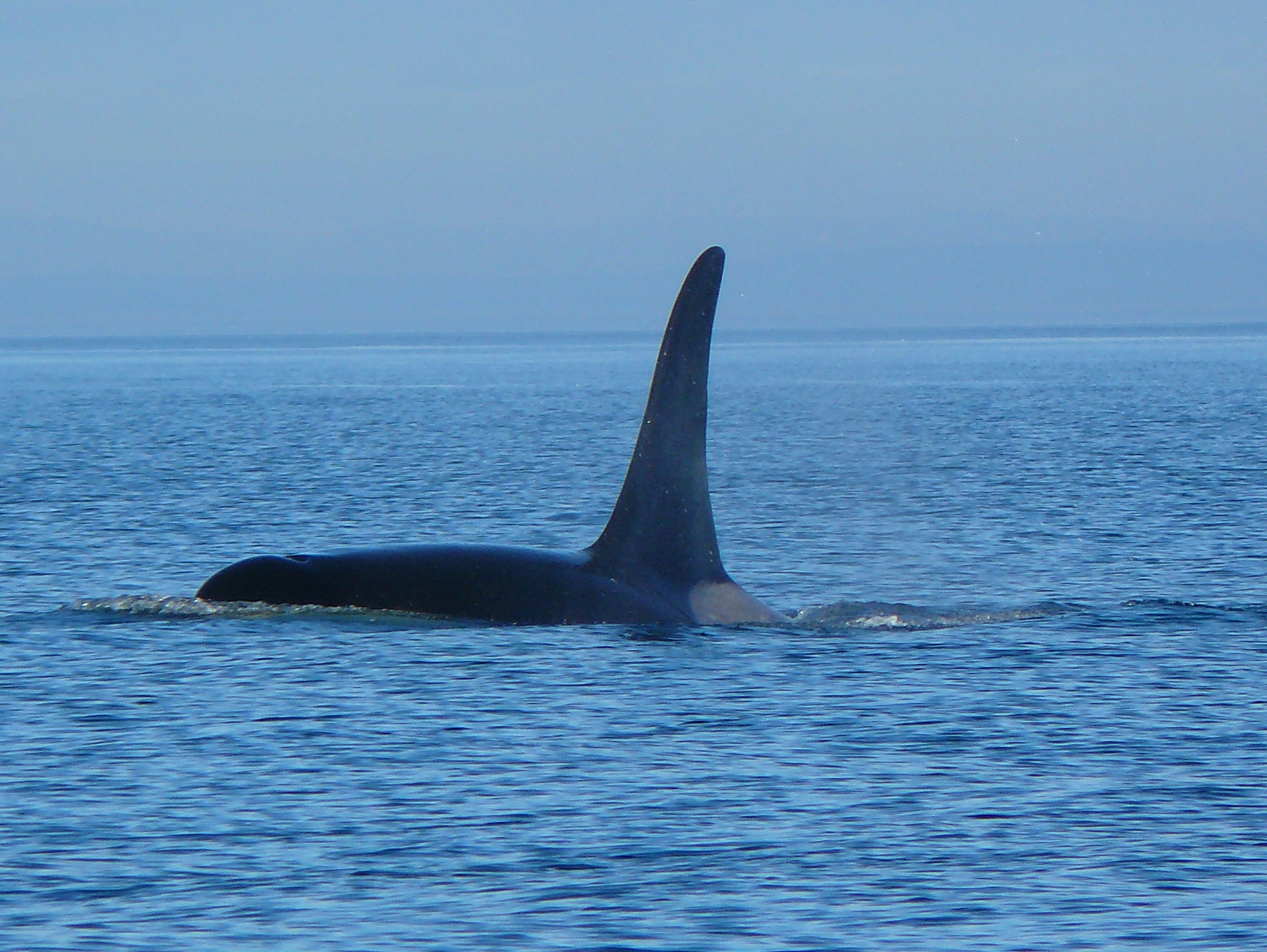
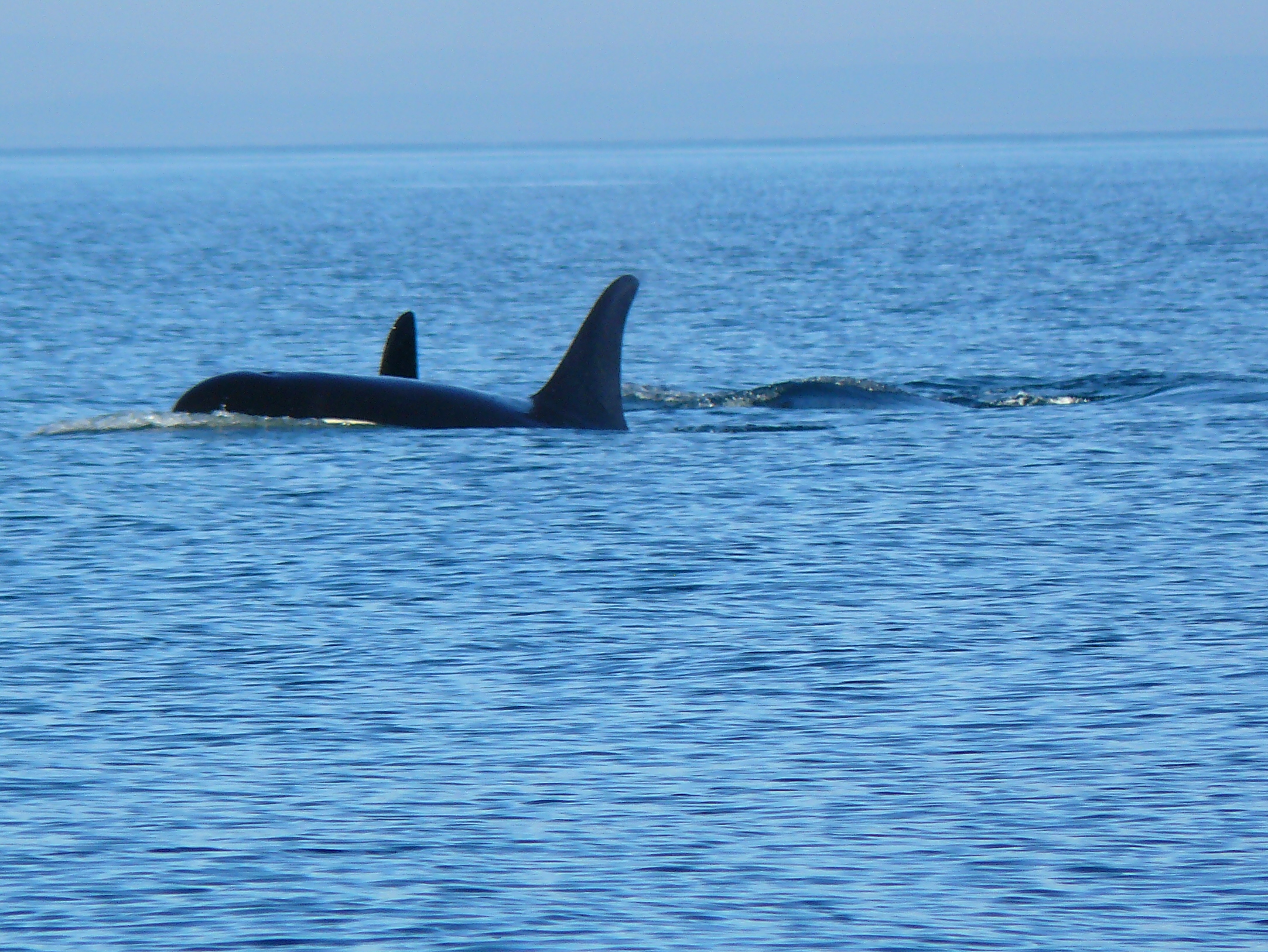
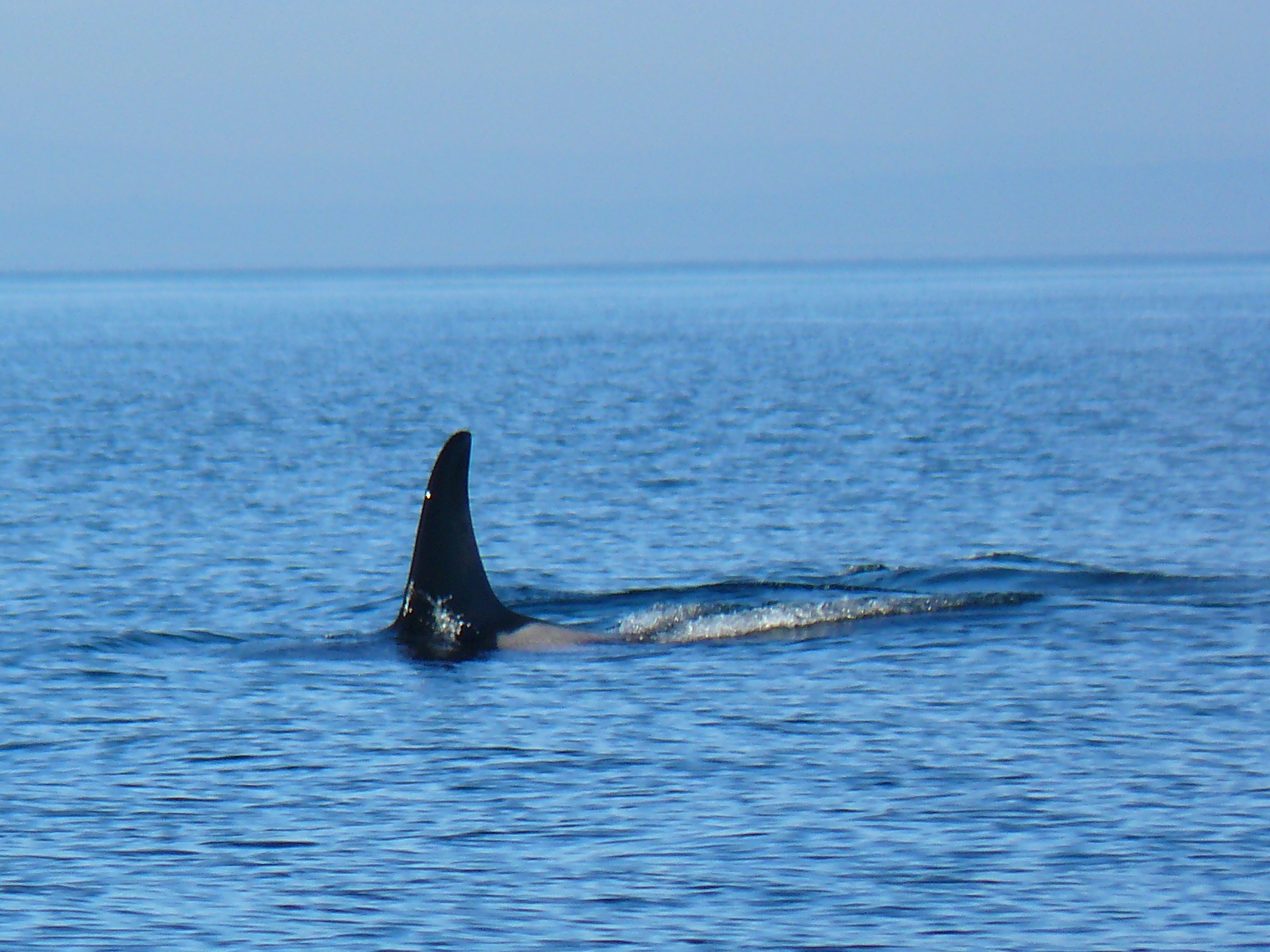
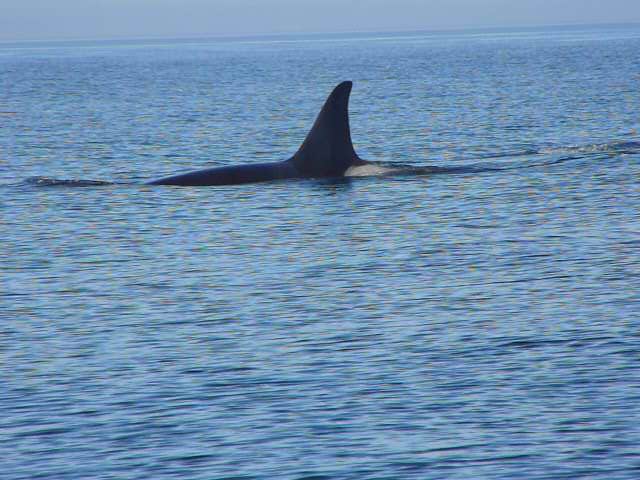
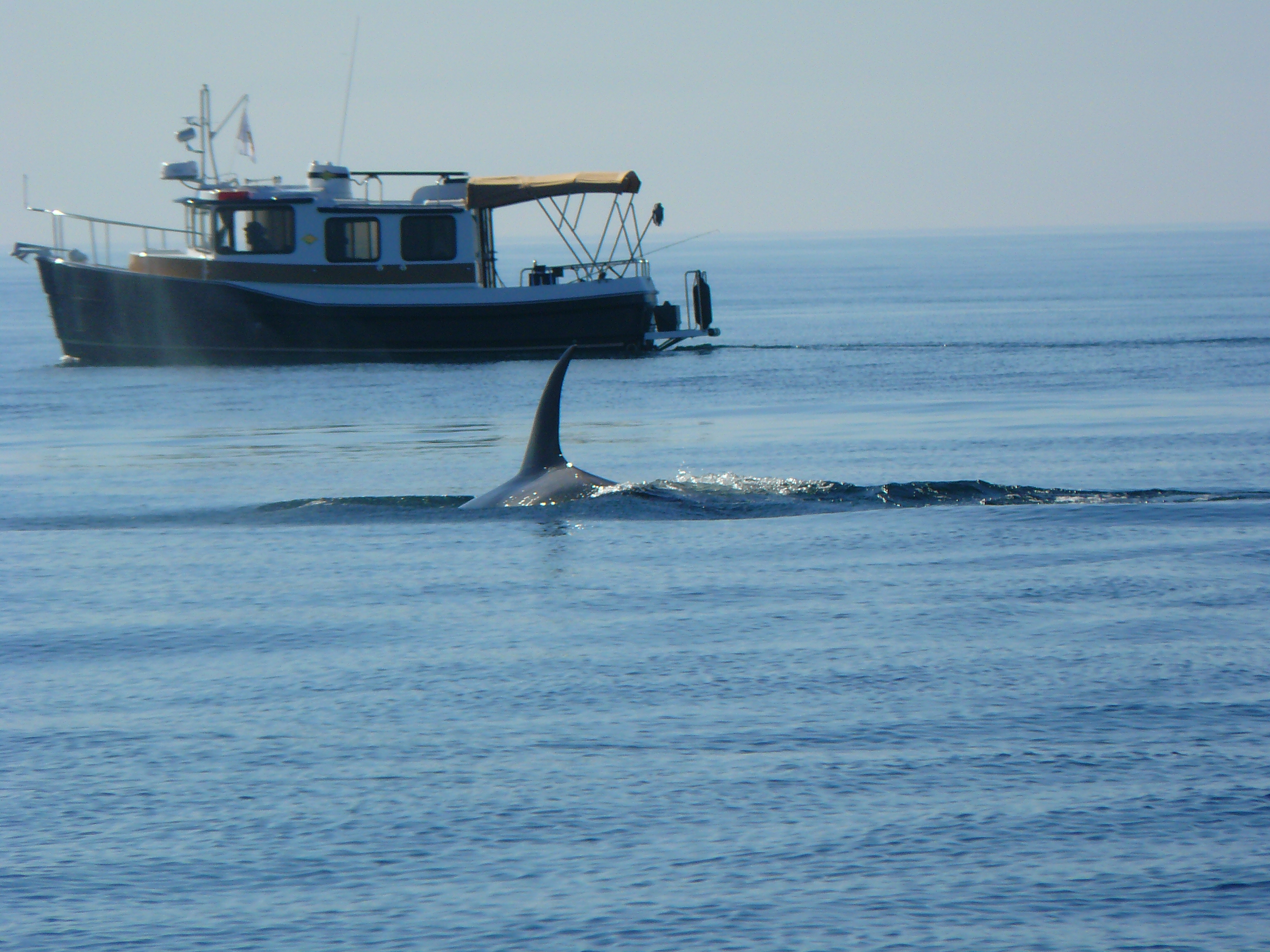
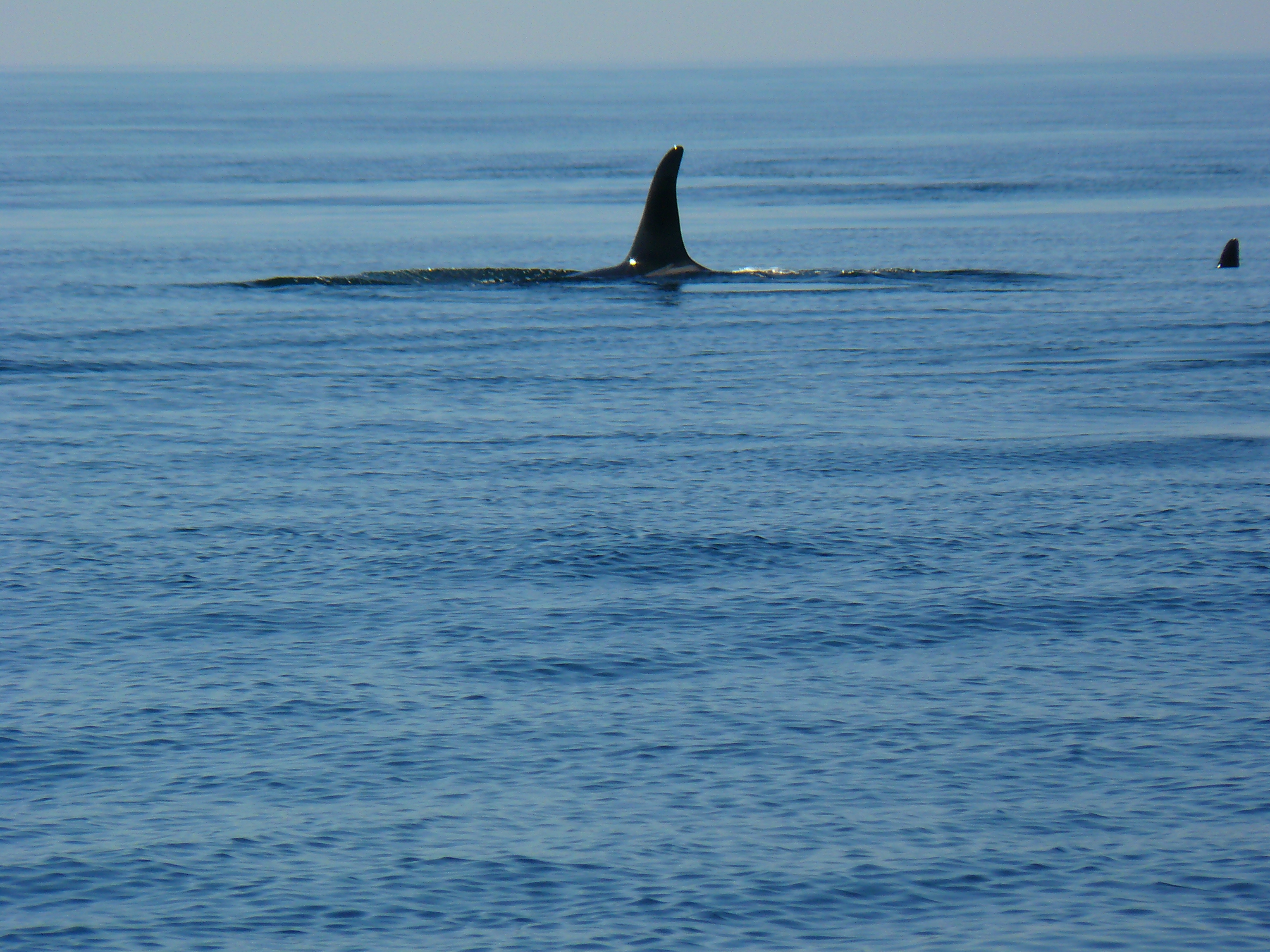
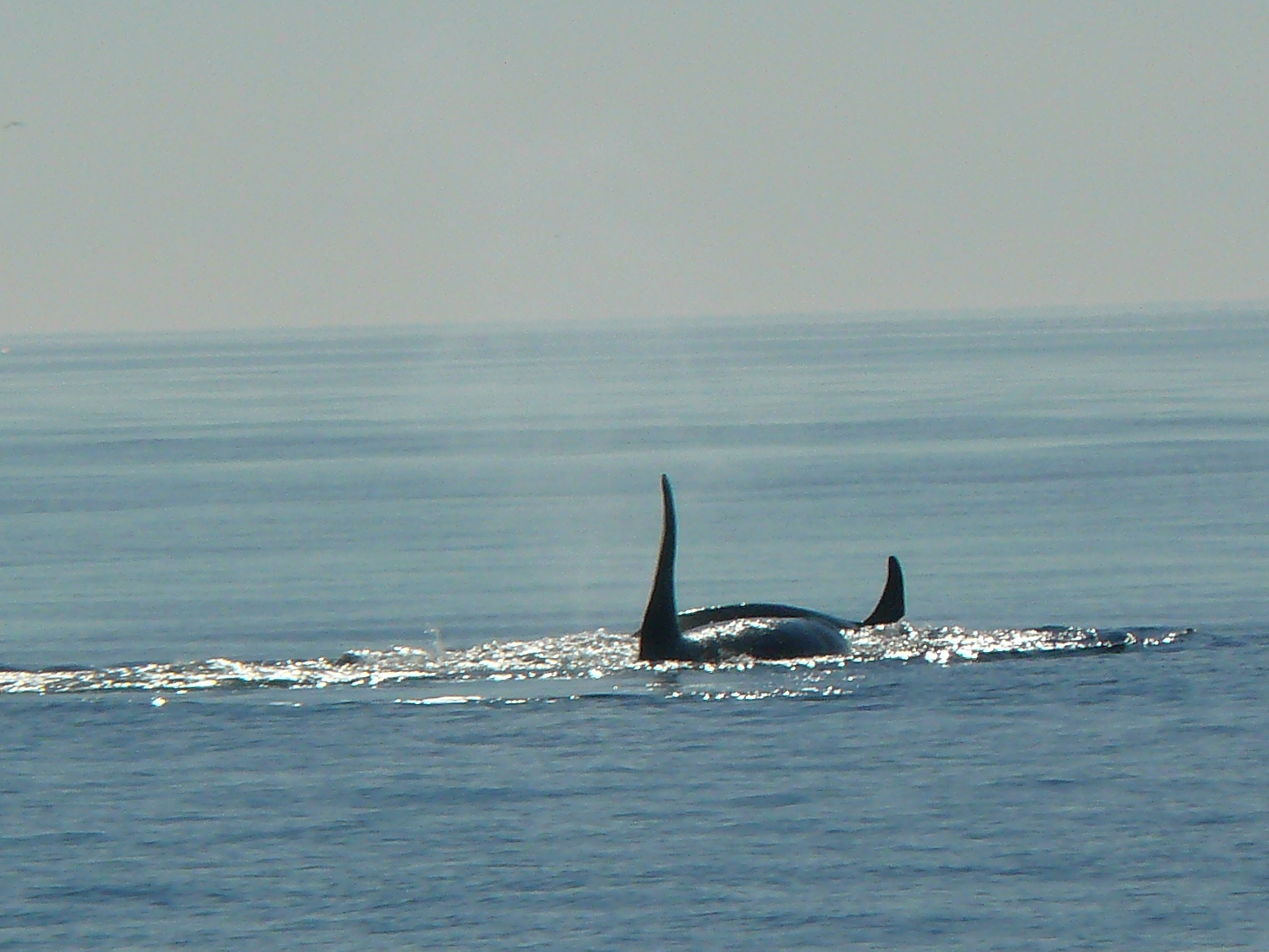
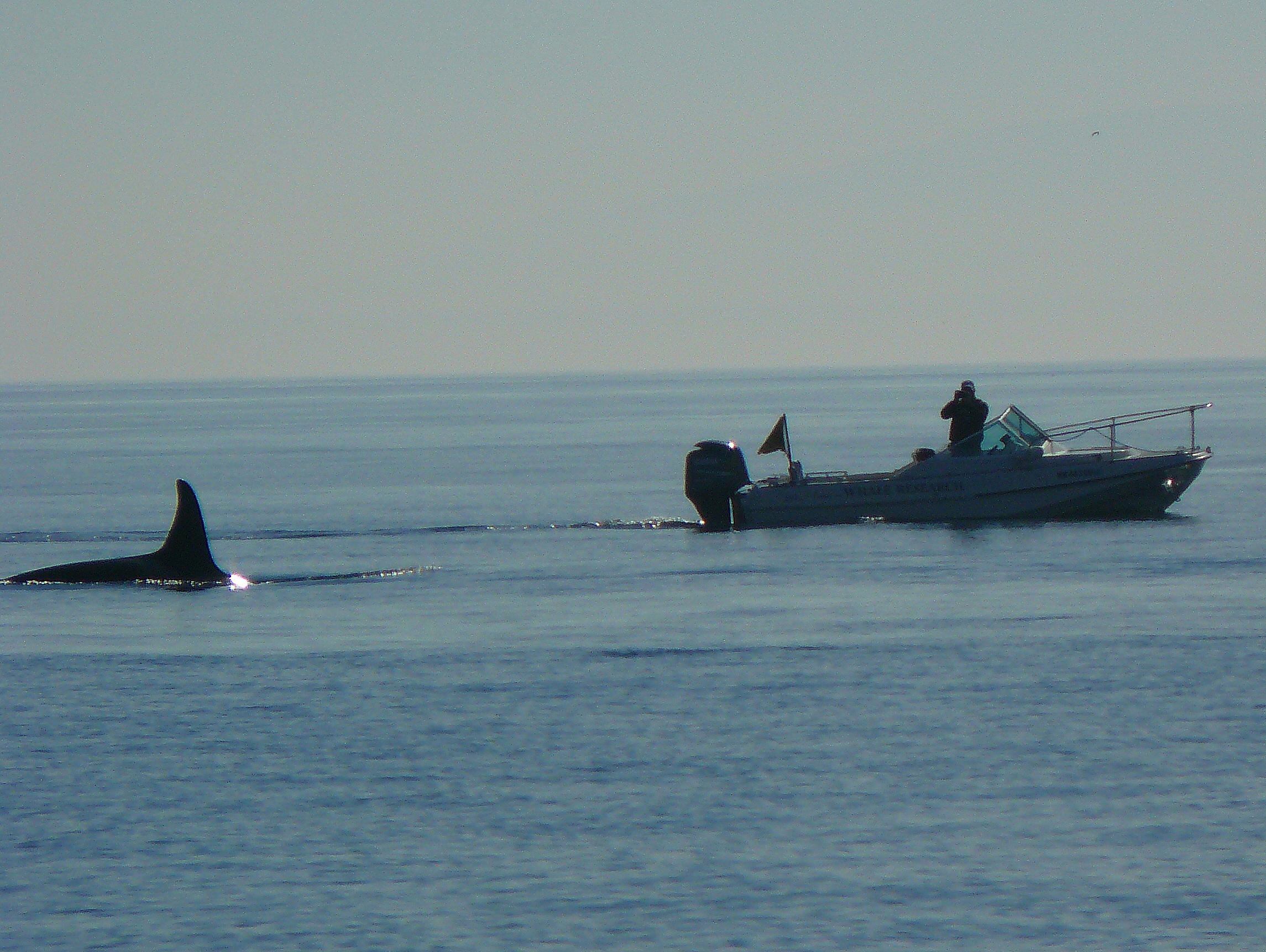
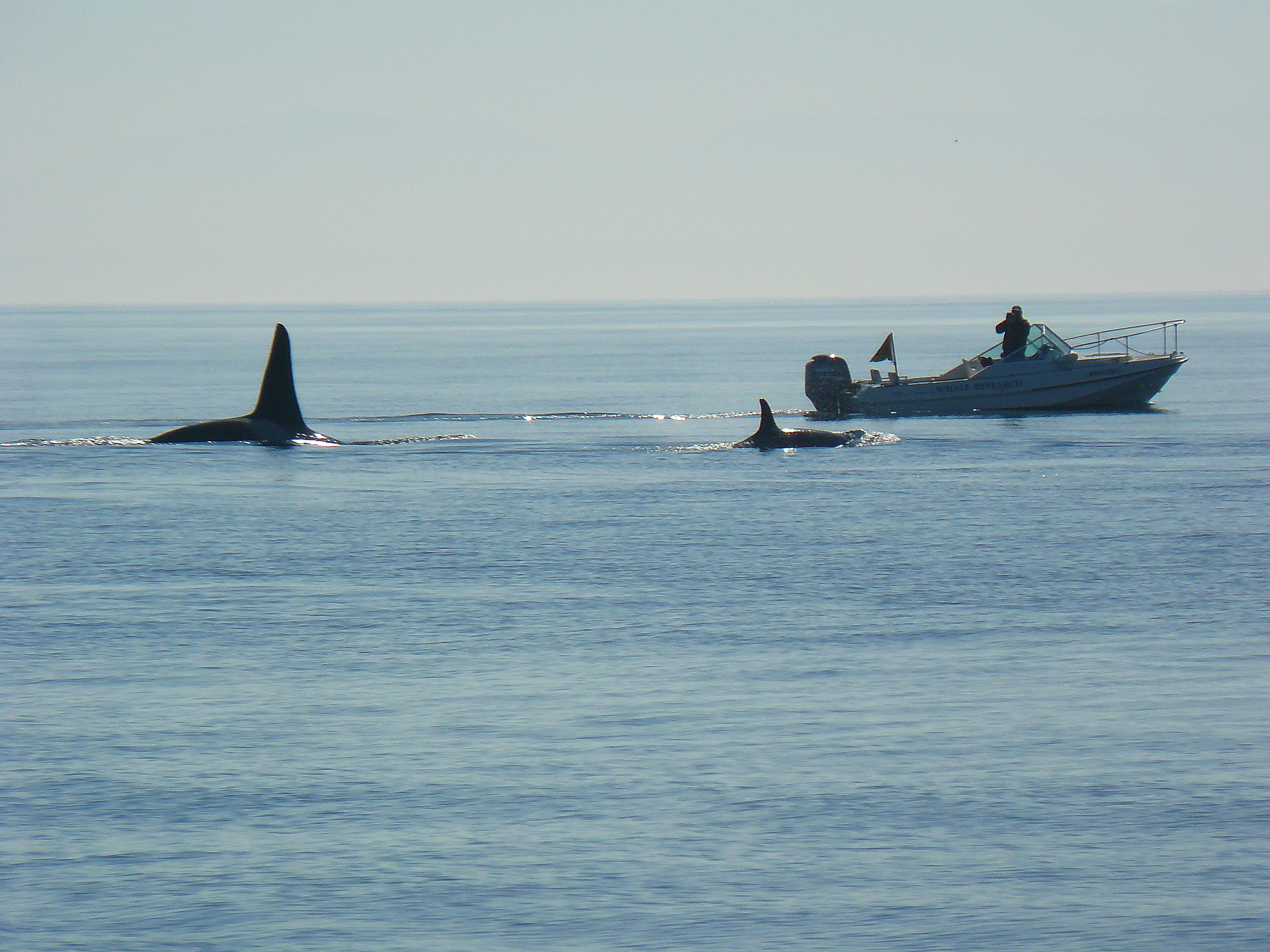
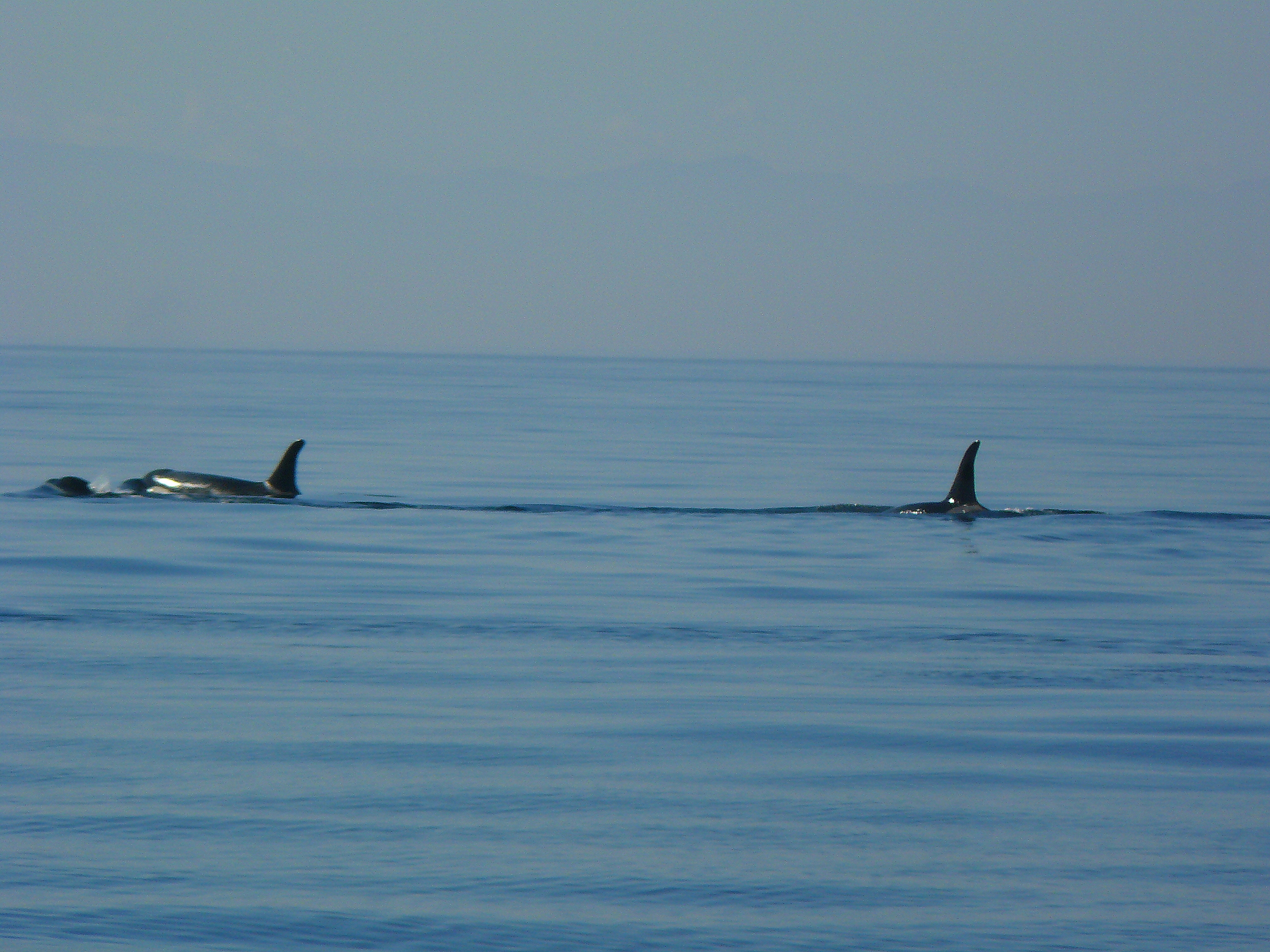
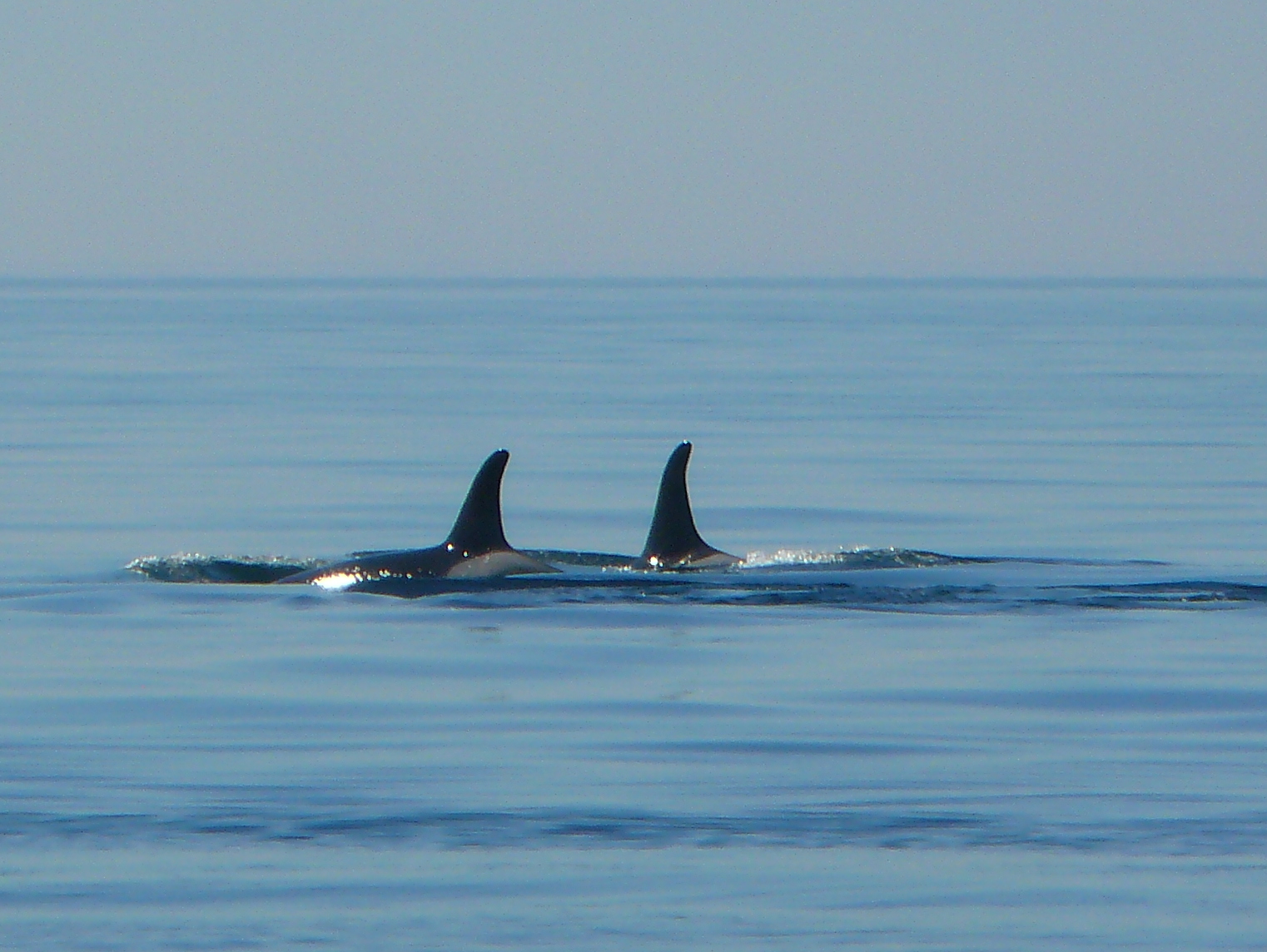
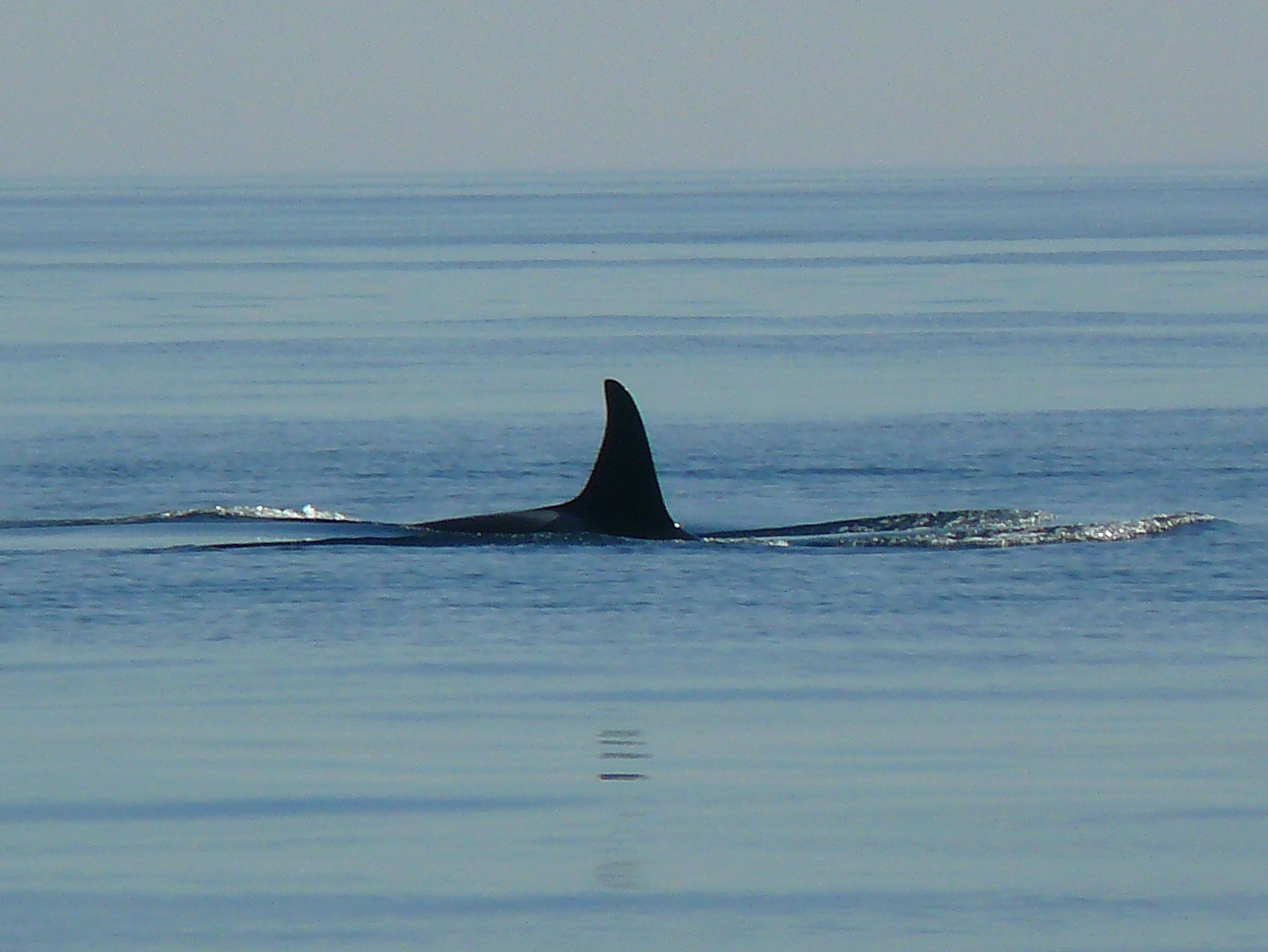
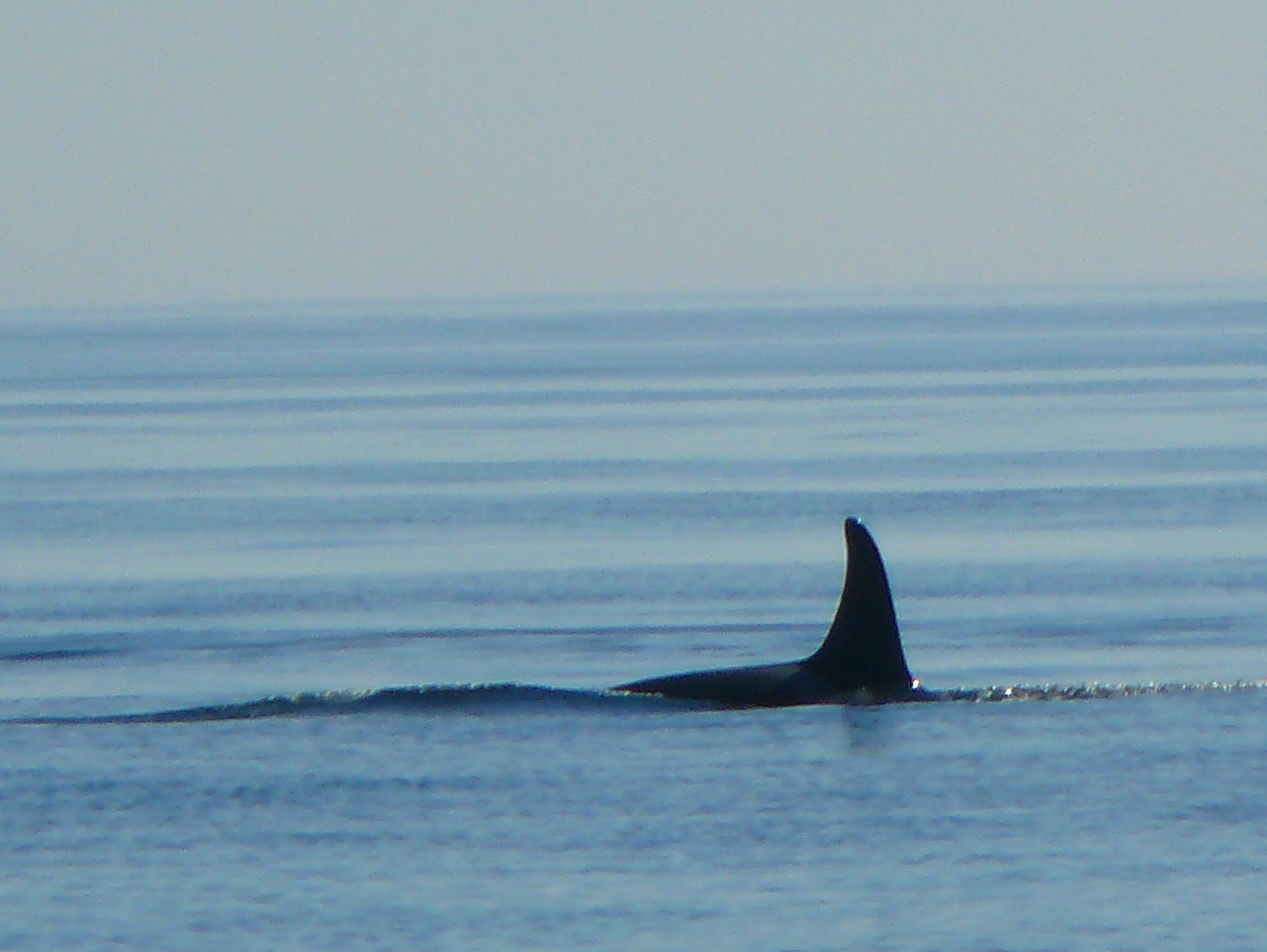
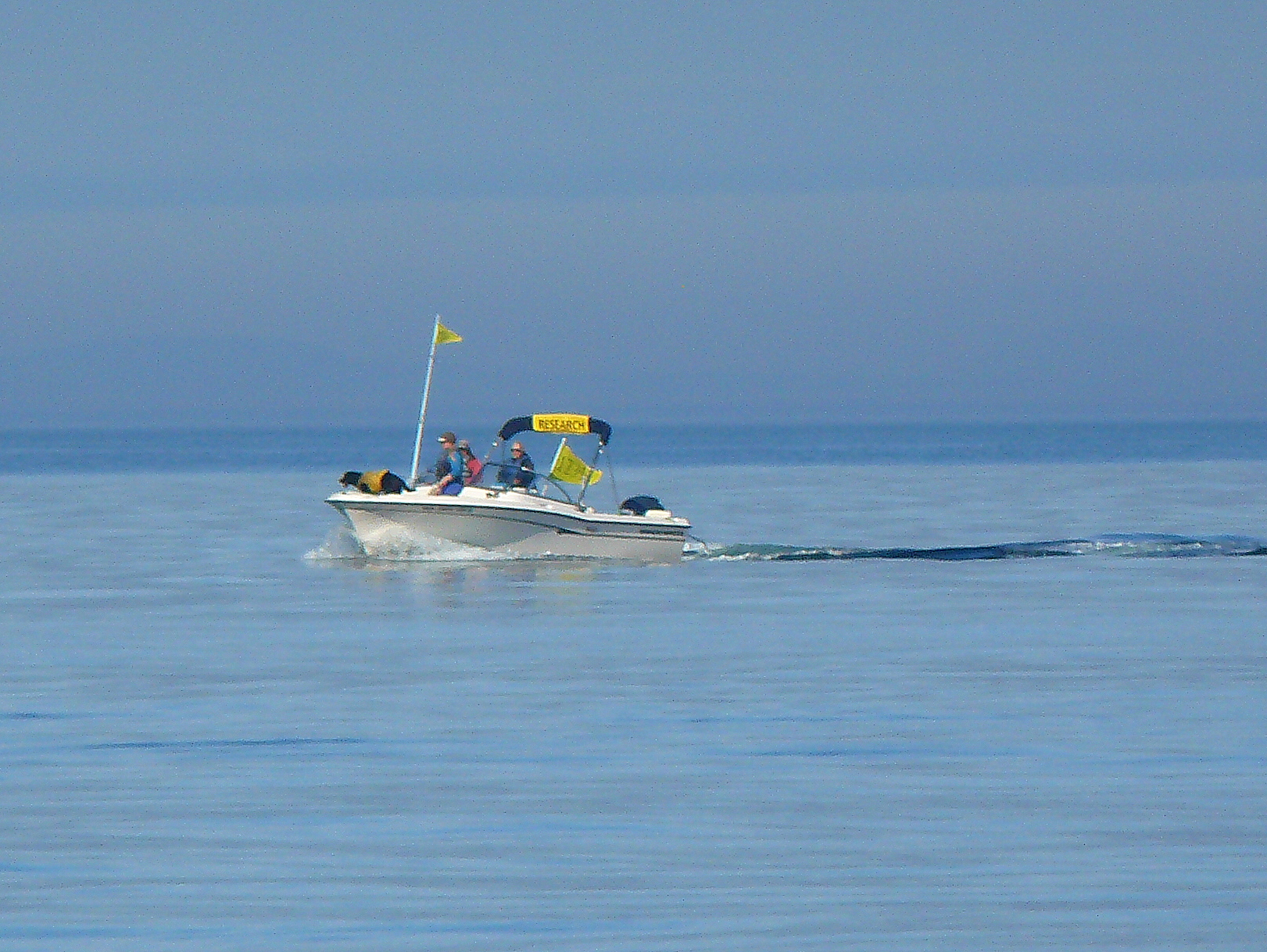
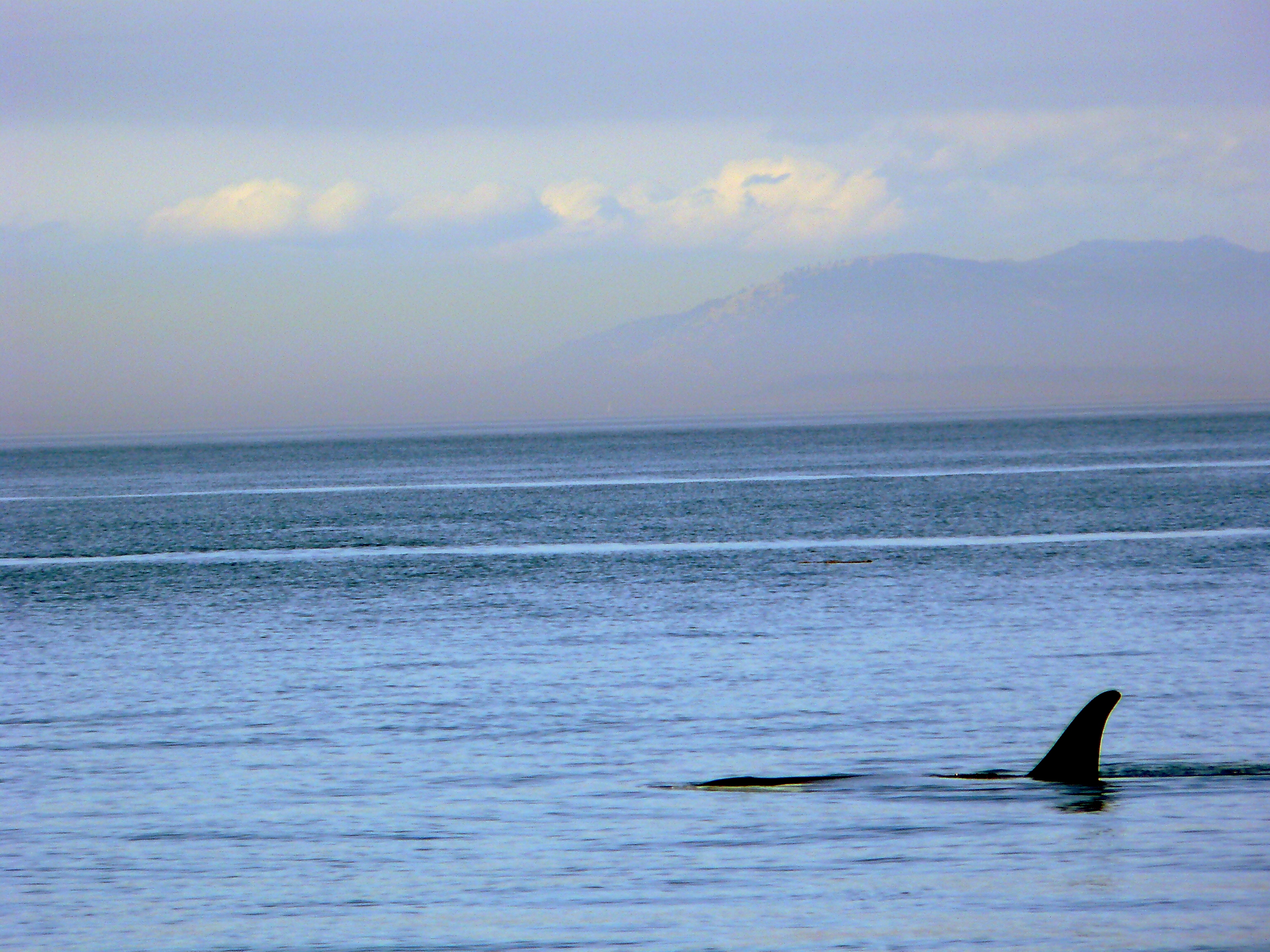
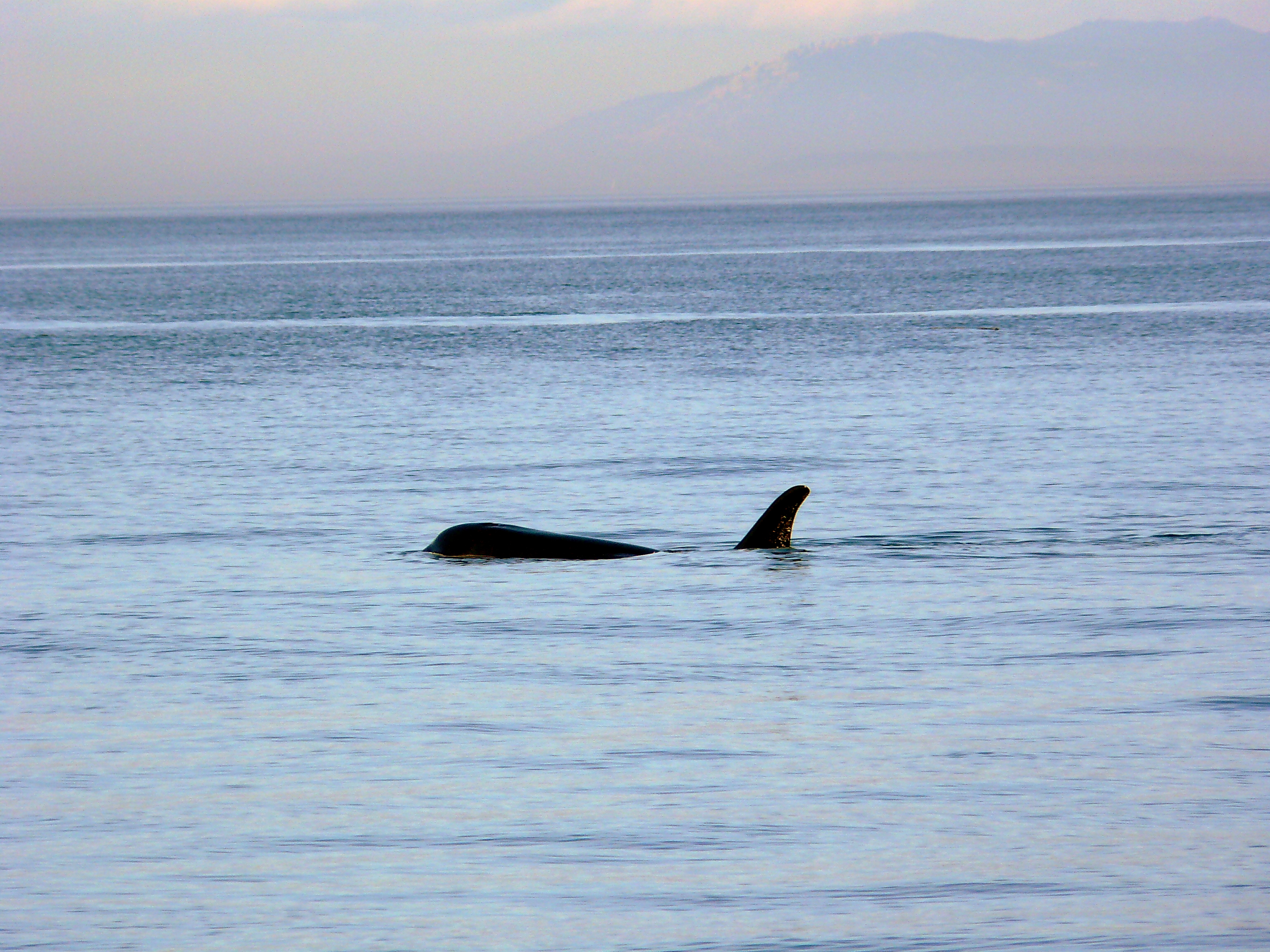
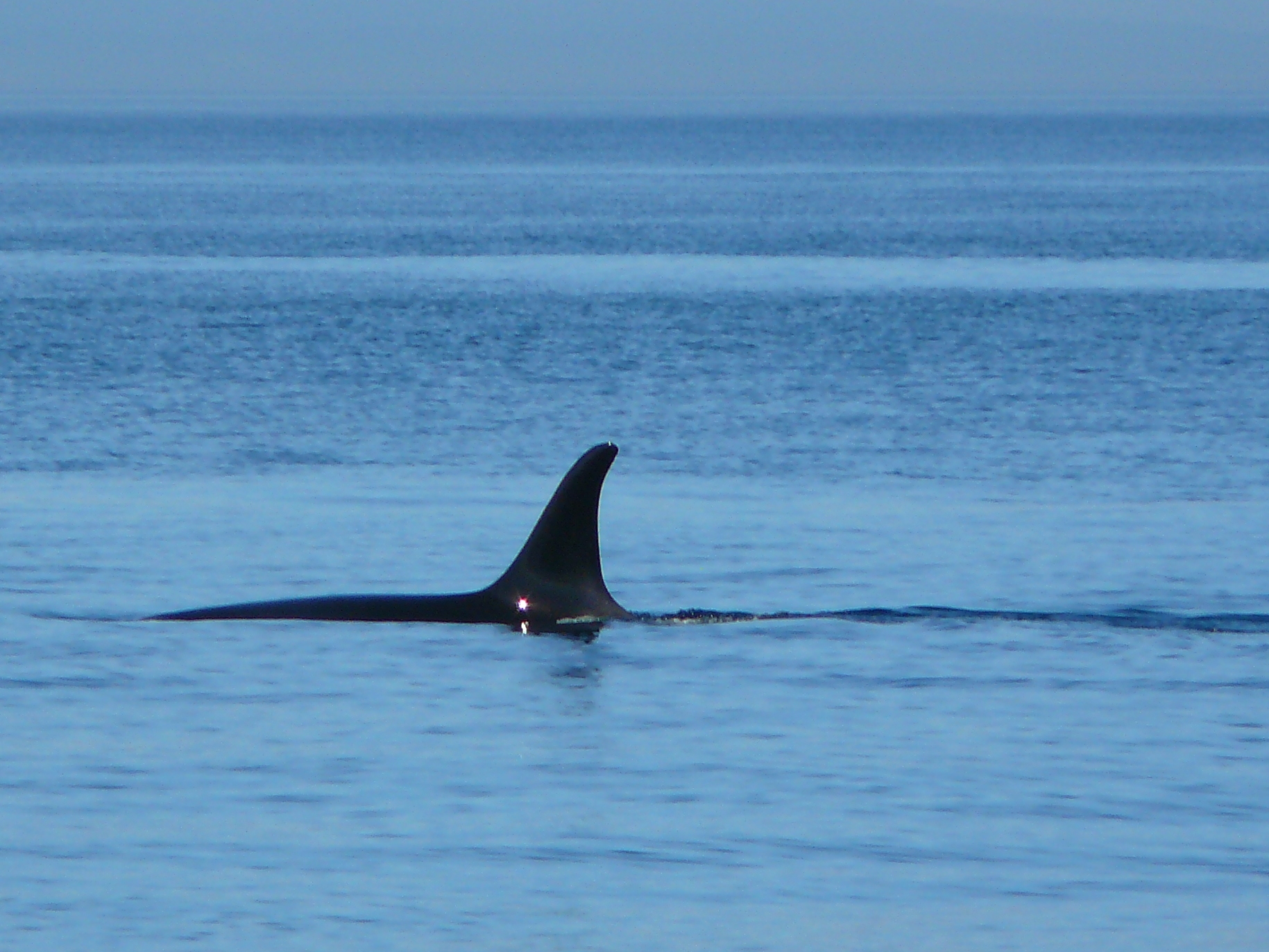
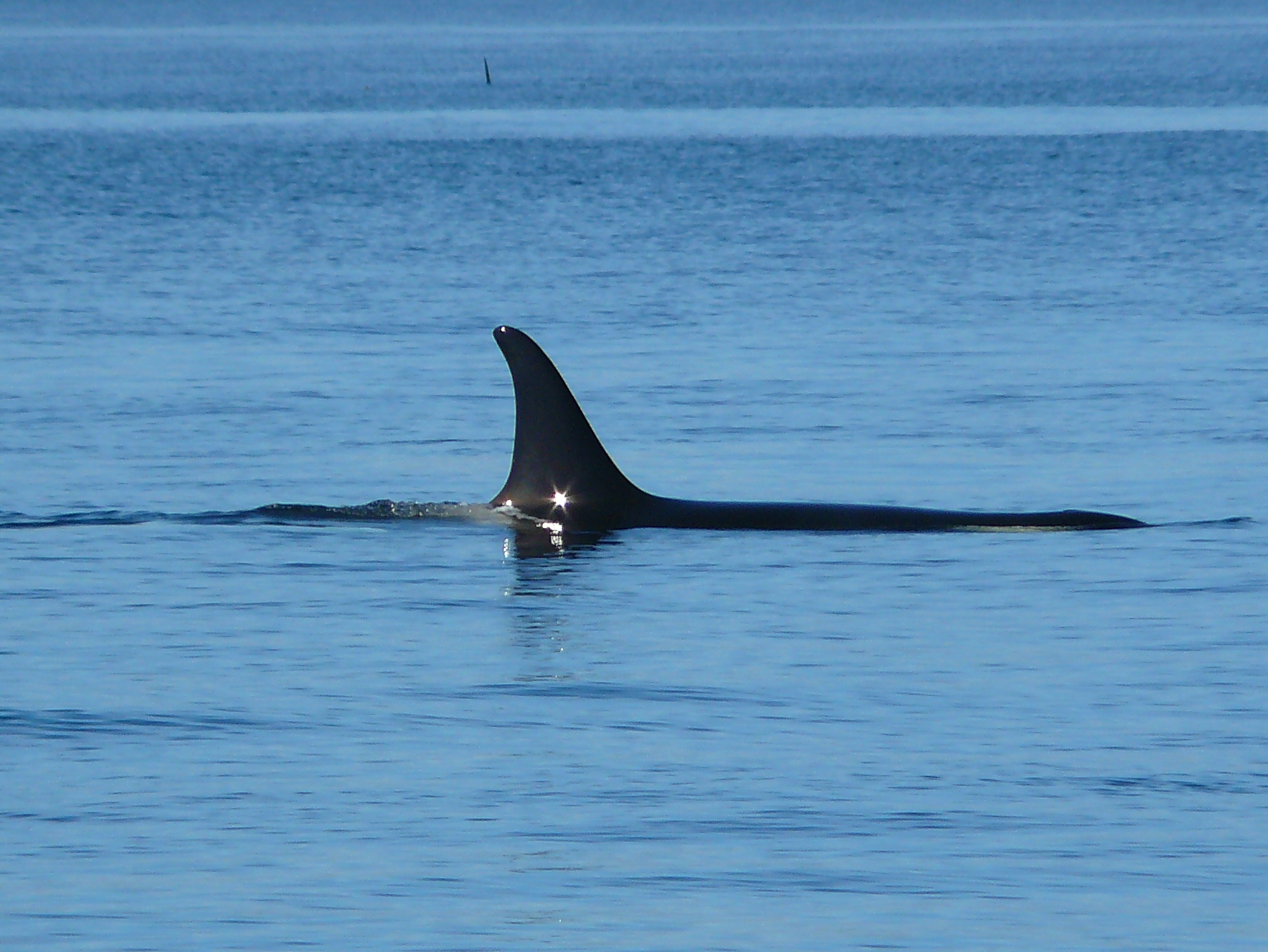
Out on the pond like, flat, calm, Strait of Juan de Fuca! Sunshine, Salish Sea Southern Fish Eating Orcas gathering, meandering, fishing, resting, by Hein Bank, heading south, south-west, traveling out to the Pacific Ocean. Humbly grateful to share moments with the whales 🙂
Video:






Posted in Salish Sea San Juan Islands | Tags: foraging, Orca Whales, resting, Salish Sea, Strait of Juan de Fuca, tail slaps
Wondrous Life in San Juan Islands!
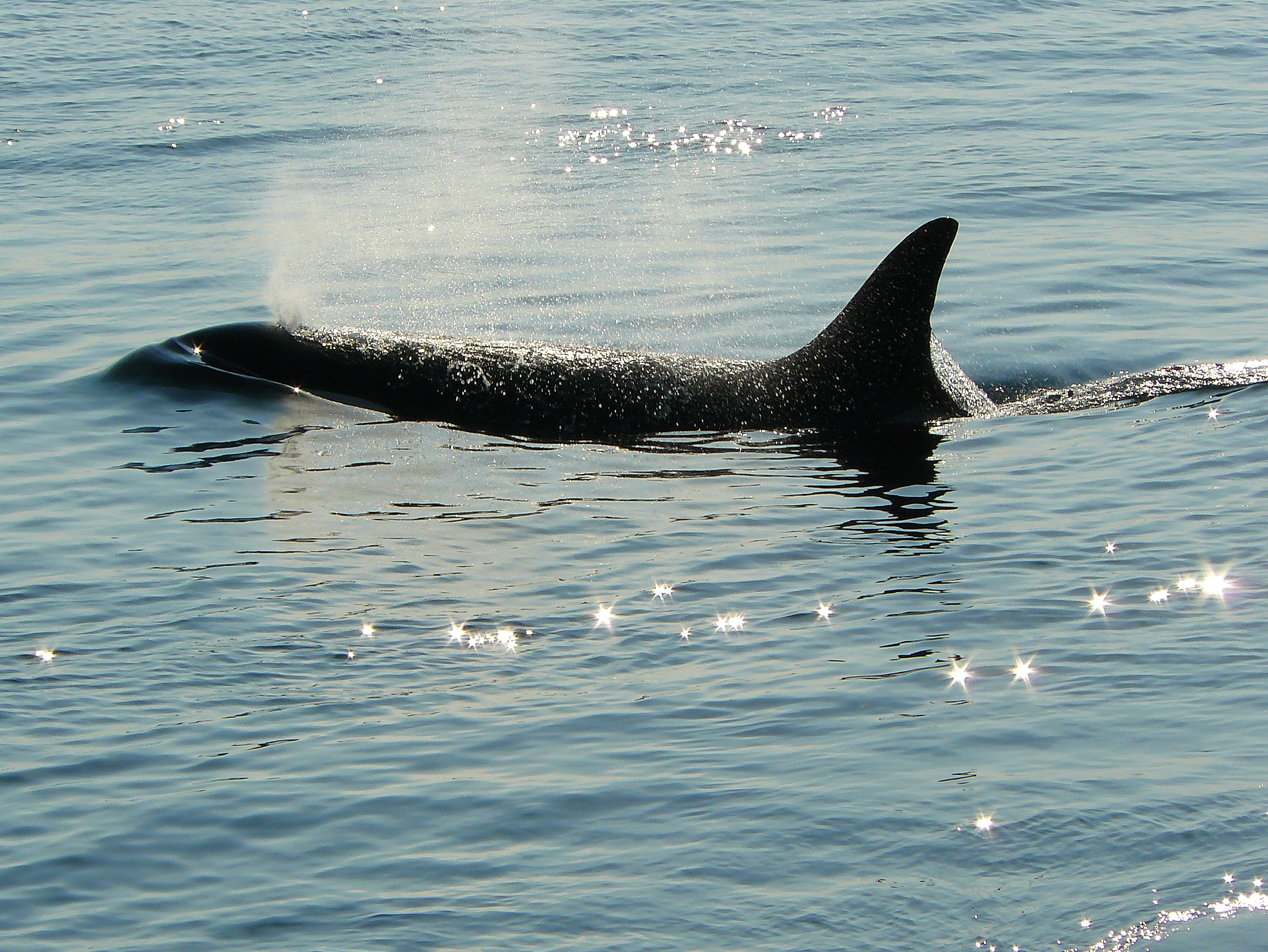
J-2 Granny Still Sparkles 🙂 estimated 103 years alive!
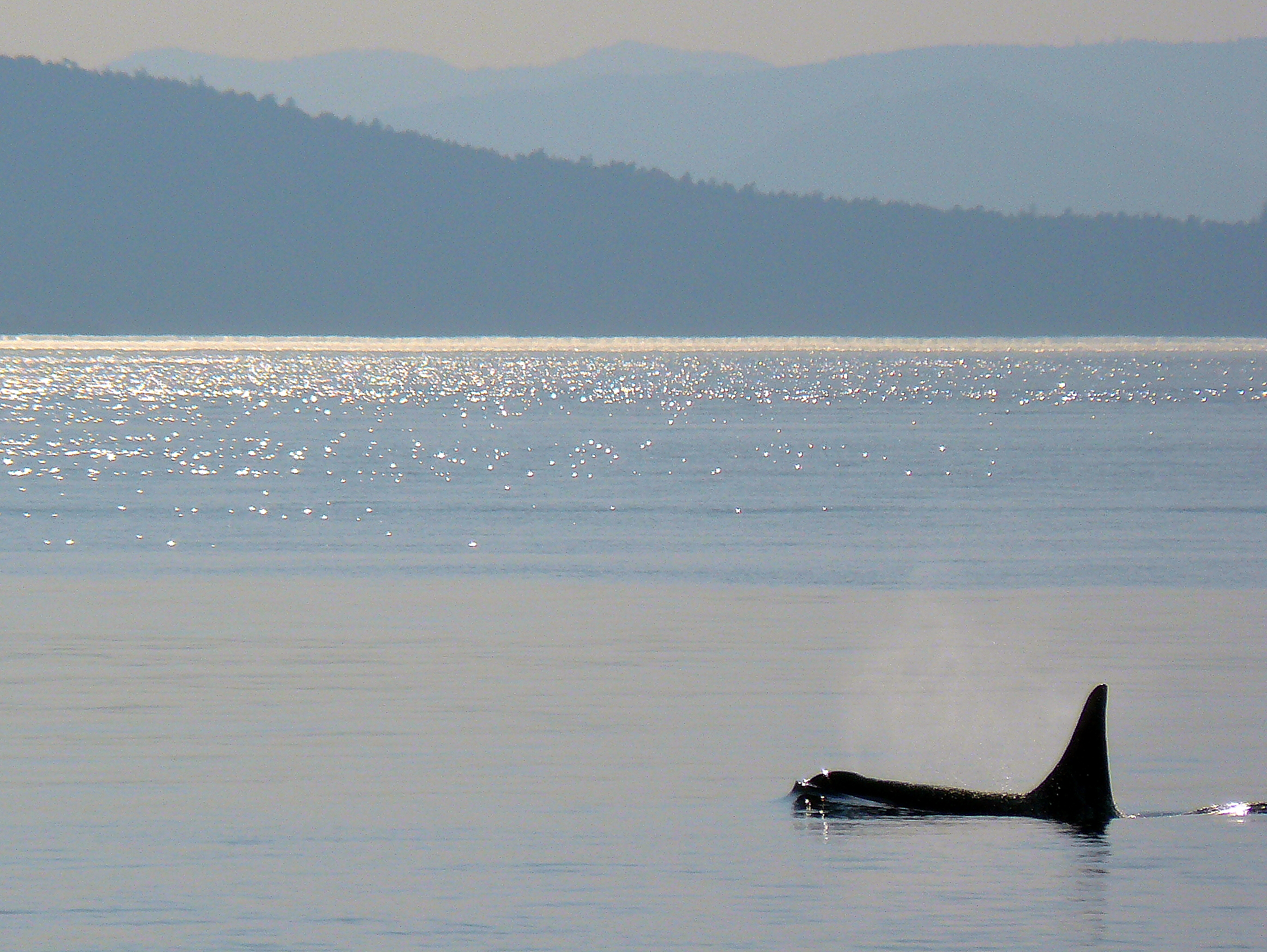
L-87 Onyx 22 year old male orphan adopted by J-2 estimated 103 year old Granny!
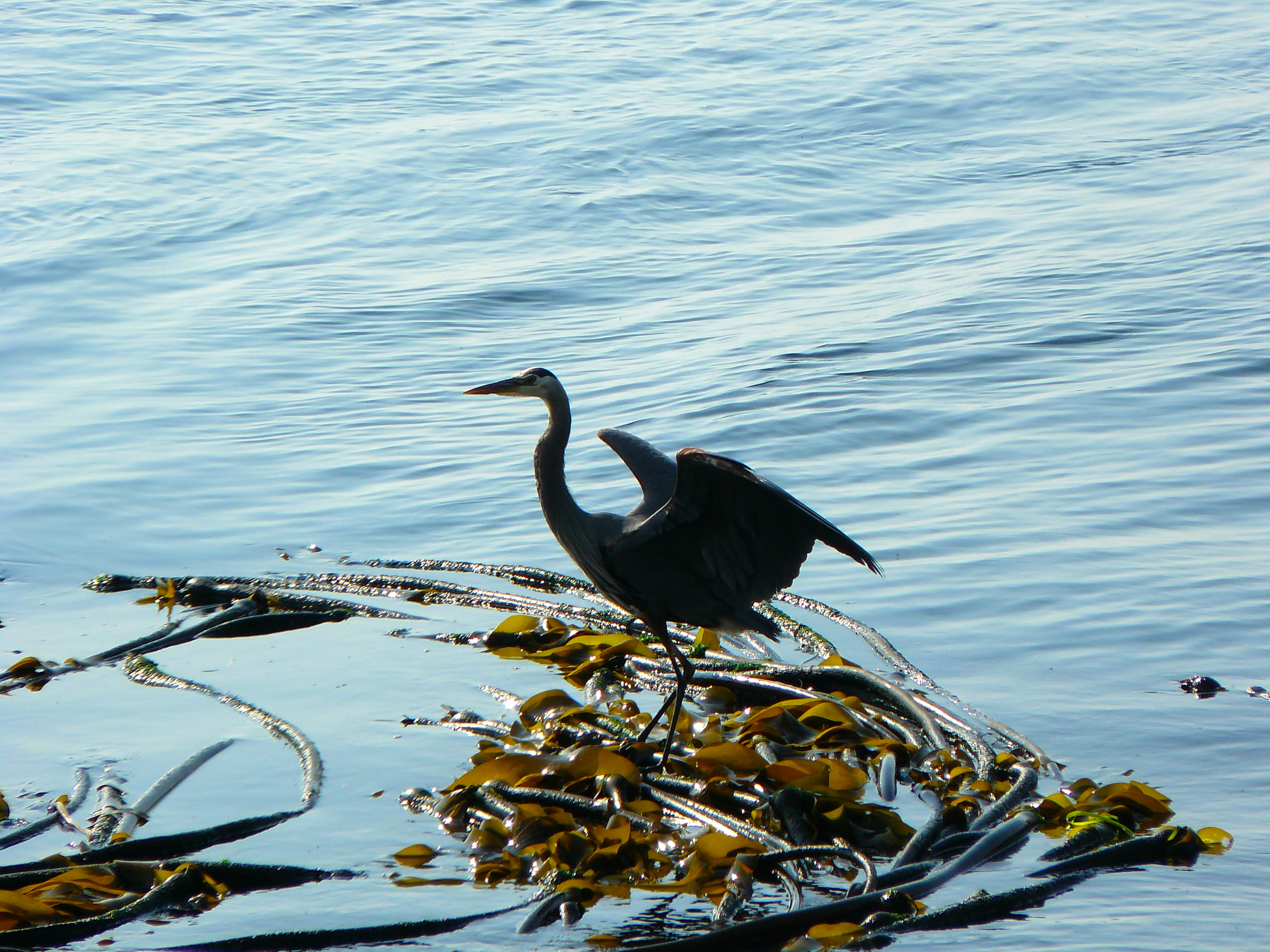
Regal Great Blue Heron-
What’s all the fuss? 🙂
August 23, 2014
People ask me if I get weary of tourists and visitors. I don’t. I see and experience place and wildlife through their fresh eyes and questions, re-igniting the passion I live, and opportunities to reconnect us humans to our ecosystems.
We Marine Educators joke about the most frequent question: What time will the whales come by? I usually answered 3pm. Today I was out at LimeKiln Lighthouse sharing education and outreach on behalf of the Whale Museum, when I was asked this. I shared about Bob Otis’ research that analyzed 20 years of sightings that showed 3pm (my previous humorous guess) edged out over other times that Orcas were sighted!
Today, however, based on my years of observations, and the intelligence, awareness, and adaptability of marine life, cetaceans particularly will often utilize their environment; the tides and currents to their advantage, with less energy expended, and IF they were in the area, IF they were in the Strait of Juan de Fuca, they may head up Haro Strait within the last 2 hours of a strong flooding tide. Today’s incoming tide was about 8 feet, peaking around 6pm. So I guesstimated, hopefully, we might see Orcas around 4pm.
Honestly, I was delightfully surprised when we first noticed some Harbor Porpoise in Haro Strait, then a large amount of boats off in the distance in the Strait of Juan de Fuca, then, then breaching Orcas at about 4pm!! It looked like a large group that split as they got closer to San Juan Island, and 2 sub-groups headed up mid channel Haro Strait past the lighthouse. The warm wonderful summer sunshine made it difficult to see saddle patches and identify the individuals. The first sub-group turned around north of the lighthouse and slowly swam back against the tide, the female coming to the shoreline. It was J-2 Granny!!! She swam and played, turning upside down in the bull kelp beds! Was she utilizing a coastline countercurrent? We were all touched and awed to experience such a close, visible sighting of an estimated 103 year old Orca! We were also able to identify her 2 male traveling companions out in the strait, L-87 Onyx and J-34 Doublestuf. Harbor Seals were hanging out in the kelp beds too, relieved they were the fish eating Killer Whales! Had J-2 Granny and the boys cruised by checking for Salmon? For 2 hours, 4pm-6pm, we were graced with whales. There was also a wedding at the lighthouse delayed as the bride and groom sat on the rocks mesmerized by the whales! Wow! Forever memorable! This Orca visit made all the questions answered and ways how we can help, even more meaningful to folks visiting from many places- Washington, Oregon, California, Utah, a family from India! It keeps me hopeful in humanity with this connection to the Salish Sea and magnificent wildlife; that people will be mindful and caring of our impacts on our ocean planet.
I share the science, the wisdom, while I wonder about the 100 years of wisdom and experiences J-2 Granny is sharing with her community
and us…
SUPERPOD!!!
July 8, 2013
A lovely summer afternoon out in the Strait of Juan de Fuca welcoming the Southern Resident Killer Whales back to the Salish Sea! The Center for Whale Research and others will confirm that indeed all 82 wild orcas, of J-K-L pods came in. A bit foggy passing Cattle Point Lighthouse, then orcas off of one of their favorite dining places- False Bay, chattering away! They seemed intent on foraging for King-Chinook salmon- their primary food, as they milled about with directional changes. The clan was spread out over 7 miles and up into Haro Strait, (they can vocalize and communicate about 10 miles away from each other!)
A Bald Eagle surprised us by flying above us then dipping down, seemingly effortlessly, to snag a herring! I wonder if that eagle was taking that herring back to a fledging, as the eagle vocalized as it flew back to land.
Sightings of two Minke whales out at Salmon Bank, a Stellar Sea Lion on Whale Rocks, Harbor Seals young and old taking advantage of the strong 8’+ new moon flooding tide in Cattle Pass, numerous marine birds, and a few shy, elusive Harbor Porpoise, enrich the experience of our diverse ecosystem here in the San Juan Islands!
(And a few photos from earlier summer days sunsets 🙂



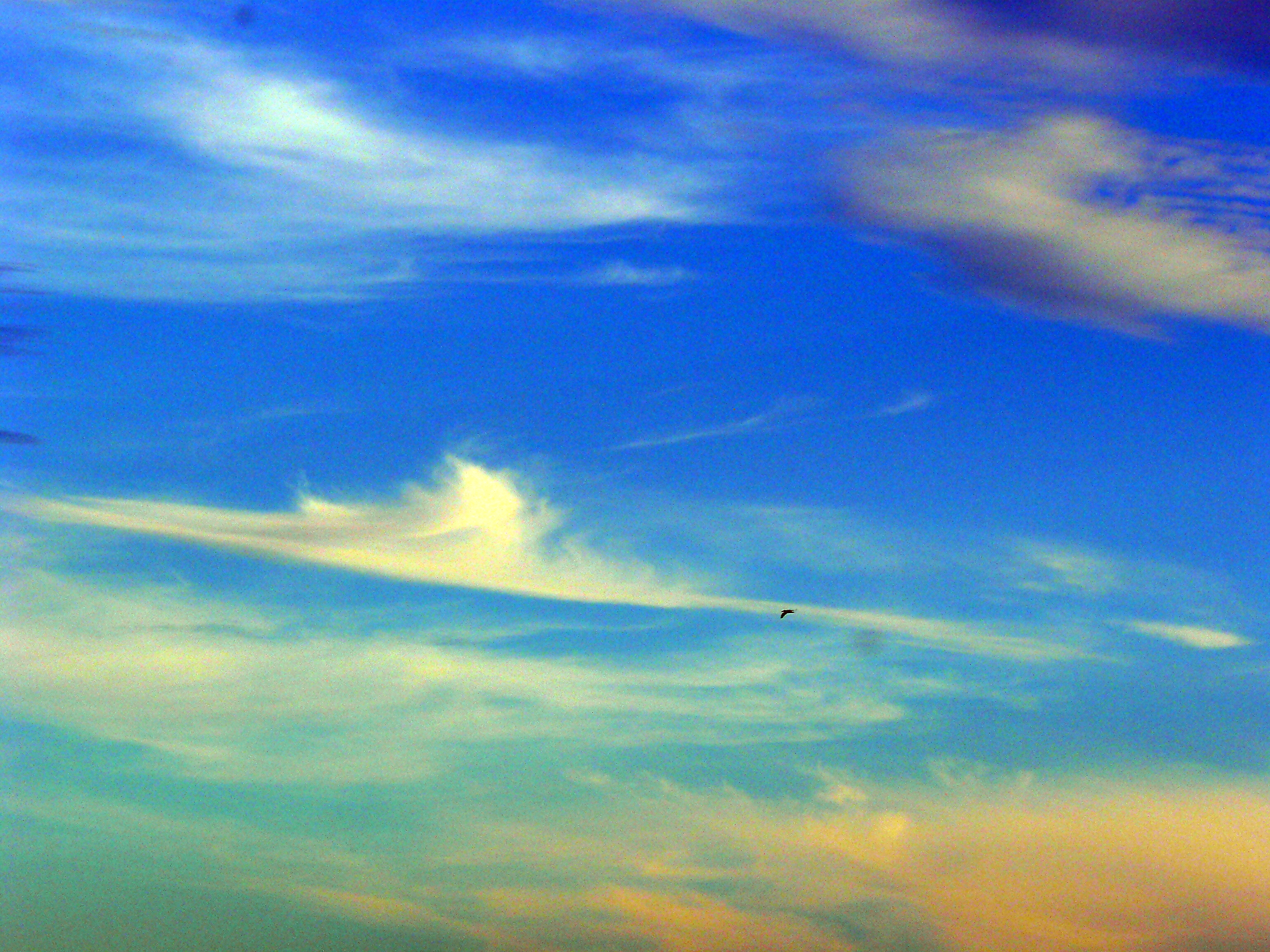
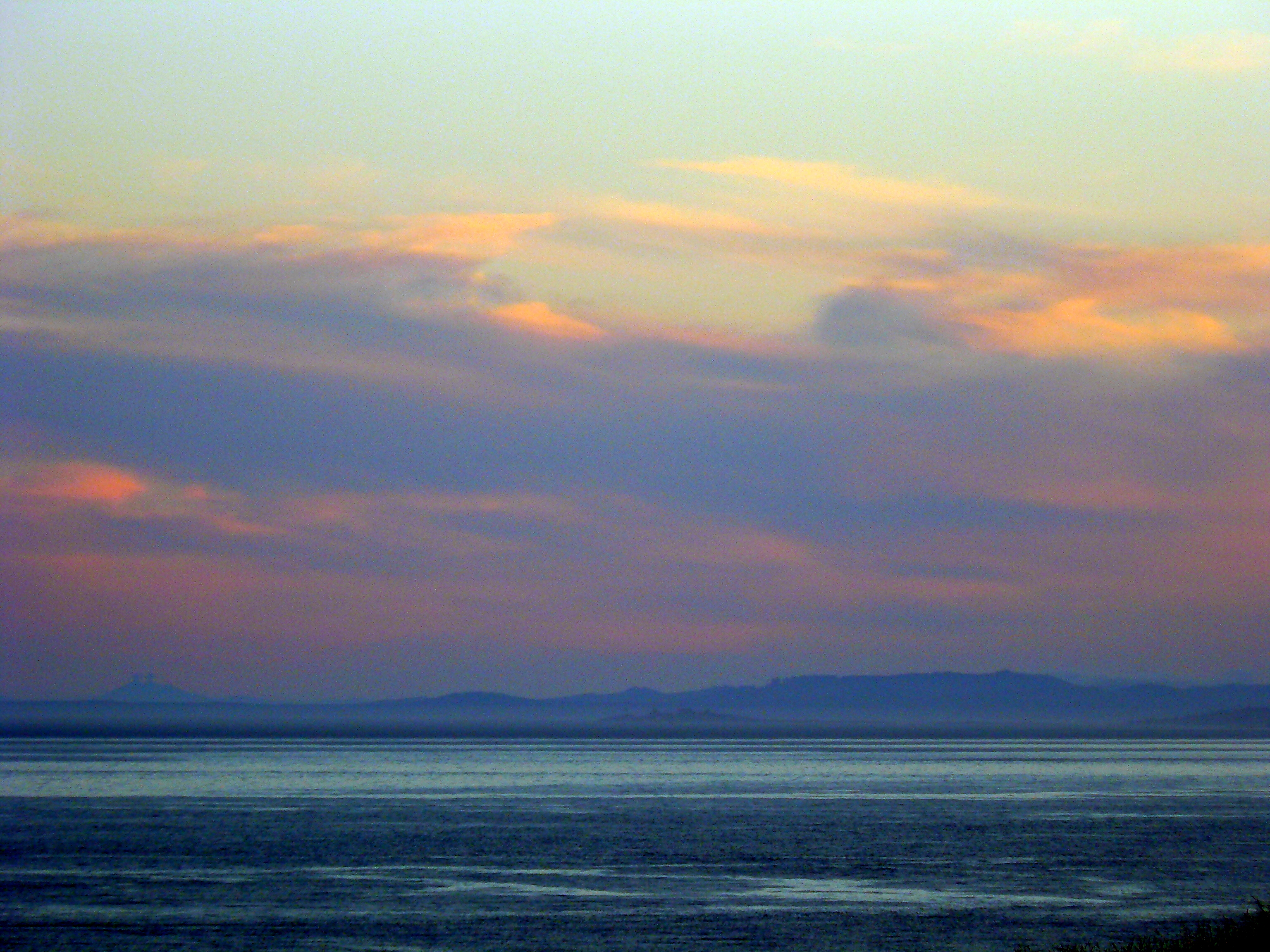
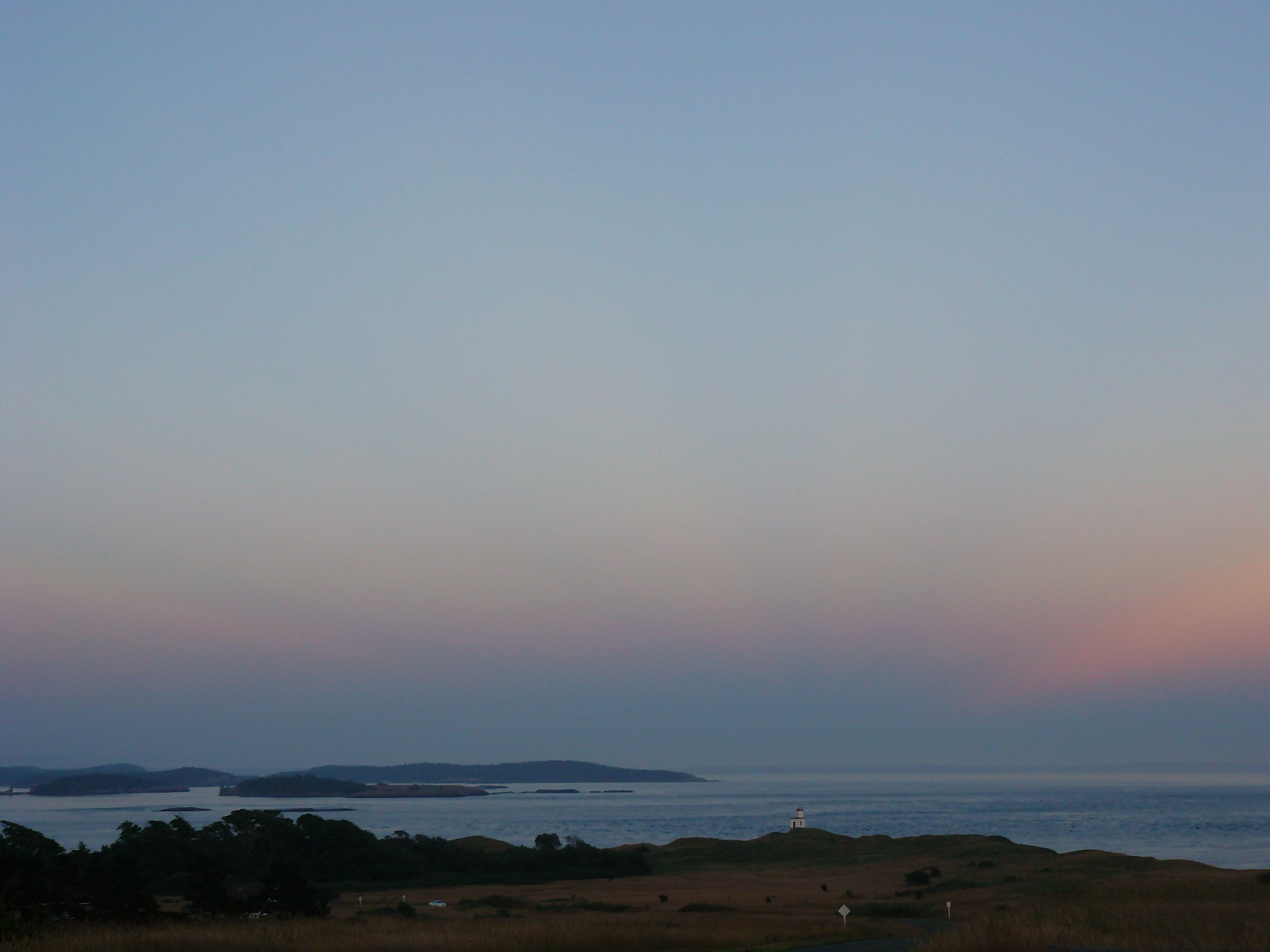
Maui Spinner Dolphins Spinning!
Posted in Wildlife in Hawai'i | Tags: dolphins, Hawaii, Maui, Spinner Dolphins
Hawaiian Sea Creatures
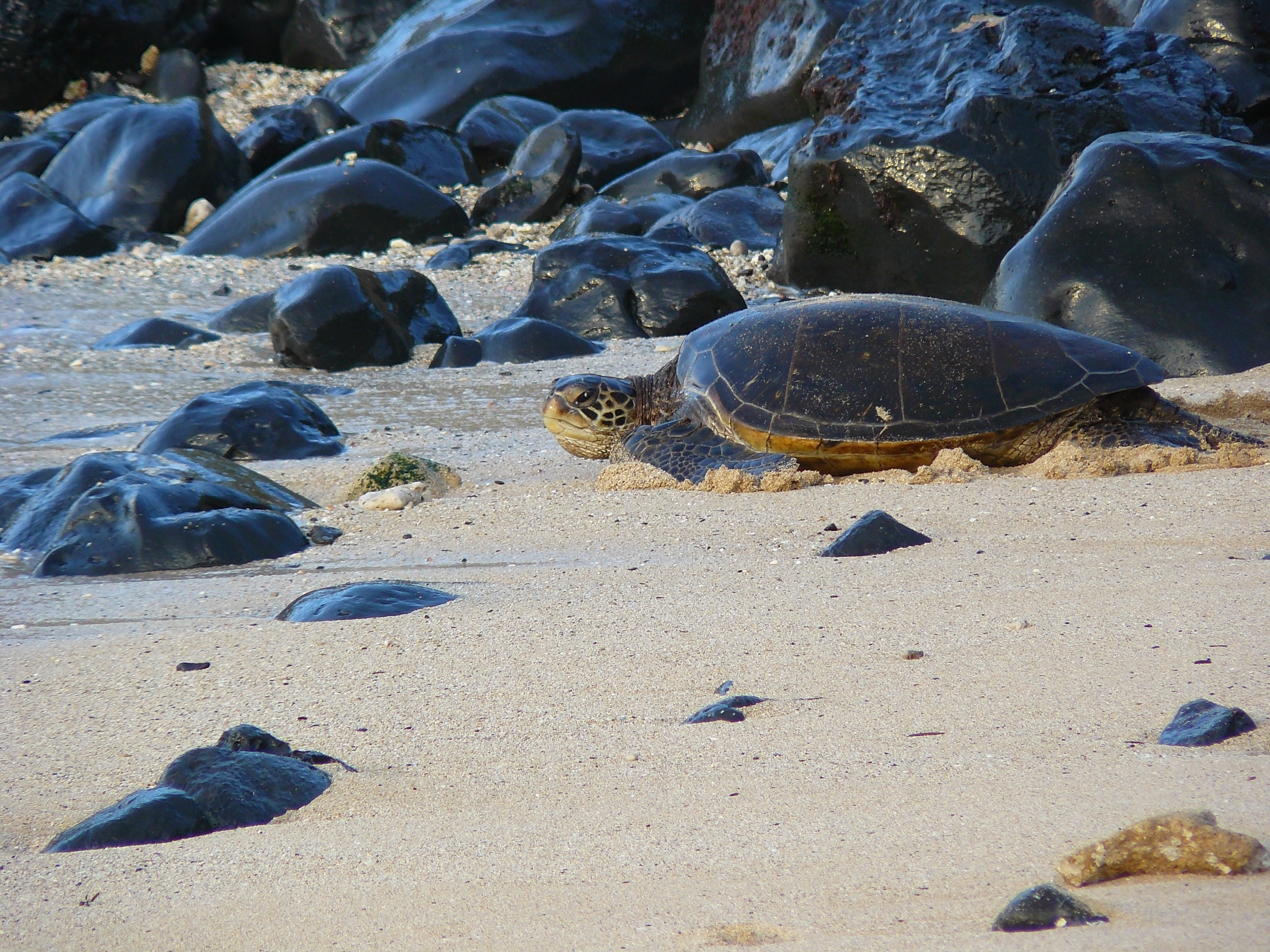
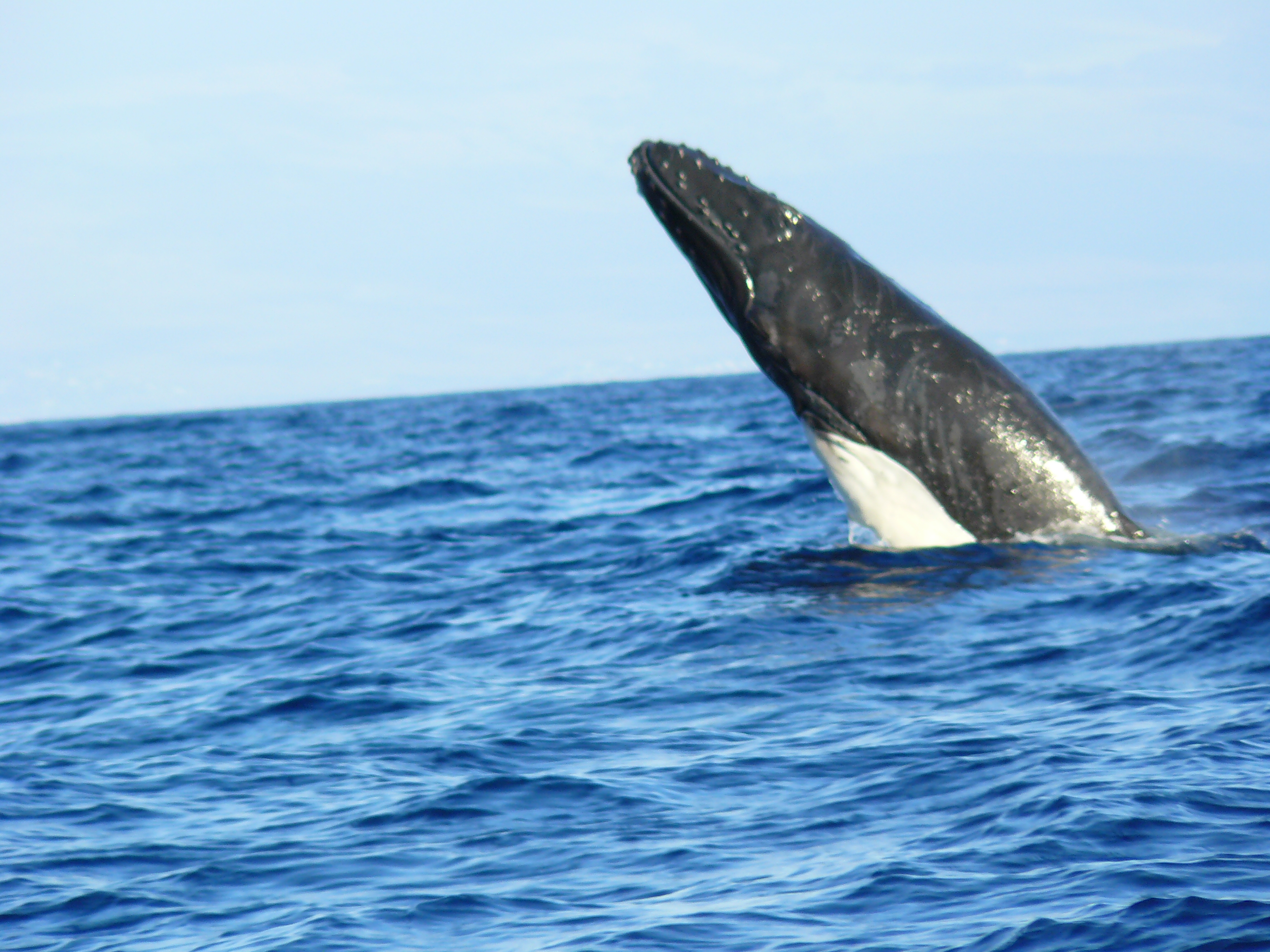
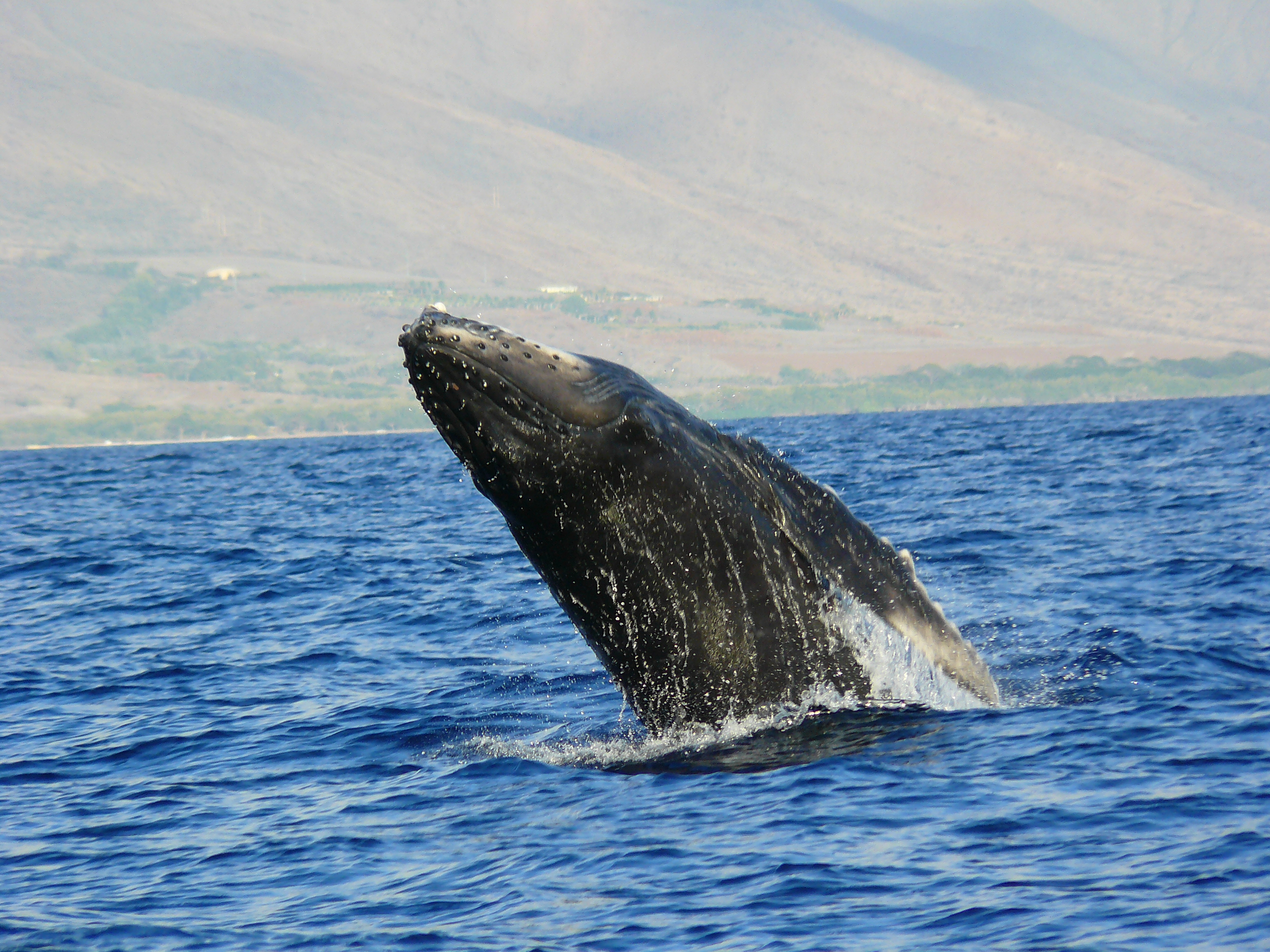
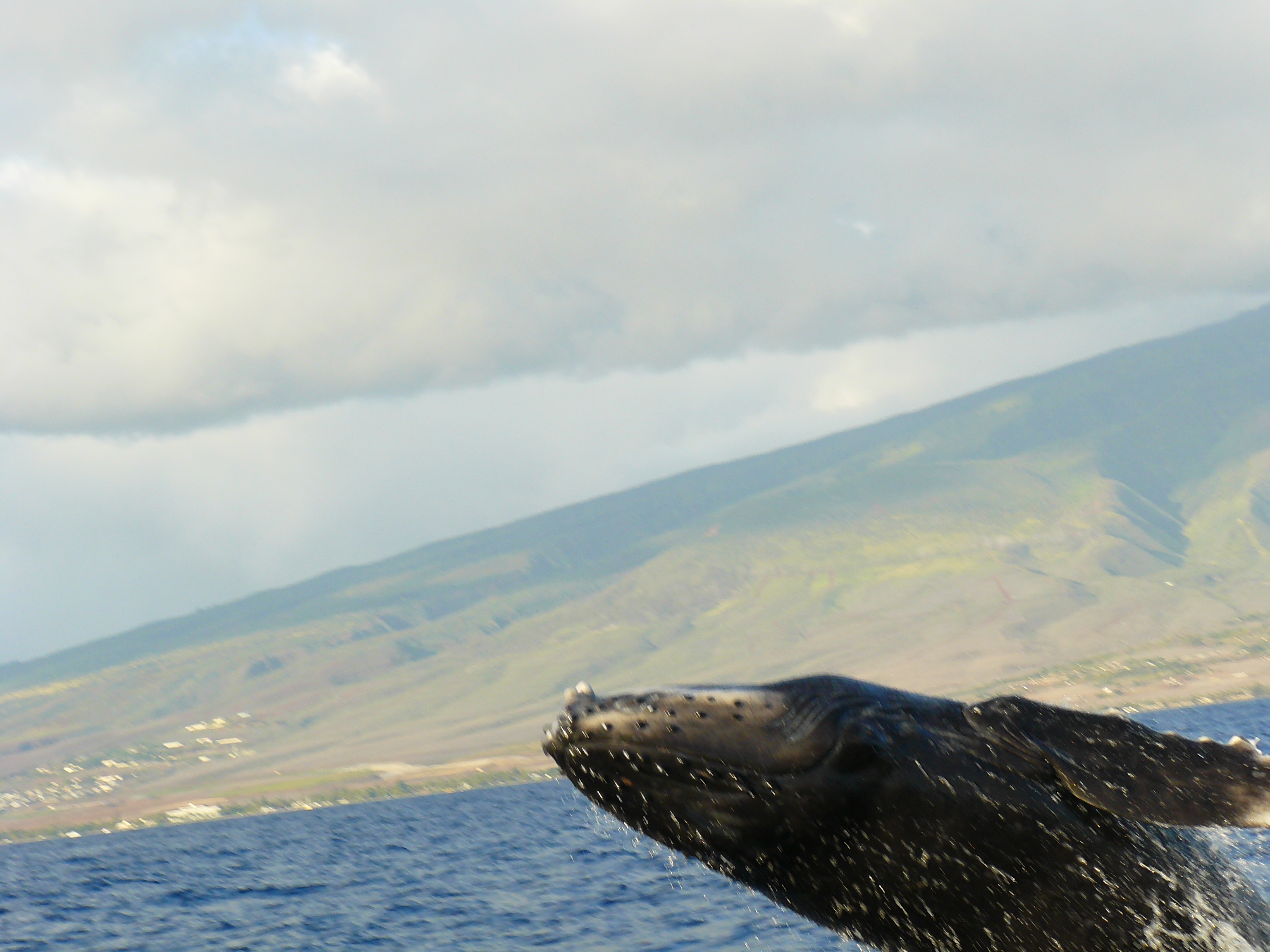
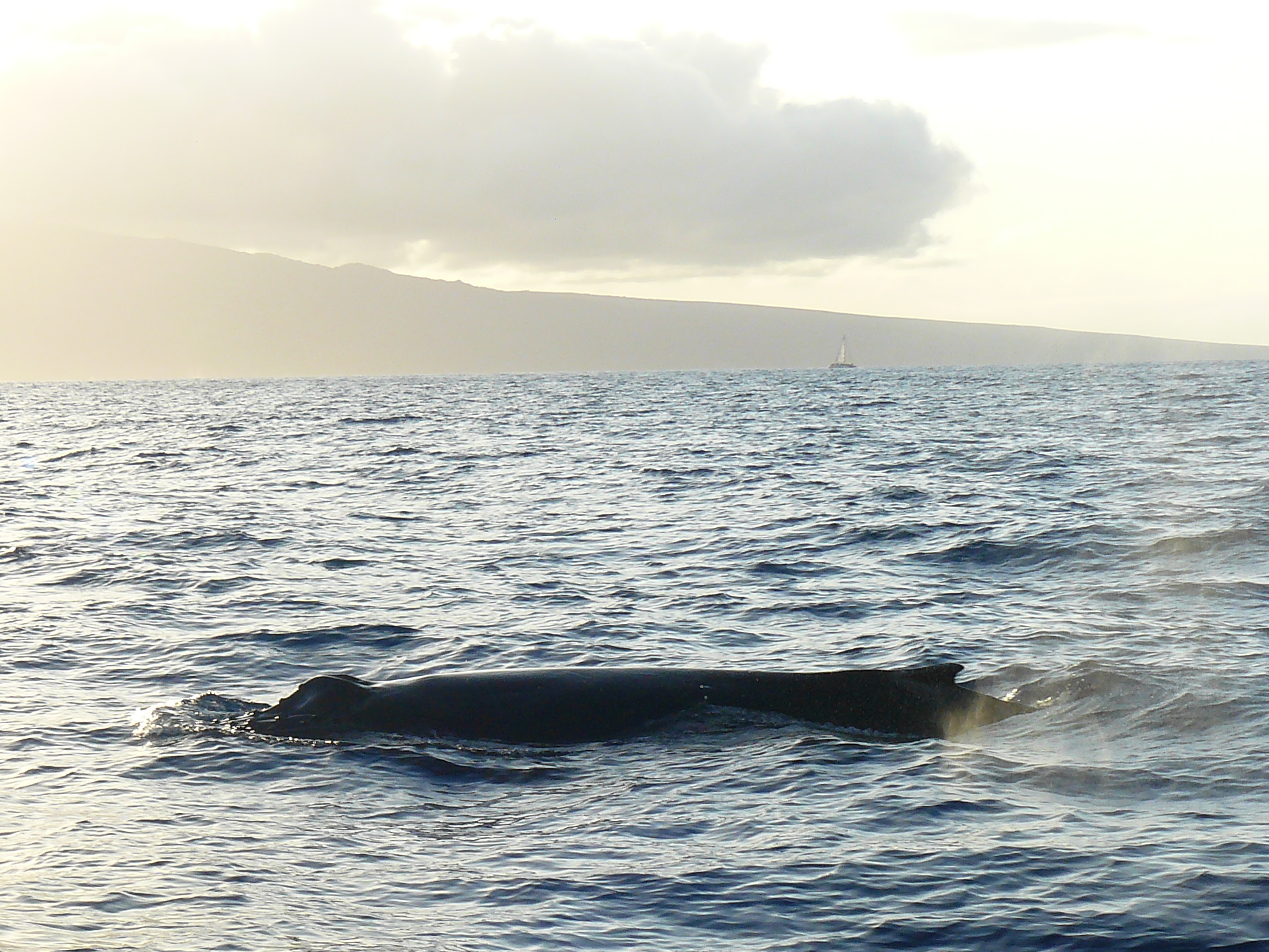
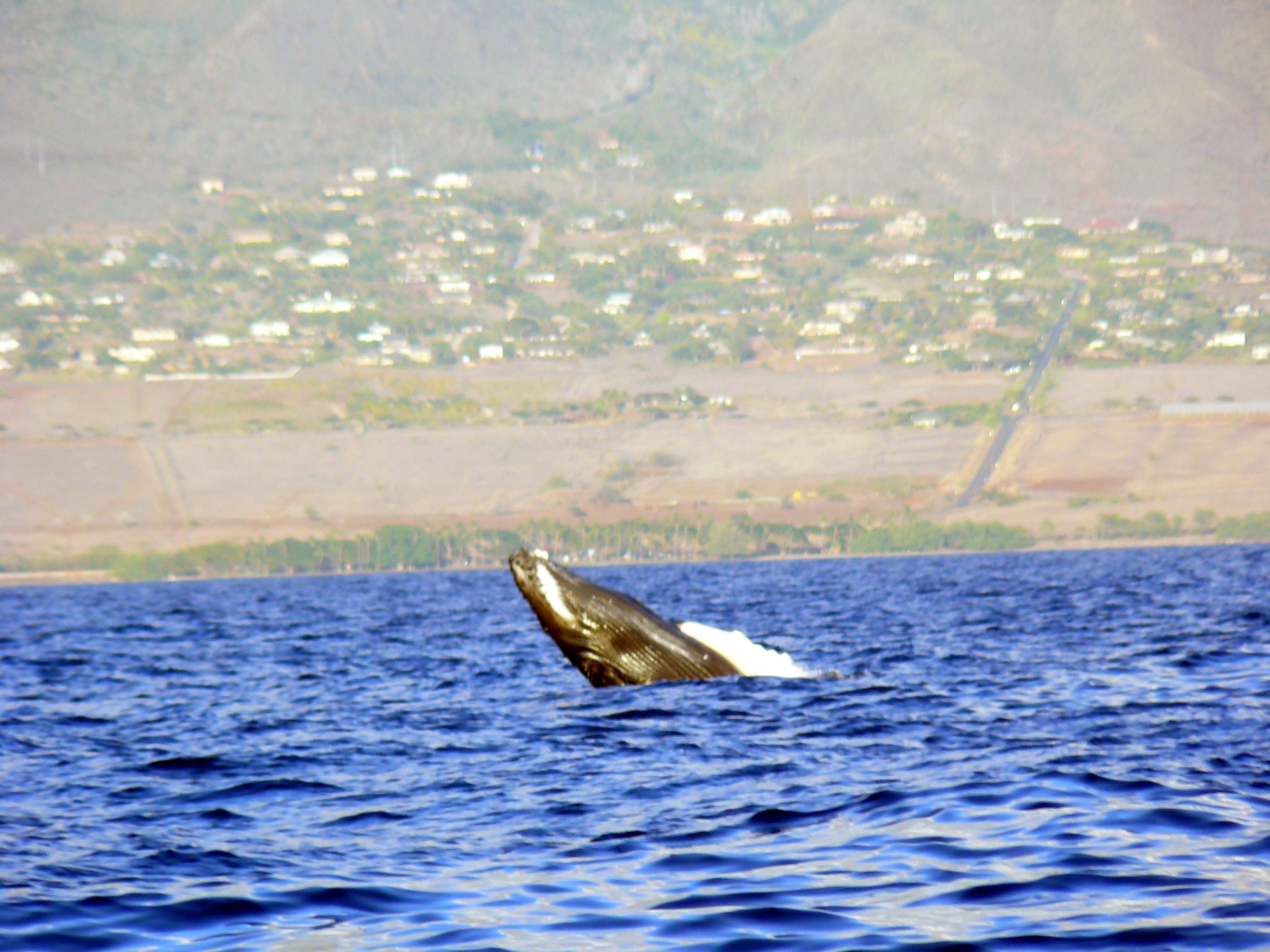
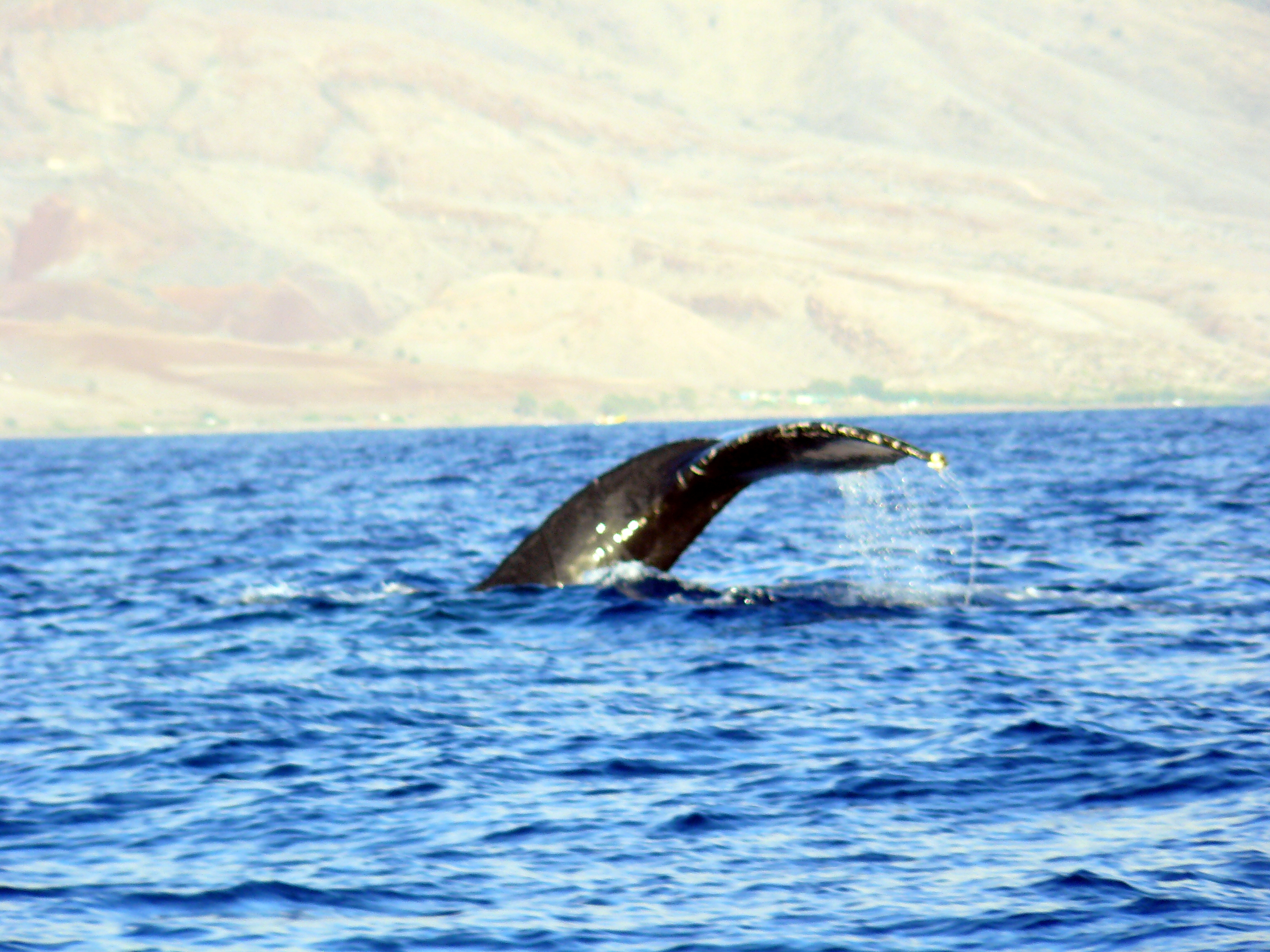
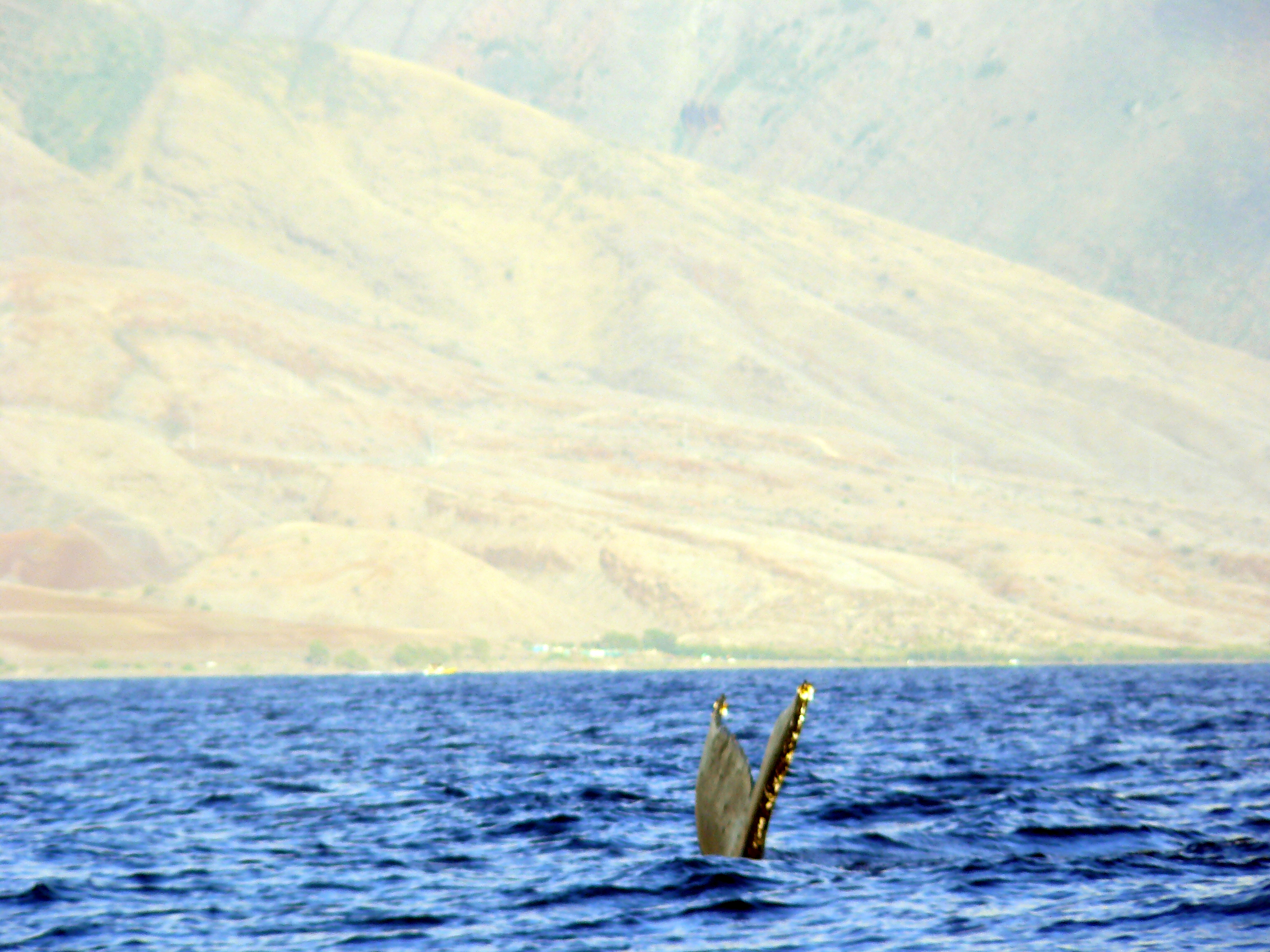
Green Sea Turtle “basking” – coming on the beach to rest! Humpback baby whales ‘exercising’ – building up their muscles ability to hold oxygen, for the long migration north, is one reason for the numerous breaches they delight us with! 🙂
Posted in Wildlife in Hawai'i | Tags: breaches, flukes, Green Sea Turtles, Hawaii, Humpback Whale, Maui
Aloha! Happy Giving Thanks, Being Thankful Days!
Awaiting the Humpback Whales – Koholas return to Hawaiian waters, I am grateful for all the organizations offering marine life lectures, classes, and training here on Maui! NOAA Ocean Awareness, participating in the Monk Seal Count, and Dolphin SMART training, Wildlife Fund Hawaii turtle monitoring, Hawaii Endangered Bird Conservation Program annual open house, and nature trips around the island, in and out on the ocean, have kept me busy!
Thank you all for your efforts to conserve and preserve all our interconnected ocean life and planet! Thought I’d share some photos and videos. (I do crop my pictures, and while we respectfully followed the laws and guidelines, we were honored the Spinner Dolphins chose to swim with the boat.)
Posted in Wildlife in Hawai'i | Tags: Green Sea Turtles, Hawaii, Humpback Whale, marine birds, Maui, Spinner Dophins
Orca Season Musings
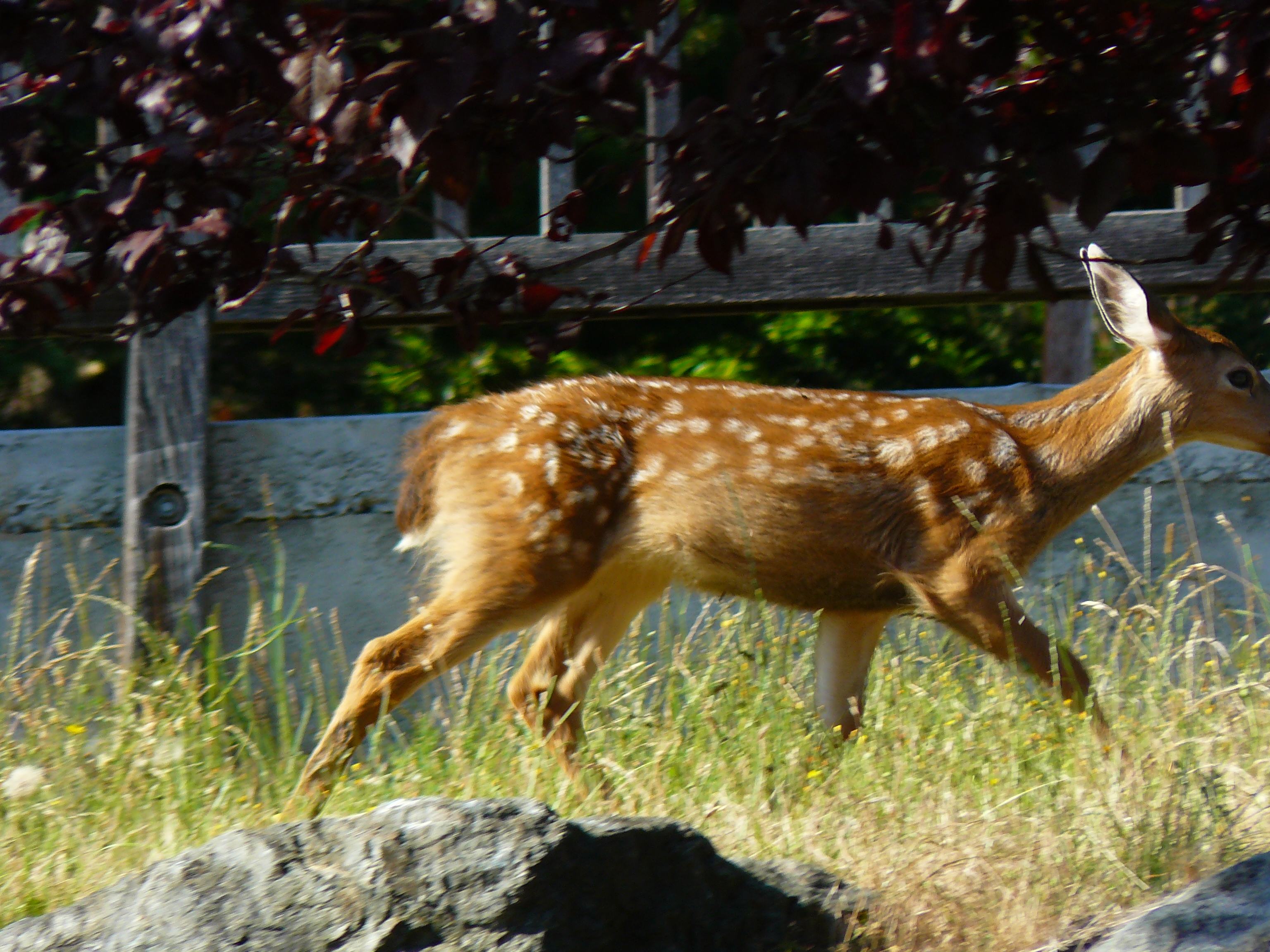
Columbian Black-Tailed deer graze right outside my window on an almost daily basis, so I couldn’t resist posting this photo!
As the Southern Resident Killer Whales seem to be traveling more out in the Pacific Ocean to find their primary food; Chinook salmon, we are thankful we saw them in Haro Strait, 4 trips out of the 6 NOAA sponsored Whale Museum Land Based Tours I conducted in July and August. San Juan County Park seemed to be the afternoon ‘Whale Watch Park’ this summer!
I am thankful for the increased awareness and everyone’s efforts to restore, preserve, and conserve salmon habitat; salmon are a keystone species here in the northwest. I also appreciate all the research trying to answer; what do these iconic, distinct, endangered orcas need to survive and not become extinct?
I was lucky to get the breach photos, when over 40 orcas from all 3 pods appeared to be resting in tight, slow-moving groups, then woke up and became very surface active! The most continuous, countless breaches by many of these whales, that I can ever remember seeing and hearing!!
Clean water and air, natural sustainable habitats, aquatic noise pollution reductions; the salmon, the orcas, we humans need this, all species do really- we are ocean dependant and connected…
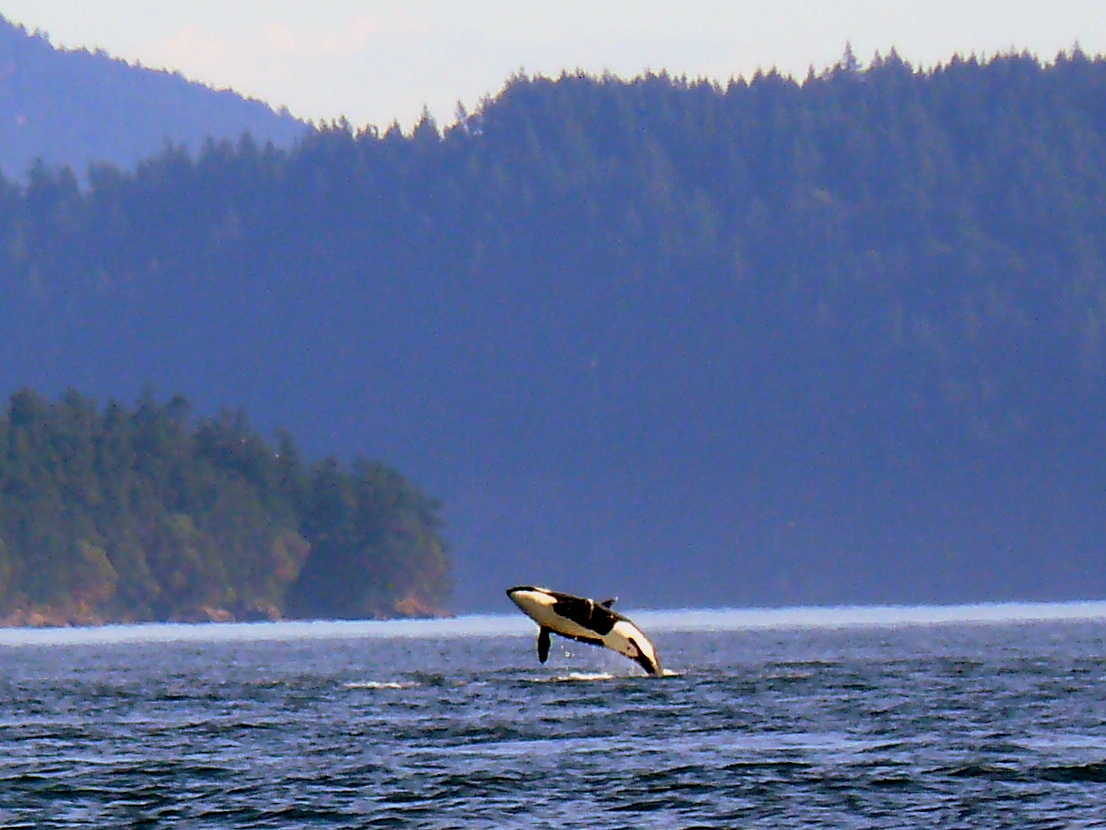
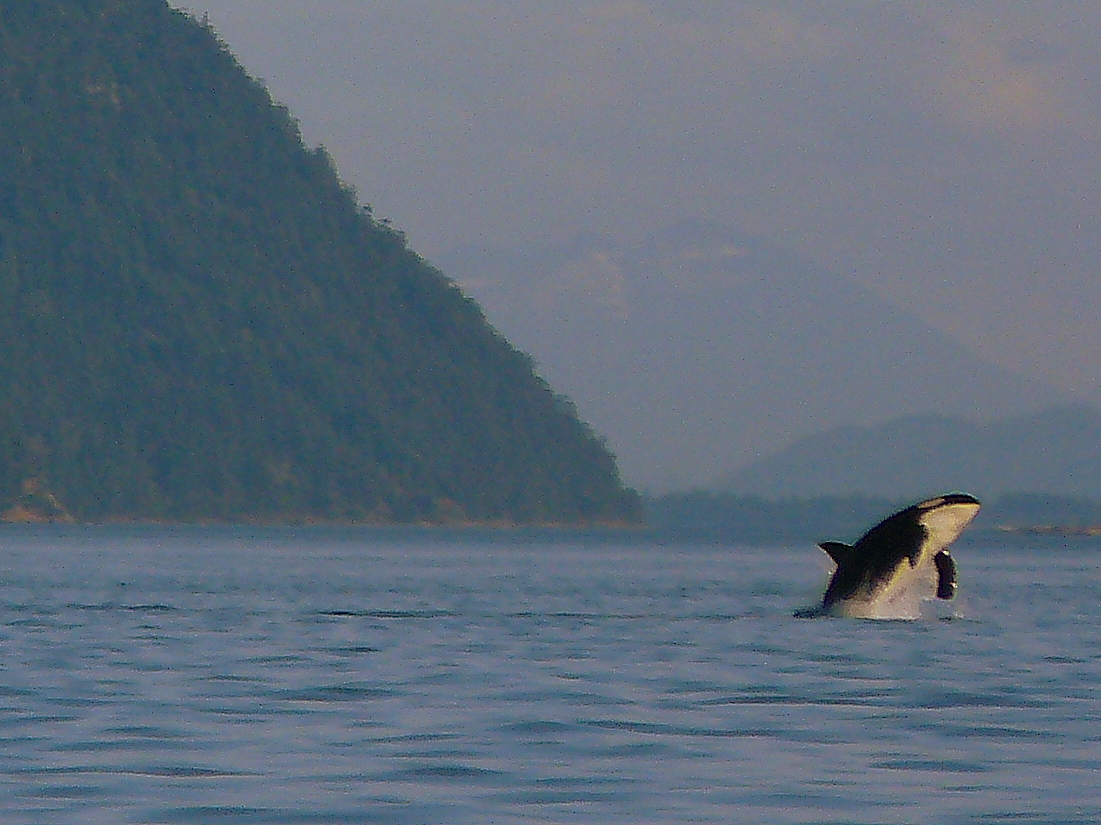
Posted in Salish Sea San Juan Islands | Tags: breaches, cartwheel, Haro Strait, headstand, J Pod, K-pod, Killer Whales, L-Pod, Orca Whales, rare sighting, resting
Summer Salish Sea Orcas!
Unusual weather and unusual whale travel patterns this July. Our ‘sunny San Juan Islands’ have had cooler temperatures and many clouds, rain, and windy squalls moving through, so we appreciate these sunny days even more.
The whales seem to be more surface active in the choppy water; they may have to rise further to be able to breathe. Our Southern Resident Killer Whales (still their official NOAA name), have been off the west side of San Juan Island more often this season, doing the ‘waltz’; swimming north then south, back and forth in Haro Strait. Delighting all of us watching and listening by land and by sea!
Orca families, members side by side, working together foraging and lunging for Chinook salmon. Then they have energy and spy hop, breach, cartwheel, swim upside down, pectoral fin and tail fluke slap the water, all the while vocalizing and communicating with each other, holding our human attention! How do I describe J-2 estimated 101 year old Granny, the respected matriarch of the whole community, in the lead on that full moon influenced strong flooding tide, exuberant whale day? Unforgettable Independence Day (someday for cetaceans too??)!!
Weather and Whales
Delighted to go off of Henry Island on Monday June 18, 2012 to see J and L Pod families swimming north, with the almost 10’ flooding summer tide! They were spread out miles from each other, it was like a whale parade of 50 to 60 or more whales!! The Center for Whale Research folks were out taking photo identifications, so they will post the results. We were grateful to witness breaches, spy (sky) hops, tail lobbing, and foraging behaviors. To see the physically close families with many mothers and youngsters closer to shore, while older females and males tended to be out in Haro Strait, gave guests an insight to the culture and life long bonds these whales share. A group of males brought up the rear and began porpoise swimming, 2 together in synchronicity!!
The rain and fog on Saturday June 16, 2012 didn’t seem to bother J-Podders! Of course they’ve adapted to their wet ocean world. We circumnavigated San Juan Island, and like the whales went with the strong flooding tide. Over the years I have seen more surface active behaviors off of Henry Island, compared to other areas, so I was very thankful we were able to see J-2, 101 year old matriarch, Granny in the lead of spread out groups. The sprinkles had stopped, the sun broke through the clouds, a whale breached and others tail fluke slapped the water! Then did Granny vocalize “come here!”? as Jpodders porpoised and sped swam toward Granny’s groups and Stuart Island.
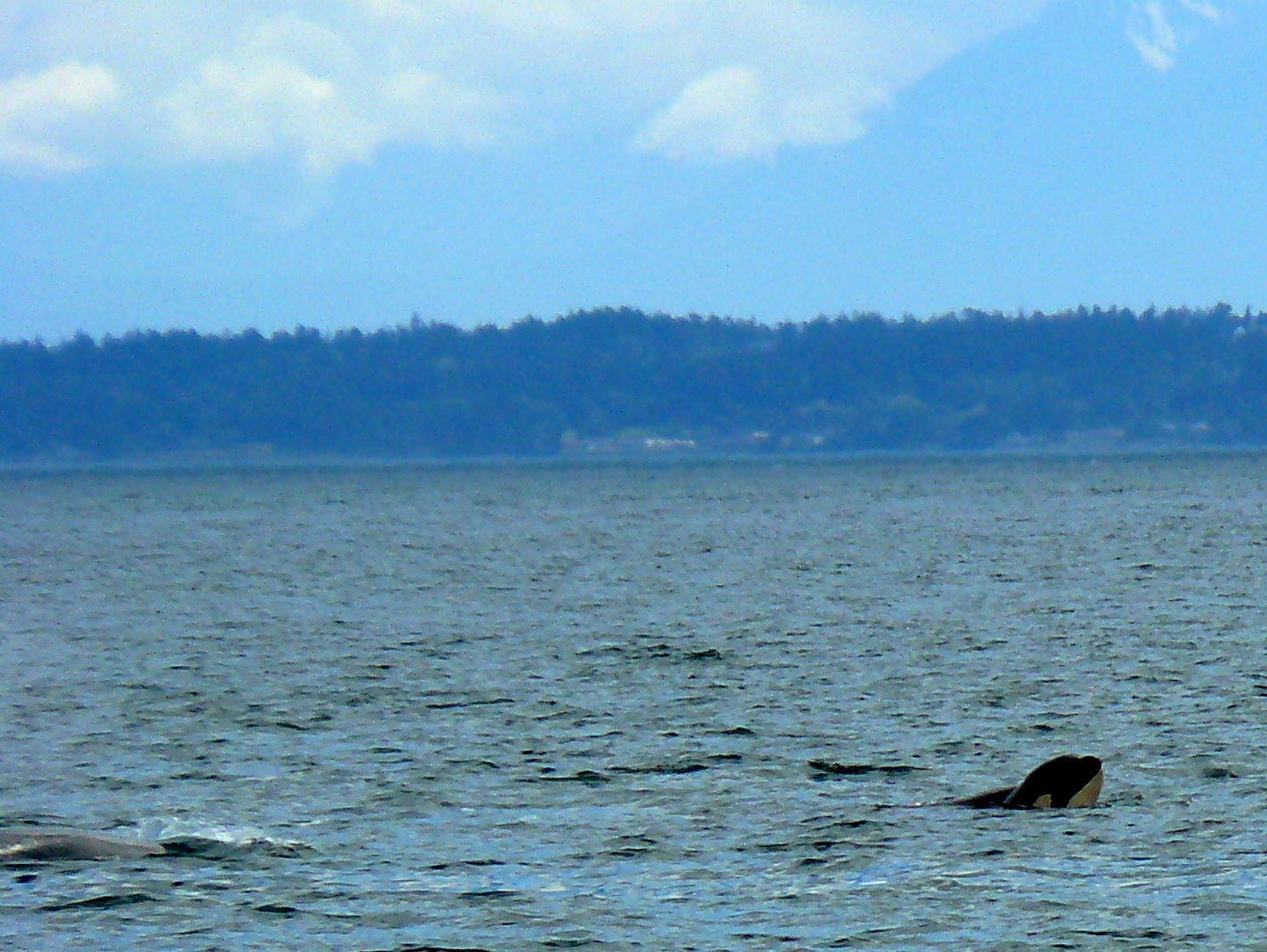
Spy (Sky) Hop!
Posted in Salish Sea San Juan Islands | Tags: Balcomb's Orcas, breaches, flukes, foraging, Haro Strait, J Pod, L-Pod, Orca Whales, percussive behaviors, Salish Sea, San Juan Island, spy hop, Stuart Island, vocalizations
Bigg’s Transient Killer Whales
Monday June 11, 2012. I wonder if the whales have territorial agreements? We don’t often sight the different ecotypes of Orcas-Killer Whales in the same area, at the same time. Since SRKW- Orcas were out of our range, I wasn’t surprised to hear Bigg’s Transient Killer Whales were by the D’Arcy Islands at Vancouver Island, Canada. We went for the international tour! T-020, a 49 year old male was with his 44 year old sister, T-021. They were quiet and traveling slowly, appearing to be resting at times, with the 2.5’ flooding tide. We did see a Harbor Seal in the area, and very few Harbor Porpoise, but no obvious meals consumed. These whales have managed to share their entire long lives, at times surfacing together, shoulder to shoulder, a beautiful sight!
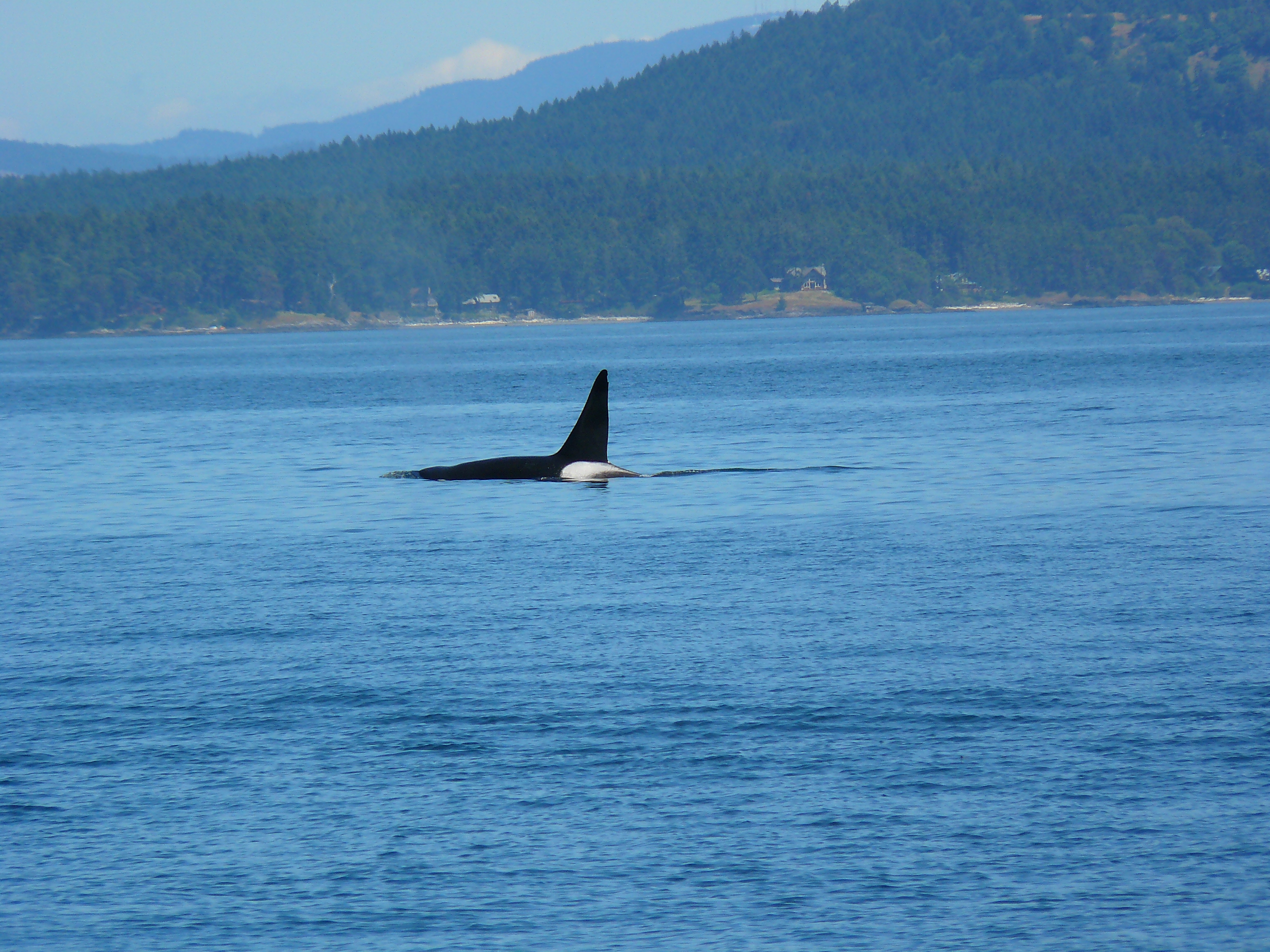
T-020
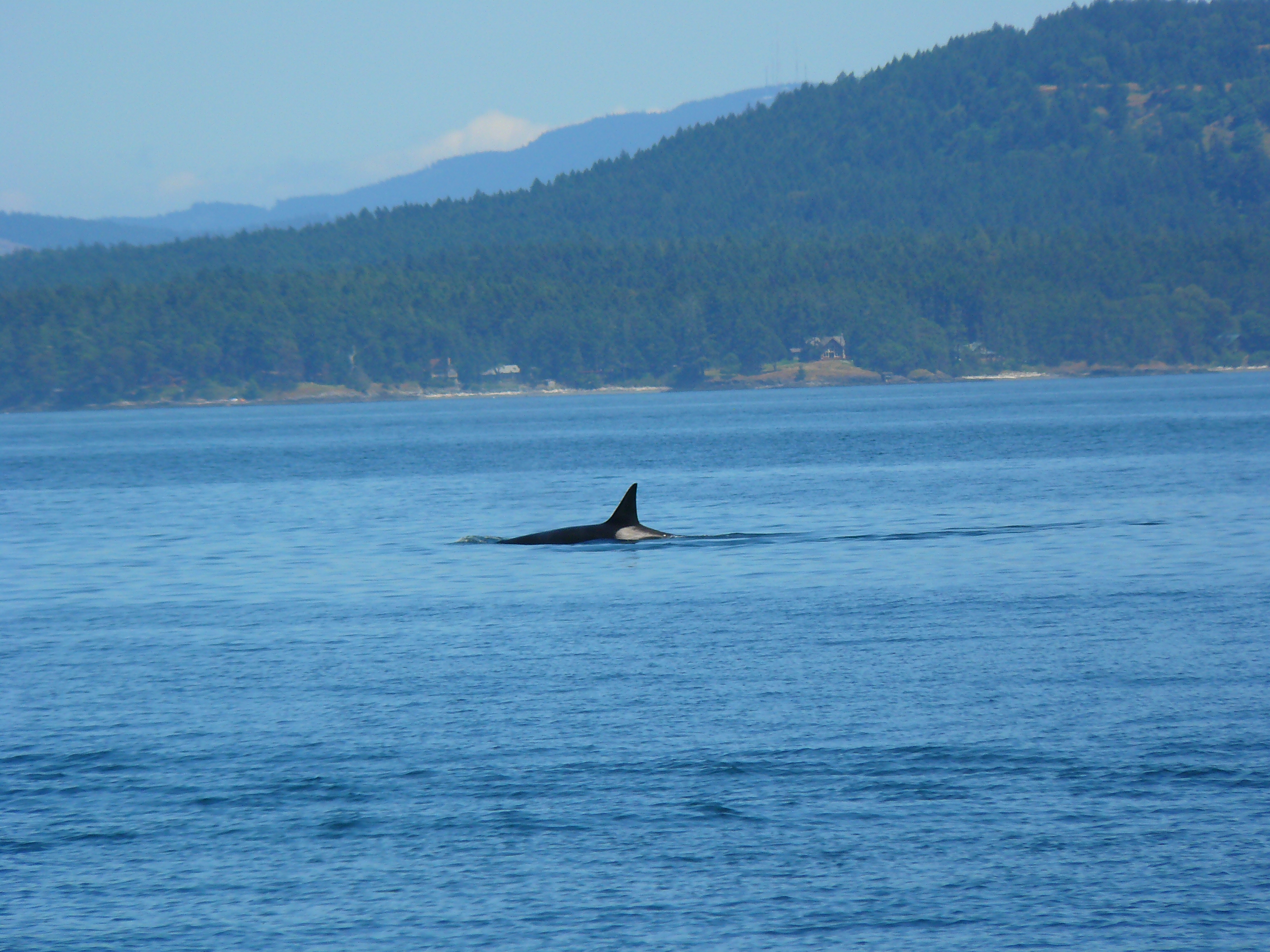
T-021
Posted in Salish Sea San Juan Islands | Tags: Bigg's Transients, Canada, Haro Strait, Killer Whales, Salish Sea, Transients
Whales back in the Salish Sea!
Happy to see SRKW- Orcas Sunday afternoon, June 10, 2012, off of South Beach, San Juan Island, spread out and foraging for salmon in a flooding tide. They don’t often head east past Salmon Bank, and sure enough, the whales turned southwest and swam across the Strait of Juan de Fuca toward the Olympic peninsula. I have also observed they will then also travel west toward the Pacific, which sure enough they did!
Mid-day Saturday June 9, 2012, L-Pod residents headed south, down Haro Strait with an ebbing tide, spread out in many groups. Off of Stuart and Henry Island, we were thrilled to see L-77 Matia with her new baby girl; L-119! And L-41 Mega looks regal; he is the eldest male in the Balcomb’s Orcas, at 35 years old. The whales began to gather closer together and porpoise (fast, lunge) swim! We heard on the radio that J-Podders were off of Lime Kiln State Park, heading north! They turned south though; L-Podders joined them and a community gathering of L and J Pod families going back and forth in Haro Strait along San Juan Island, continued for hours! Out at Whale Watch Park, I watched them forage and socialize well into this special day and evening!
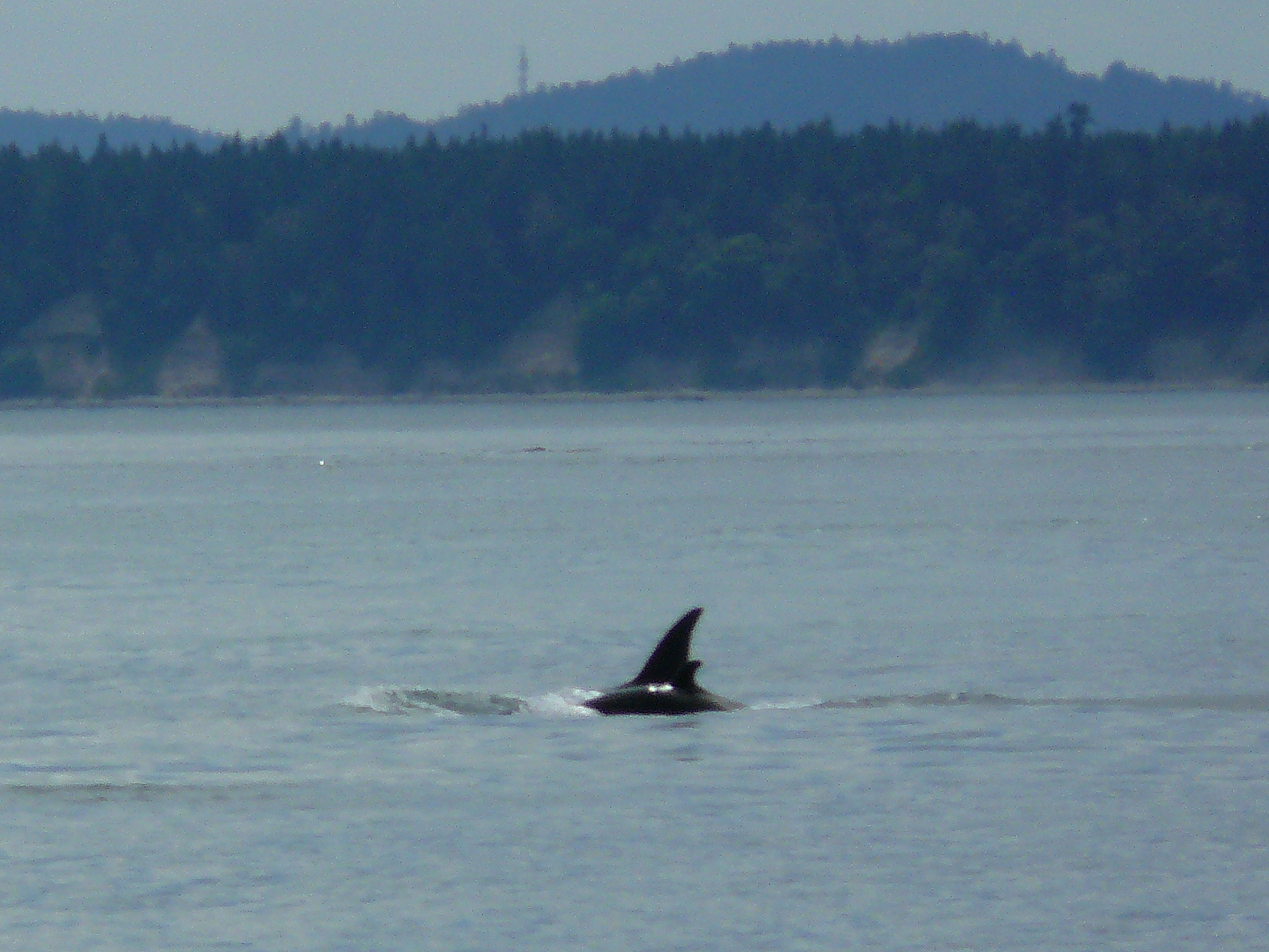
L-77 Matia and Daughter L-119
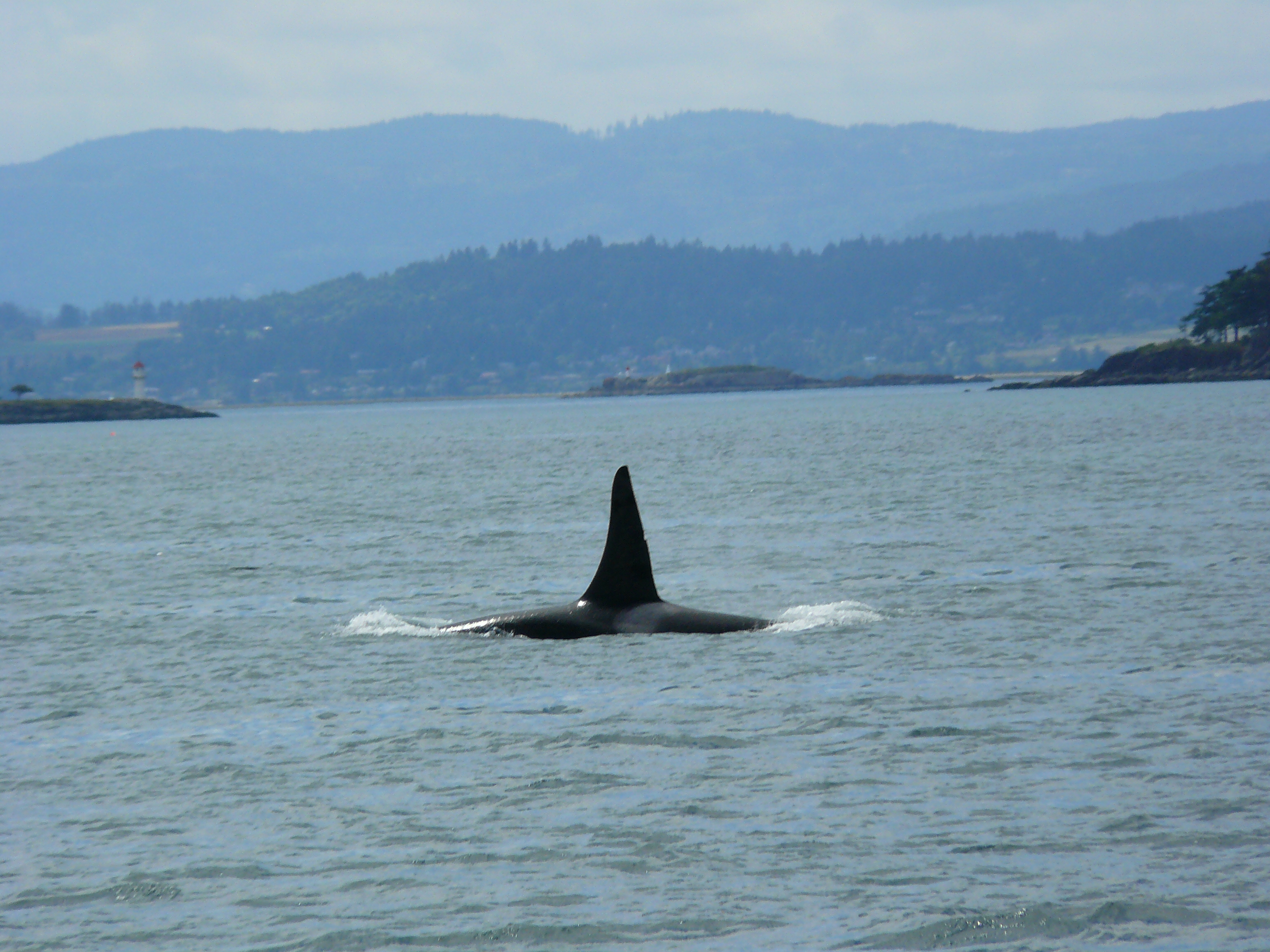
L-41 Mega SR Oldest Male at 35 yrs
Minke Whales and Harbor Porpoise
Wednesday June 6, 2012
June is Orca Month here in Washington! However, our Southern Residents- Orcas, headed back out to the Pacific Ocean, a good 70 miles from the San Juan Islands.
Extreme low, close to summer solstice, tides showed invertebrates we only see exposed a few days each year. First a -3 foot low and then an incoming 9+ foot high tide, gave a glimpse of the underwater world and species!
The sun also came through the overcast clouds and let us say “Welcome to the Sunny San Juans!” We went south down San Juan Channel, viewing 100’s of harbor seals hauled out to maintain their warm-blooded bodies and rest on the rocks and islets, and a pair of Bald Eagles nesting on Cape San Juan. Out on Salmon Bank in the Strait of Juan de Fuca, we luckily sighted 2 Minke Whales zig-zagging about, foraging, being the unpredictable slinky Minkes they are! I try to imagine I am the bait fish they are after, where would I go? Then scan around to see if a Minke comes up to breathe where I thought it might. A gathering of sea birds gets my attention too, as they will take advantage of the fish being driven up toward the surface, and any leftovers! A large community of harbor porpoise, foraging in the now strong flooding tide, right outside of Friday Harbor, capped off a nice trip!
Posted in Salish Sea San Juan Islands | Tags: eagles, foraging, harbor porpoise, harbor seals, Minke Whale, Strait of Juan de Fuca
Southern Resident Orca = Balcomb’s Orca
Wednesday May 30, 2012
Long ago, mariners named the whale species that preyed on other whale species, the “whale killer”. It got flipped over time into “Killer Whale”. Now that we are referring to one of the three killer whale- orca whale ecotypes as transient killer whales and Bigg’s Transients, I think our Southern Resident killer whales should be called Southern Resident orca, which is part of their current scientific name, and Balcomb’s Orca out of respect for the almost four decades of research Ken Balcomb and The Center for Whale Research have conducted and shared. One of the longest and informative studies of any cetacean in the world! Check out the link to the Center, on the blogroll.
It’s Orca season in the Salish Sea, we were all excited to hear the Southern Resident orca – Balcomb’s Orca community is back! Off the south end of Lopez Island, in the Strait of Juan de Fuca, whales spread out as far as you could see, coming from Rosario Strait, heading west and southwest. Slack water made for flat water and extended visibility! J-Podders with L-87 (he’s been with J-Pod for a few years now) and K-Podders all mixed together, very active, foraging, spyhopping, breaching, tail fluke and pectoral fin slapping the waters, rolling over each other, and swimming on their backs, while chattering with vocalizations even heard above water! Our guests realized what a wondrous experience this was, to encounter all these whales and behaviors by magnificent, wild, free, intelligent animals that maintain life long family and community relationships, without destroying their environment. I hope they are finding enough of the Chinook salmon they depend on, in cleaner, toxic free waters, with a minimum amount of boat, shipping, seismic, and naval ordnance and sonar testing noises and impacts. Our efforts do make a positive difference.
Transient Killer Whales = Bigg’s Transients
Saturday May 26, 2012
The sun was shining, making a long trip north to Cherry Point to see 4 matrilines of the mammal eating killer whales, an enjoyable boat ride for all the guests- young and old alike! Out of respect for one of the first scientists that photo identified individual killer whales – orcas; Dr. Michael Bigg, Orca Network and others are referring to this ecotype as “Bigg’s Transients”. Science shows biological and cultural differences between the 3 ecotypes, and I suspect they will eventually be scientifically reclassified and renamed.
The 8 killer whales of 3 then 4 groups seemed to be resting taking advantage of the slack water, then spread out, continuing north. On the way up, we spotted very few harbor seals and harbor porpoise heading south, the opposite direction of their predators! Perhaps the whales had already had lunch and the word was out! Extraordinary visibility of the Cascade Mountains with glass pond like waters!
Posted in Salish Sea San Juan Islands | Tags: Killer Whales, Salish Sea, Transients
Maui Hawaii
I completed NOAA Ocean Awareness Training and earned my CORAL (Care of our Culture, Oceans, Reefs and Animal Life) certification! These months in Hawaii, I have learned so much and experienced the oceanic and Pacific Rim connections between marine life and we humans! Now I prepare to migrate to the San Juan Islands and Salish Sea. Here are some random land and sea photos.
Posted in Wildlife in Hawai'i | Tags: Hawaii, Maui, NOAA
 OnBoard Tours Whales